


Explainer: Philippine Senate coup, new majority, lame duck president, flood control scandal
Summarized and contextualized by DistantNews.
At a glance
News
Sources not specified
Context piece
- The Philippine Senate experienced a leadership shakeup where Senator Sherwin Gatchalian was installed as Senate President Pro Tempore and acting Senate president.
- The change occurred after Senator Alan Peter Cayetano refused to convene sessions, leading to a shift in the majority bloc.
- The presidential palace acknowledged the changes, stating they were in accordance with the law, though Cayetano contested the legality of the move.
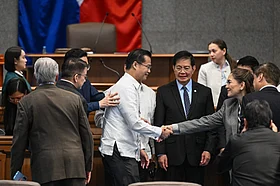
The Philippine Senate saw a significant leadership shift on Wednesday, June 3, with Senator Sherwin Gatchalian installed as Senate President Pro Tempore and serving as acting Senate president in the absence of Senator Alan Peter Cayetano. The presidential palace, through spokesperson Claire Castro, quickly recognized the changes, affirming they were "in accordance with the law and the rule of law."
What happened in the Senate this afternoon is in accordance with the law and the rule of law.
The unusual session unfolded after Senator Cayetano had reportedly refused to convene the Senate for three consecutive days, beginning Monday, June 1. This refusal followed the arrest of Senator Jose “Jinggoy” Estrada on plunder charges. Cayetano stated his actions were to uphold the Senate's independence.
Senator Francis 'Chiz' Escudero, a member of the former majority, reportedly joined the previous minority bloc in the plenary hall on Wednesday. This move brought the number of senators present to 12, constituting a quorum according to Senate rules. The newly formed majority immediately declared all elected chairpersonships vacant and proceeded to elect Gatchalian as Senate President Pro-Tempore and Acting President. However, they fell short of ousting Cayetano entirely, as Senate rules require a 13-vote majority to elect a new Senate President.
The majority in the 24-member Senate is 13.
Senator Cayetano, however, dismissed the shakeup, labeling it an "illegal coup d’etat" and an attempt by the previous minority to undermine the Senate. He argued that a majority of 13 senators is needed to convene sessions and conduct business. Cayetano also contested the legal precedent cited by Gatchalian, asserting that an acting president can only be elected if the current president has resigned, died, been ousted, or is incapacitated, not merely in their absence.
This is an illegal coup d’etat with the effect of violating the Philippine Constitution.
DistantNews Editorial
Originally published by Khaleej Times. Summarized and contextualized by our editorial team with added local perspective. Read our editorial standards.
More Stories


From Our Blog

What Gets Lost (and Found) When News Is Translated

The Critical Role of Diaspora Media in Global News

What Travellers Should Know About Countries with Restricted Press

A Digital Nomad's Guide to Following Local News

How the Same Story Looks Different in Different Countries
