


Explorationists Urge Better Reservoir Modelling as Nigeria’s Deepwater Drilling Cost Hits $1m Daily
Summarized and contextualized by DistantNews.
At a glance
News
Named sources
Context piece
- Nigeria's deepwater drilling costs have surpassed $1 million per day, prompting calls for improved reservoir modeling.
- The Nigerian Association of Petroleum Explorationists (NAPE) urges operators to invest in better subsurface characterization to reduce risks and optimize recovery.
- Accurate understanding of submarine channel architecture is crucial for maximizing production and delaying water cut in deepwater operations.
The Nigerian Association of Petroleum Explorationists (NAPE) is urging oil and gas operators in the country to enhance their reservoir modeling capabilities, as deepwater drilling costs now exceed $1 million daily. This significant expense underscores the critical need for accurate subsurface characterization to mitigate exploration and development risks.
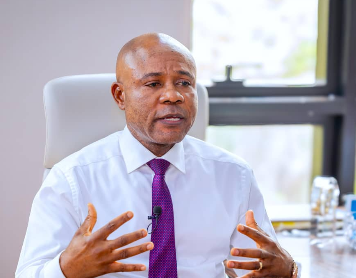
NAPE President Mrs. Olajumoke Ajayi and Dr. Busari Olarewaju, a geoscientist with TotalEnergies EP Nigeria, emphasized this point at NAPE's recent technical session in Lagos. Dr. Olarewaju presented findings from a study on a Pleistocene submarine channel-levee complex in deepwater Nigeria, highlighting how a weak understanding of submarine channel architecture increases uncertainty and negatively impacts hydrocarbon recovery.
"The message here is that we understand the detailed interactive presence of the flow to make sure to maximise the production and you delay water cut as much as possible," Dr. Olarewaju stated. His research, which utilized extensive seismic and well data, revealed complex geological features within the channel system. These include lateral accretion packages, vertically stacked channels, and mass-transport deposits, all of which influence fluid movement and production efficiency.
The study reconstructed the channel's evolutionary history over five stages, demonstrating how this understanding forms the basis for effective facies and reservoir modeling. Such modeling is essential for guiding field development decisions and optimizing recovery. Dr. Olarewaju noted that heterogeneity within channel systems directly affects fluid movement, sweep efficiency, and overall production performance, identifying lateral accretion deposits as particularly attractive for reservoir quality.
NAPE's call for improved modeling comes at a time when Nigeria's deepwater sector faces escalating costs. Accurate geological insights are paramount to ensuring the economic viability of these complex operations and maximizing the potential of the nation's hydrocarbon resources.
The message here is that we understand the detailed interactive presence of the flow to make sure to maximise the production and you delay water cut as much as possible.
DistantNews Editorial
Originally published by ThisDay. Summarized and contextualized by our editorial team with added local perspective. Read our editorial standards.
More Stories


From Our Blog

How the Same Story Looks Different in Different Countries

What Gets Lost (and Found) When News Is Translated

The Critical Role of Diaspora Media in Global News

What Travellers Should Know About Countries with Restricted Press

A Digital Nomad's Guide to Following Local News
