


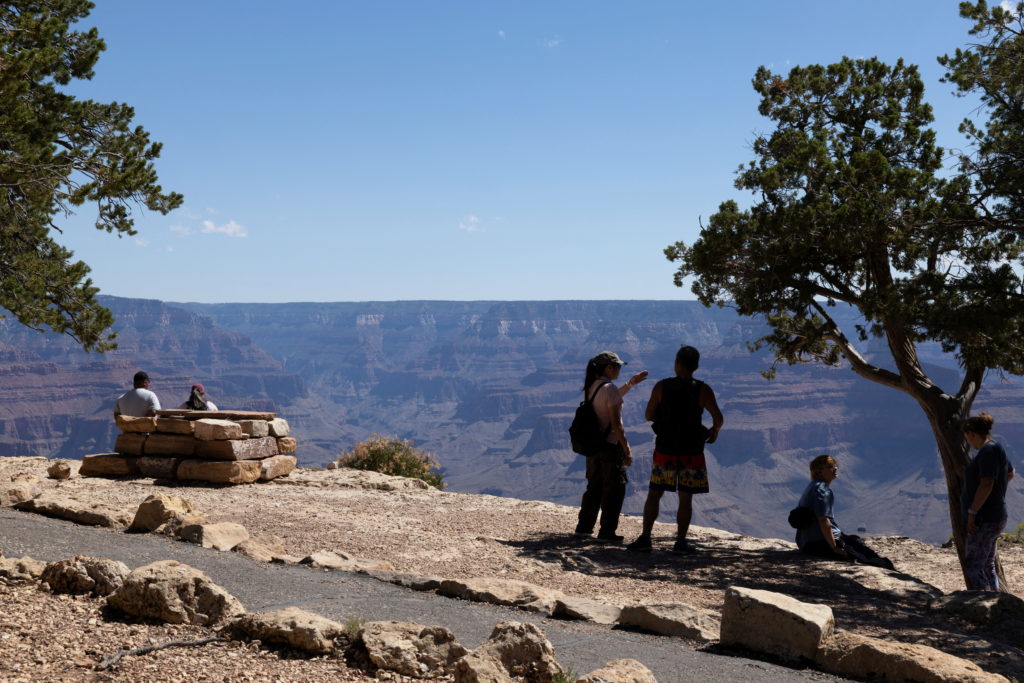
Extreme heat warning issued for Grand Canyon after three hikers die from heat-related incidents
Translated from English, summarized and contextualized by DistantNews.
At a glance
News
From a news agency
Ongoing story
- Grand Canyon National Park warns visitors of extreme heat, with temperatures potentially exceeding 110°F (43°C) at Phantom Ranch.
- The warning follows three recent heat-related hiker deaths in the inner canyon.
- Visitors are strongly advised to avoid hiking during the hottest parts of the day.
Grand Canyon National Park is issuing a stark warning to visitors about extreme heat expected early next week, following a recent surge in heat-related incidents, including the deaths of three hikers. The U.S. National Weather Service has issued an extreme heat watch for the park from Monday midday through Tuesday, forecasting temperatures that could reach or surpass 110 degrees Fahrenheit (43 degrees Celsius) at the low-elevation Phantom Ranch.
Hikers are "strongly advised" to avoid hiking in the middle of the day.
The U.S. National Park Service (NPS) strongly advises against hiking during the middle of the day, citing a "recent influx of heat-related incidents." This warning comes after two hikers, aged 67 and 68, were found dead on the North Kaibab Trail on June 16, appearing to have succumbed to heat-related illness. A third hiker, 72, died on June 12 along the South Kaibab Trail after falling ill from the heat.
Meteorologist Justin Johndrow emphasized that the bottom of the Grand Canyon is a "very hot place," with temperatures often 20 to 25 degrees Fahrenheit cooler at the rim. He warned that the region is approaching its hottest period before monsoon season offers some relief. The challenging climb back to the rim, combined with extreme temperatures, can lead to heat illness symptoms that "sneak up on visitors."
It's just a hot place at the bottom of the Grand Canyon.
Park officials urge visitors to avoid strenuous activity during the hottest hours. Meanwhile, a wildfire near Oak Creek Canyon, about 90 miles south, burned hundreds of acres, adding to the fire danger risk throughout the region due to prolonged dry, hot weather and low humidity.
That's very strenuous even on a mild day. Throw in temperatures of 105 to 110 degrees and that causes some pretty bad problems.
DistantNews Editorial
Originally published by PBS NewsHour in English. Translated, summarized, and contextualized by our editorial team with added local perspective. Read our editorial standards.
More Stories



From Our Blog

How the Same Story Looks Different in Different Countries

What Gets Lost (and Found) When News Is Translated

The Critical Role of Diaspora Media in Global News

What Travellers Should Know About Countries with Restricted Press

A Digital Nomad's Guide to Following Local News
