

Extreme Heatwave Reshapes South Korea's Summer Vacation Map, Driving Visitors Indoors
Translated from Korean, summarized and contextualized by DistantNews.
At a glance
News
Documents & data
Context piece
- South Korea is experiencing a shift in summer vacation destinations due to extreme heat, with indoor spaces replacing traditional outdoor leisure spots.
- Data shows a 5.2% increase in shopping destination searches, while travel and leisure saw a 16.5% decrease compared to last year.
- Indoor cultural facilities like cinemas and science museums have seen significant visitor increases as people seek refuge from the heat.
South Korea's summer vacation habits are changing dramatically as record-breaking heatwaves, with temperatures exceeding 40 degrees Celsius (104 Fahrenheit), drive people away from traditional outdoor destinations. This year, the focus has shifted decisively towards air-conditioned indoor spaces.
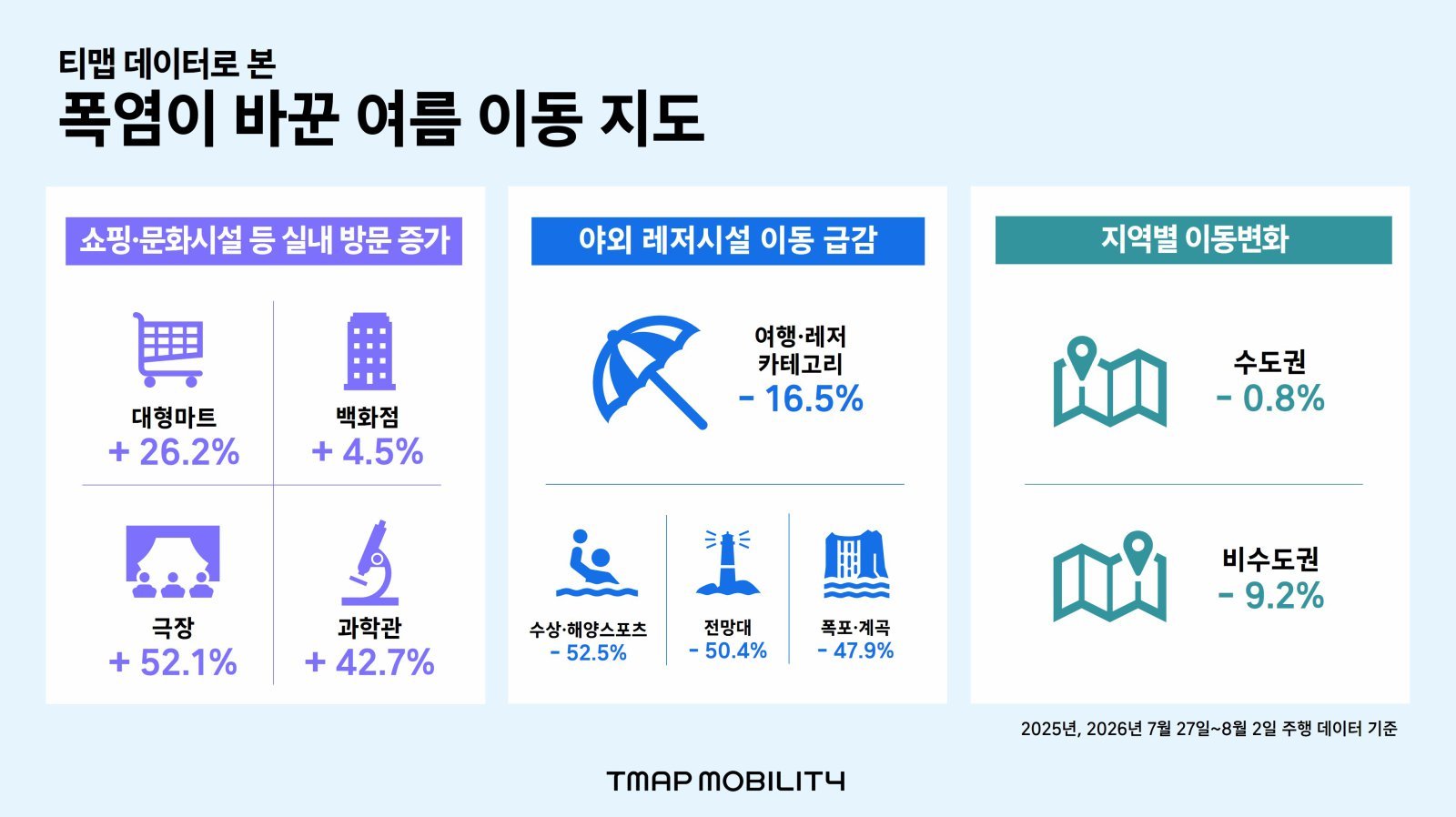
Analysis of destination searches from July 27 to August 2 reveals a significant trend: while searches for shopping destinations rose by 5.2% compared to the same period last year, travel and leisure destinations saw a sharp decline of 16.5%. This indicates a clear preference for indoor activities over outdoor recreation.
Within the shopping category, large hypermarkets and department stores experienced notable increases of 26.2% and 4.5% respectively. Tmap Mobility, which provided the data, suggests this surge is driven by demand for complex shopping spaces offering dining and relaxation alongside retail therapy, all within a cool environment.
The shift extends to cultural venues as well. Cinemas saw a remarkable 52.1% increase in visitors, followed by science museums (42.7%) and performance halls (39.2%). The summer vacation period, coupled with special programs and family-friendly content at institutions like the National Science Museum in Gwacheon and Busan, appears to be drawing crowds seeking indoor entertainment and educational experiences away from the oppressive heat.
DistantNews Editorial
Originally published by Dong-A Ilbo in Korean. Translated, summarized, and contextualized by our editorial team with added local perspective. Read our editorial standards.
More Stories


From Our Blog

What Gets Lost (and Found) When News Is Translated

The Critical Role of Diaspora Media in Global News

What Travellers Should Know About Countries with Restricted Press

A Digital Nomad's Guide to Following Local News

How the Same Story Looks Different in Different Countries
