


F5 Urges Unified Security for Distributed Infrastructures Amid AI and Cloud Growth
Translated from Korean, summarized and contextualized by DistantNews.
At a glance
News
Sources not specified
Context piece
- F5 Networks highlighted the need for consistent security across distributed infrastructures in the era of hybrid multi-cloud and AI.
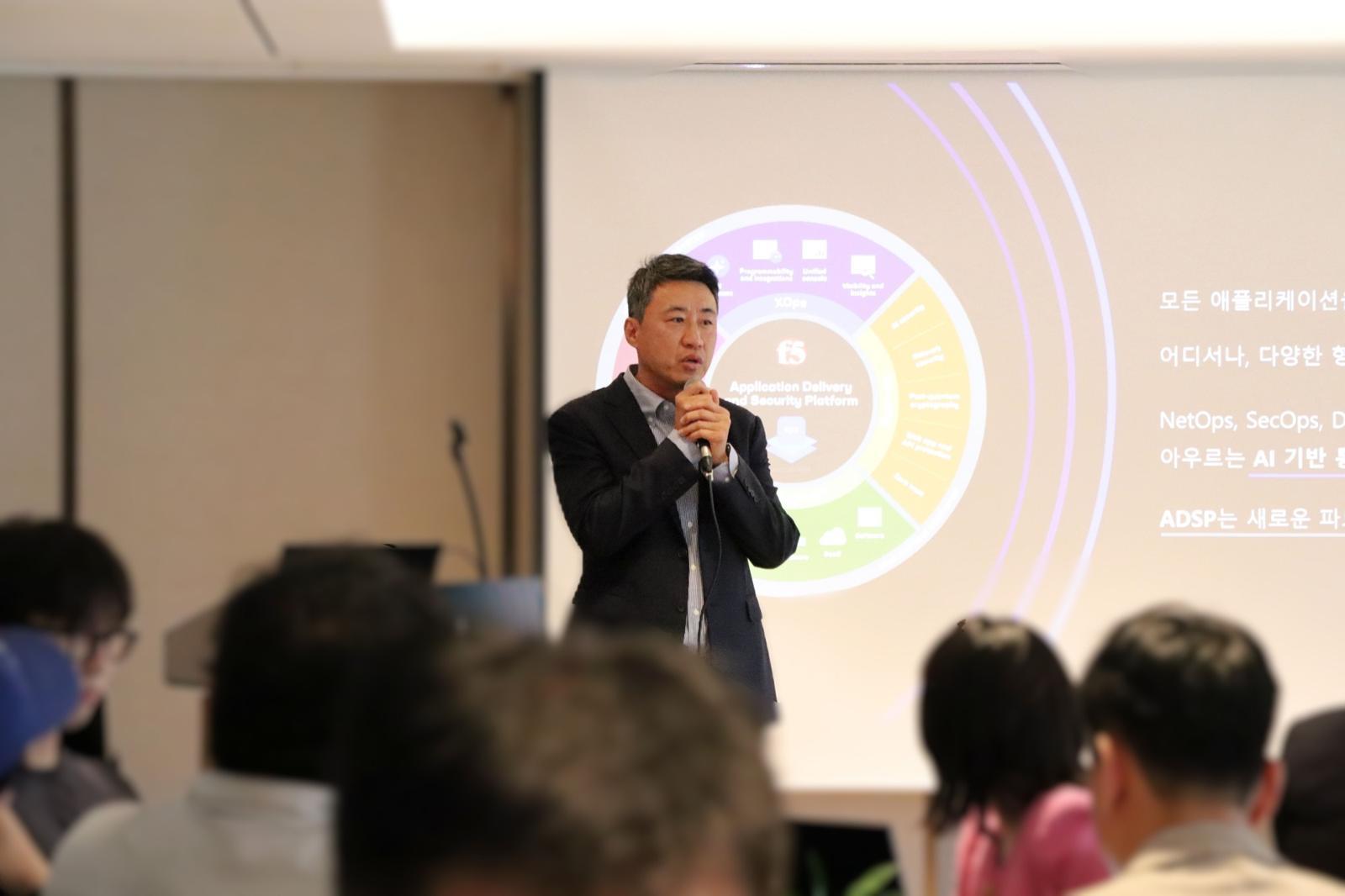
- The company presented its Application Delivery and Security Platform (ADSP) vision to address complex security challenges.
- F5 emphasized the growing threat landscape, with web attacks and bot activity increasing significantly, requiring faster, AI-driven responses.
Global application delivery and security firm F5 Networks stressed the critical need for unified security capabilities across increasingly distributed infrastructures, particularly in the context of hybrid multi-cloud environments and the rise of artificial intelligence (AI).
F5, celebrating its 30th anniversary globally, continuously supports partners and customers in solving complex business challenges and ensuring stable application delivery and protection. Through ADSP, F5 will help Korean companies drive innovation in a stable environment based on consistent security, performance, and resilience.
During a press conference ahead of its 'F5 AppWorld Seoul 2026' event, F5 Korea Country Manager Lee Hyung-wook stated that the company, celebrating its 30th anniversary, is committed to helping partners and customers navigate complex business challenges. He highlighted F5's Application Delivery and Security Platform (ADSP) vision, designed to ensure consistent security, performance, and resilience for businesses pursuing innovation in diverse environments.
Kunaciilan Nallappan, F5's Vice President for Asia Pacific, China, and Japan, identified three major trends reshaping the corporate landscape: the shift to hybrid multi-cloud, the proliferation of AI-driven application architectures, and the escalation of automated, agent-based security threats. With corporate data spread across an average of 19 different environments, Nallappan noted that the focus is shifting from technology adoption to effective control. "Companies must secure consistent control capabilities that span their entire infrastructure," he urged.
Now, the important task is not technology adoption itself, but how to control it efficiently. Companies must secure consistent control capabilities that span their entire infrastructure.
F5's research indicates a dramatic increase in cyber threats, with web attacks up 77% and malicious bot activity surging by 150% year-over-year. Nallappan pointed out the dangerous speed gap: attackers operate at machine speed using advanced automation, while most companies still respond at human speed, leading to significant risks. To counter this, F5 is enhancing its security solutions with AI, segmenting the AI workflow into 'frontdoor' (data entry), 'orchestration' (data refinement), and 'inference' (AI model output). Their updated Web Application Firewall (WAF) architecture, for example, uses AI for real-time behavioral analysis, achieving high accuracy even on central processing units (CPUs) without dedicated graphics processing units (GPUs), and has demonstrated the ability to detect zero-day attacks and significantly reduce false positives.
Attackers are already using advanced automation technology and moving at machine speed, while most companies are still responding at human speed. This speed gap directly leads to risk.
DistantNews Editorial
Originally published by Dong-A Ilbo in Korean. Translated, summarized, and contextualized by our editorial team with added local perspective. Read our editorial standards.
More Stories


From Our Blog

What Gets Lost (and Found) When News Is Translated

The Critical Role of Diaspora Media in Global News

What Travellers Should Know About Countries with Restricted Press

A Digital Nomad's Guide to Following Local News

How the Same Story Looks Different in Different Countries
