

Faustino Oro is a Grandmaster at 12... but he's even better at rapid chess
Translated from Spanish, summarized and contextualized by DistantNews.
At a glance
In-depth
Sources not specified
Context piece
- Argentine chess player Faustino Oro, at 12 years old, achieved the Grandmaster title and excels in rapid chess.
- He recently defeated world No. 13 Jan Duda in a rapid chess match and beat Latin America's top player, Jose Eduardo Martinez Alcantara, 4-2.
- The article discusses the growing importance and appeal of rapid chess formats compared to classical chess.
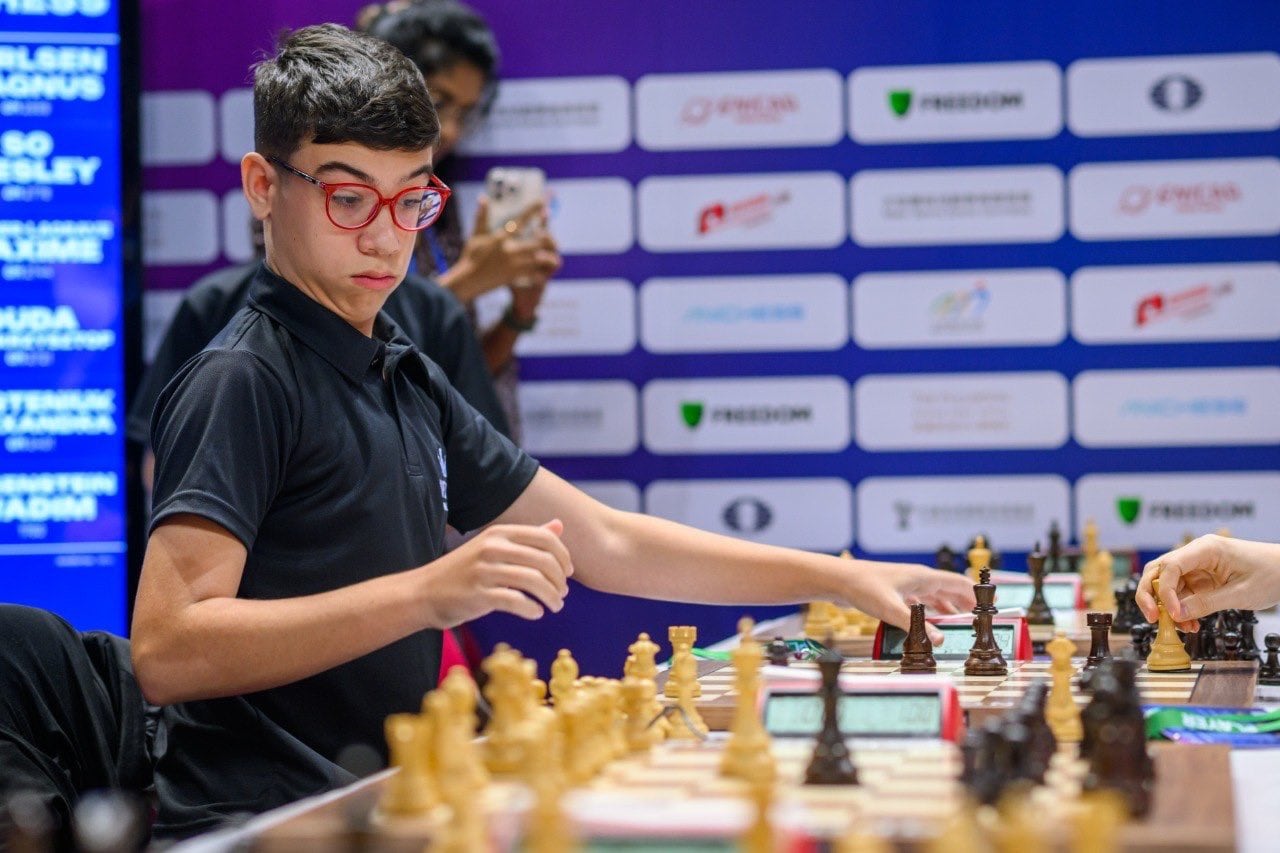
At just 12 years old, Argentine chess prodigy Faustino Oro has achieved the prestigious Grandmaster title, but his prowess extends even further into the dynamic world of rapid chess. Following his remarkable achievement, Oro has been immersed in a demanding competition schedule, with a particular focus on faster-paced games. Recently, he participated in a rapid chess team world championship in Hong Kong. While his team wasn't among the strongest, Oro notably faced off against Poland's Jan Duda, the world's 13th-ranked player with an Elo of 2743, and secured a decisive victory. Subsequently, in Peru, Oro competed in a six-game rapid match against Jose Eduardo Martinez Alcantara, the highest-rated player in Latin America (Elo 2650), triumphing with a score of 4-2. However, his performance in León, Spain, saw a loss against local player Santos Latasa (Elo 2620), highlighting the competitive landscape even for a player of Oro's caliber, as his own Elo stands at 2537, still below these elite players. Oro reached the semifinals in León, Spain, losing to Jaime Santos (Elo 2620), who had an 83-point Elo advantage. This follows his victory over Sandro Mareco in a rapid match last year in Bahía Blanca. The article suggests that by 2026, Oro could potentially contend for a top-10 spot in the rapid chess world championships, competing alongside the game's heavyweights. The traditional measure of chess excellence, the Elo rating system, has long been based on classical, or 'think-ahead,' chess. Yet, a paradigm shift is underway, marked by a significant increase in rapid chess tournaments globally. These faster formats are more economical for organizers, fitting into weekends or even single days, unlike classical games requiring at least a week. Rapid chess, while potentially leading to more errors, offers greater entertainment and excitement for both players and audiences. Oro demonstrates exceptional skill in classical chess but truly shines in the time-constrained formats, which are rapidly gaining popularity worldwide. This shift is partly because, at the highest levels of classical play, gaining an advantage over opponents becomes exceedingly difficult. In contrast, rapid games heavily involve intuition, calculation speed, improvisation, and an element of chance. This trend has led prominent figures like Magnus Carlsen to advocate for reduced time controls in chess.
We've been here for three days. They told us to wait until the bridges are restored. Today is Sunday, and no work is being done. Fortunately, we have cars and tents, so we have a place to stay. Everyone feels fine, there's no panic.
DistantNews Editorial
Originally published by La Nación in Spanish. Translated, summarized, and contextualized by our editorial team with added local perspective. Read our editorial standards.
More Stories

From Our Blog

What Gets Lost (and Found) When News Is Translated

The Critical Role of Diaspora Media in Global News

What Travellers Should Know About Countries with Restricted Press

A Digital Nomad's Guide to Following Local News

How the Same Story Looks Different in Different Countries
