

Fear Rooted in the Past at MODEM
Translated from Hungarian, summarized and contextualized by DistantNews.
At a glance
In-depth
Sources not specified
Context piece
- A retrospective exhibition of artist Csaba Nemes's work is on display at MODEM in Debrecen until July 12.
- Nemes's art often engages with political and social themes, reflecting the cultural conflicts in Hungary since the regime change.
- The exhibition prompts reflection on the artist's role and engagement with different political eras and societal issues.
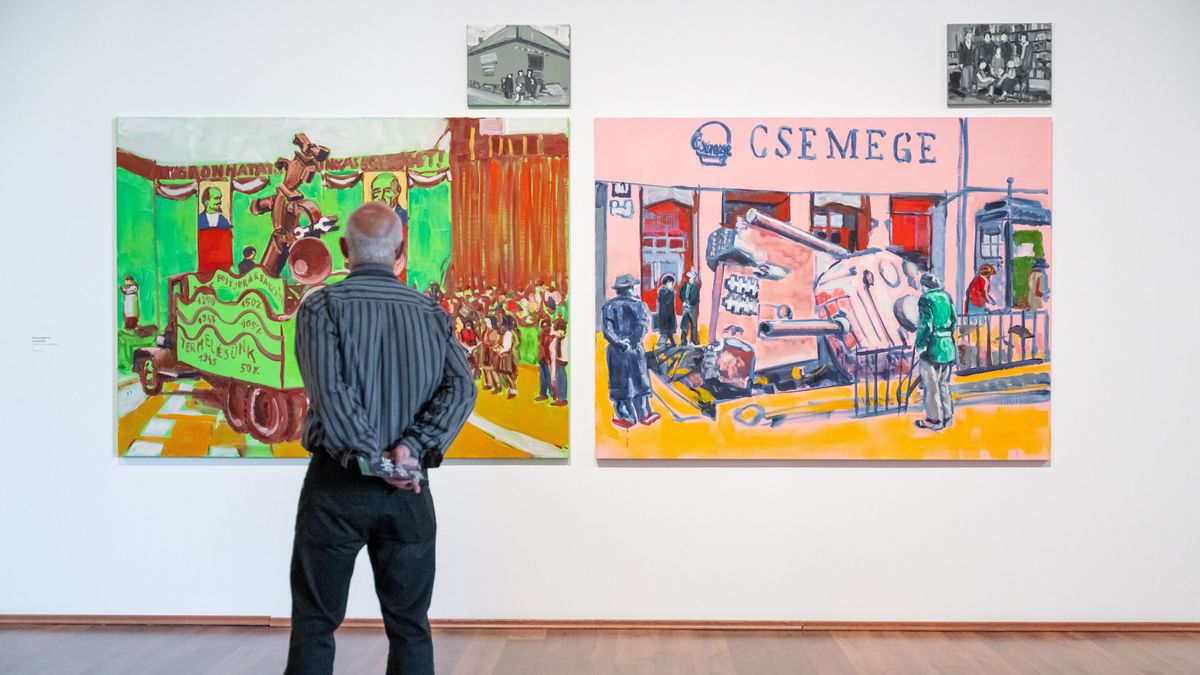
The MODEM Modern and Contemporary Art Center in Debrecen is currently hosting "Continuous Past," a retrospective exhibition of artist Csaba Nemes's work, running until July 12. Nemes, active since the regime change, often positions his art within Hungary's ongoing cultural and political conflicts, making his work resonate with themes that may challenge the perspectives of many readers of Magyar Nemzet.
The exhibition opens with a powerful series, "A Painter in Illiberal Democracy" (2015). In this work, Nemes depicts himself with a painter's easel on the streets of Budapest, suggesting that public life itself has become his landscape. This piece consciously echoes a work by Előd Nagy from over thirty years prior, which showed Nagy in front of the Paks nuclear power plant. While Nemes's stance might seem oppositional, the identical pose highlights shared ground: both artists, in their own ways, are painters for their respective systems, compelled to engage actively with their times, within frameworks that define both critical and conformist positions.
The exhibition's title, "Continuous Past," draws from familiar vocabulary, and as expected, Nemes's art consistently engages with the emblematic conflicts of Hungary's post-1989 cultural wars. While nuances appear in his artistic representation, his positions often align with predictable stances. Nemes has spoken out against the growing influence of the Hungarian Academy of Arts (MMA) and initiated the "Living Monument" movement during the "monument wars." He also holds opinions on the blockade of the University of Theatre and Film Arts and the Russian invasion of Ukraine.
Notably, the exhibition places significant emphasis on the 2015 refugee crisis, during which Nemes worked with Austrian volunteer doctors. This focus, however, leads to an imbalance in his oeuvre, with events like the 2006 street protests receiving less attention despite their political significance. In relation to the 2006 events, the framing primarily highlights concerns about antisemitism and the rise of the radical right. This particular framing may not resonate with the experiences of a broad segment of contemporary Hungarian society, making the exhibition's overall narrative less universally appealing, though it remains a significant artistic engagement with recent history.
DistantNews Editorial
Originally published by Magyar Nemzet in Hungarian. Translated, summarized, and contextualized by our editorial team with added local perspective. Read our editorial standards.
More Stories

From Our Blog

Countries Without a Free Press: What You Need to Know

What Press Freedom Means for the News You Read

What Gets Lost (and Found) When News Is Translated

The Critical Role of Diaspora Media in Global News

What Travellers Should Know About Countries with Restricted Press
