

Fed Chair Warsh testifies on monetary policy amid inflation, housing concerns
Translated from English, summarized and contextualized by DistantNews.
At a glance
News
From a news agency
Ongoing story
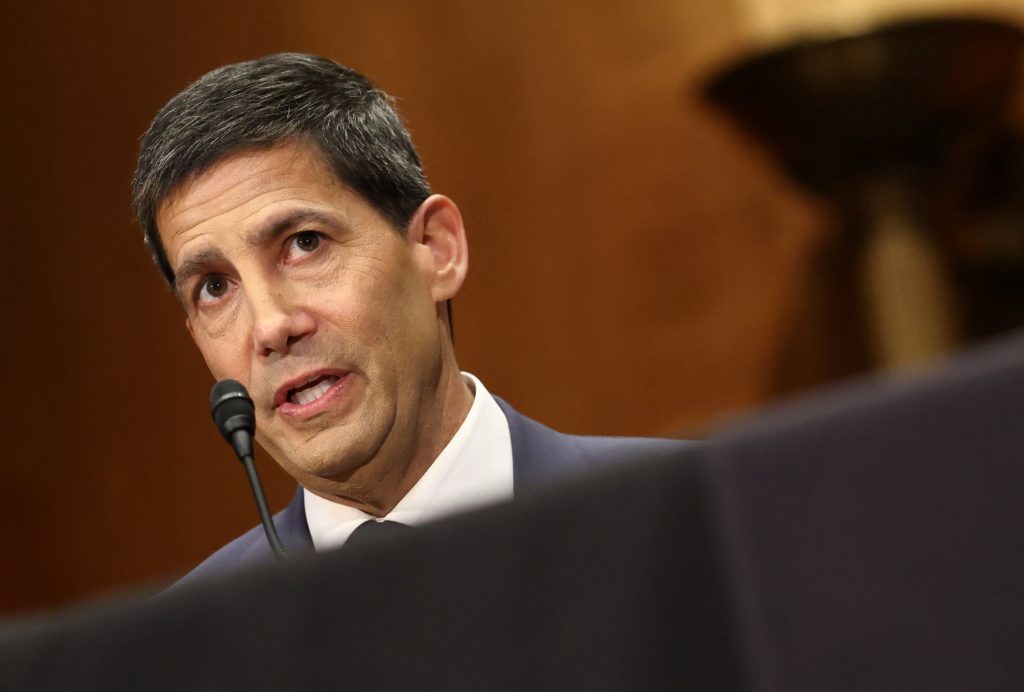
- Federal Reserve Chair Kevin Warsh is testifying before the House Financial Services Committee on monetary policy.
- The hearing addresses concerns about inflation, interest rates, and the U.S. economy, with differing views among Fed officials.
- U.S. home prices have reached an all-time high despite a slowdown in existing home sales.
Federal Reserve Chair Kevin Warsh is set to testify before the House Financial Services Committee today, presenting the agency's semi-annual monetary policy report. The hearing, scheduled for 10 a.m. EDT, comes amid significant public concern over rising inflation, which has made everyday expenses like groceries and gasoline more costly for American households and businesses.
The economy, inflation and how those forces could impact the lives of Americans were front and center over the past week.
Minutes released last week revealed a divided Federal Reserve regarding inflation's persistence. While some officials believe inflation will cool as the Iran war subsides, others anticipate it will remain elevated. This division is reflected in forecasts for the federal funds rate: about half of the 18 policymakers who submitted projections supported raising rates by year-end, while the other half favored keeping them unchanged or lowering them. Warsh himself has opted not to submit a forecast, believing it can unduly constrain policy flexibility.
many of the Fed's 19 officials said its key rate would be unchanged from or slightly below its current level of 3.6% by the end of this year. But they also also said that it would likely be higher by year-end.
Adding to economic complexities, U.S. home prices have climbed to a record high, even as sales of previously occupied homes slowed in June. Existing home sales fell 2.4% from May to an annual rate of 4.09 million units, falling short of economists' expectations. Despite this slowdown, the median sales price for existing homes rose 1.8% year-over-year to $440,600, marking 36 consecutive months of annual price increases and exacerbating affordability challenges for potential buyers.
Sales rose 2.8% compared with June last year.
Meanwhile, the International Monetary Fund (IMF) has downgraded its global economic growth forecast for 2026 to a sluggish 3%, citing the energy shock from the Iran war. However, the IMF notes that booming investment in artificial intelligence and other technologies is partially offsetting the conflict's fallout. The global economy grew 3.5% last year and was projected to grow 3.1% this year before the revision.
The U.S. median sales price increased 1.8% in June from a year earlier to $440,600, an all-time high on data going back to 1999.
DistantNews Editorial
Originally published by PBS NewsHour in English. Translated, summarized, and contextualized by our editorial team with added local perspective. Read our editorial standards.
More Stories


From Our Blog

How the Same Story Looks Different in Different Countries

What Gets Lost (and Found) When News Is Translated

The Critical Role of Diaspora Media in Global News

What Travellers Should Know About Countries with Restricted Press

A Digital Nomad's Guide to Following Local News
