


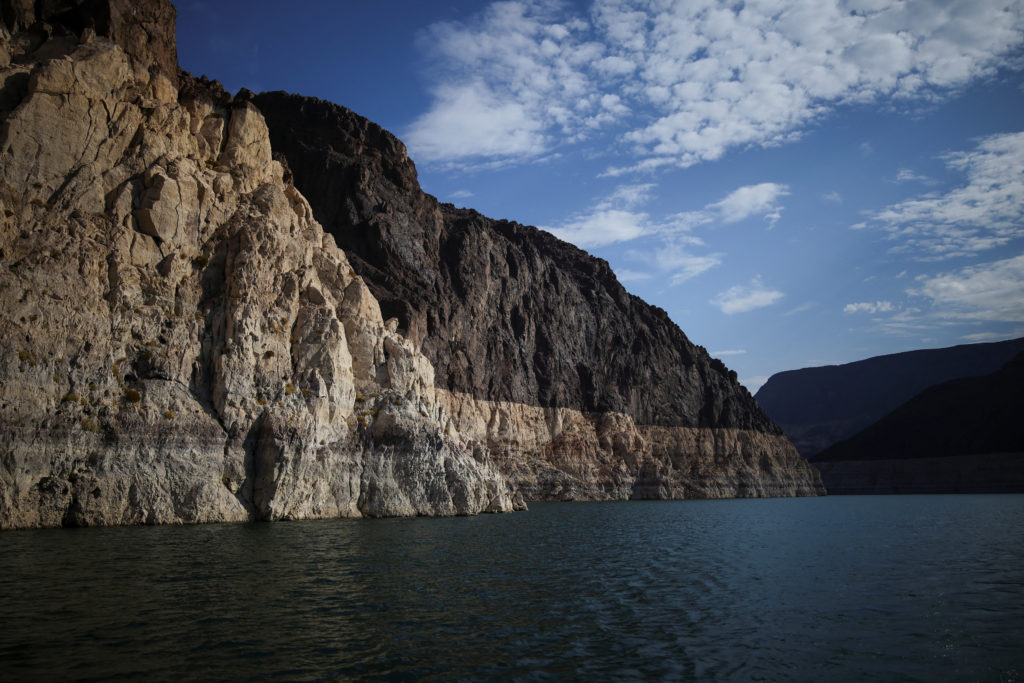
Federal officials announce water cuts as Colorado River supplies continue to plunge
Summarized and contextualized by DistantNews.
At a glance
News
Named sources
New plan
- Federal officials announced mandatory water cuts for California, Nevada, and Arizona due to declining Colorado River supplies.
- The cuts, totaling 1.25 million acre-feet annually for two years, aim to stabilize the river's critically low reservoirs.
- Upstream states and Mexico will also face reductions, as negotiations for long-term water sharing remain unresolved.
Federal officials have imposed significant water cuts on three Western U.S. states, mandating reductions in water use from the Colorado River for the next two years. California, Nevada, and Arizona will collectively cut their water consumption by 1.25 million acre-feet annually, a move designed to address the river's critically low levels. Arizona will bear the brunt of these cuts, while upstream states like Colorado, Utah, Wyoming, and New Mexico are not currently subject to reductions. Neighboring Mexico will also reduce its intake by 250,000 acre-feet under a treaty with the U.S. These measures come as the river's primary reservoirs, Lake Mead and Lake Powell, have reached historic lows due to a prolonged 26-year drought, climate change, and years of overuse. "We continue to see a prolonged drought in our future," said Andrea Travnicek, the Interior Department's assistant secretary for water and science. "So continuing to work together as a whole within the basin is going to be extremely important." The current rules governing the river's water usage are set to expire in October, and the seven states that rely on the Colorado River have yet to reach a consensus on a long-term sharing agreement. Last winter's record-low snowpack further exacerbated the strain on the river system, impacting agriculture, industry, wildlife, hydropower, and tens of millions of people, including numerous Native American tribes. Officials expressed cautious optimism about the near-term stability provided by the cuts. "For 2027 and 2028, the reductions that are now memorialized here will provide substantial stability for folks," stated Tom Buschatzke, director of the Arizona Department of Water Resources. JB Hamby, California's chief negotiator, called the plan "a bridge, not a permanent solution," highlighting the urgent need for a lasting agreement. While Nevada officials welcomed the collaboration, they reiterated their preference for a seven-state consensus.
We've been in this 26-year prolonged drought period. We continue to see a prolonged drought in our future. So continuing to work together as a whole within the basin is going to be extremely important.
DistantNews Editorial
Originally published by PBS NewsHour. Summarized and contextualized by our editorial team with added local perspective. Read our editorial standards.
More Stories


From Our Blog

How the Same Story Looks Different in Different Countries

What Gets Lost (and Found) When News Is Translated

The Critical Role of Diaspora Media in Global News

What Travellers Should Know About Countries with Restricted Press

A Digital Nomad's Guide to Following Local News
