


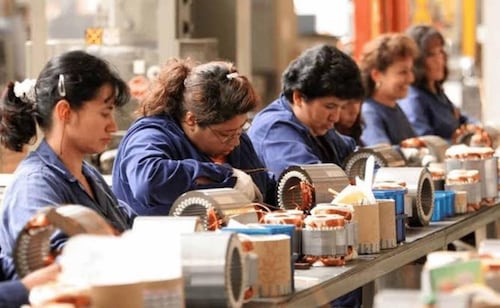
Feminist economics highlights care work, expert notes impact of inequalities
Translated from Spanish, summarized and contextualized by DistantNews.
At a glance
News
Sources not specified
Context piece
- Feminist economics highlights undervalued care work, noting its unequal distribution.
- Specialists analyzed the impact of structural inequalities on women and historically subordinate groups at a UNAM colloquium.
- The event aimed to understand the social reproduction crisis in contemporary capitalism and explore feminist economic solutions.
The feminist economics movement is bringing crucial attention to the often-invisible labor that sustains daily life. At the National Autonomous University of Mexico (UNAM), the II Colloquium on Feminist Economics, themed "Crisis of Social Reproduction," convened specialists to dissect the profound impact of structural inequalities on women and marginalized communities.
Feminist economics has been fundamental to placing the sustainability of life at the center of economic analysis.
Lorena Rodríguez León, dean of UNAM's Faculty of Economics, inaugurated the event, emphasizing that feminist economics has been instrumental in centering the sustainability of life within economic analysis. She explained how the concept of social reproduction illuminates indispensable activities like care, food provision, and education – tasks historically excluded from traditional economic metrics but vital for societal function.
The colloquium grappled with pressing questions: how the crisis of social reproduction manifests in today's capitalism and what tools feminist economics offers for comprehension and the construction of alternatives. These discussions gain urgency amidst escalating inequalities disproportionately affecting women, racialized individuals, and other vulnerable groups.
The concept of social reproduction allows us to make visible indispensable activities for the functioning of societies, such as care, food, and education, which have historically remained outside traditional economic measurements.
Antonio Ibarra Romero, head of the Postgraduate Studies Division at the Faculty of Economics, highlighted the 20th anniversary of the "Gender in Economics" specialization, a leading program in Mexico. He noted a growing interest in feminist economics among emerging researchers. The colloquium featured 43 participants from 15 institutions in Mexico and Brazil, engaging in 12 thematic tables across four key axes: body, territory, and extractivism; debt, financialization, and social security; international division of labor; and alternatives to the social reproduction crisis.
The specialization 'Gender in Economics' turns 20 years old within the Unique Program of Specializations in Economics (PUEE), consolidating itself as one of the main training options in this field in Mexico.
DistantNews Editorial
Originally published by El Universal in Spanish. Translated, summarized, and contextualized by our editorial team with added local perspective. Read our editorial standards.
More Stories


From Our Blog

What Press Freedom Means for the News You Read

What Gets Lost (and Found) When News Is Translated

The Critical Role of Diaspora Media in Global News

What Travellers Should Know About Countries with Restricted Press

A Digital Nomad's Guide to Following Local News
