


FG approves 600 housing units for military, adopts revised biotechnology policy
Summarized and contextualized by DistantNews.
At a glance
News
Official statement
New plan
- Nigeria's Federal Executive Council approved the purchase of 600 housing units for the Armed Forces in Abuja.
- This brings the total housing units delivered to 2,656 out of a target of 10,000 under a five-year federal housing program.
- The Minister of Housing attributed high construction costs to expensive materials but stated government housing remains subsidized.
Nigeria's Federal Executive Council has approved the direct purchase of 600 four-bedroom terrace duplexes in Abuja for members of the Armed Forces. This decision advances the federal housing program aimed at delivering 10,000 units over five years. With this latest acquisition, 2,656 housing units have now been allocated to military personnel.
The Federal Ministry of Housing and Urban Development presented a memo for the council to consider and approve direct purchase of 600 units of four-bedroom terrace duplexes at Bristol City Development, Life Camp, Abuja, for the Armed Forces. Mr President is committed to seeing to the improvement of the welfare of the armed forces, and housing is an important welfare consideration.
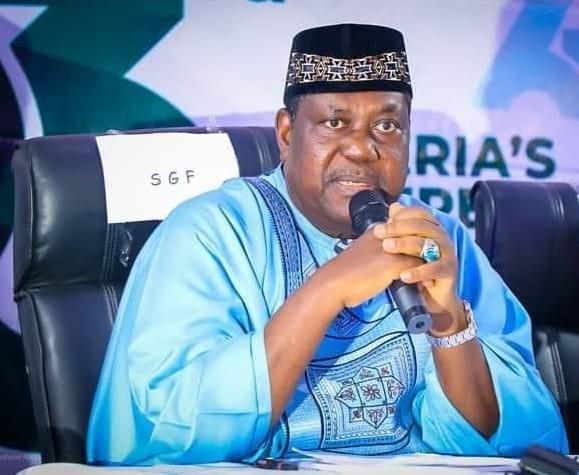
Minister of Housing and Urban Development, Rabe Darma, briefed State House correspondents after the council meeting, presided over by President Bola Tinubu. He explained that this approval follows a previous memo last year that secured 1,556 housing units for the armed forces in the Kaduna area of the Federal Capital Territory. The commitment to improving military welfare through housing remains a key priority.
Darma addressed concerns about the cost of federal housing, attributing the prices primarily to the escalating cost of construction materials. He emphasized that despite appearing high, government-provided housing remains heavily subsidized. For example, a house costing the federal government approximately N18 million to build might be sold to personnel for N12 million, or even N8-9 million in some locations, demonstrating significant government subsidy.
Certainly we know houses are expensive because construction materials are now very, very expensive. If you take the example of a two-bedroom house, even to put up the DPC, the foundation structure, you require at least 1,000 nine-inch blocks. If you are in Abuja, Lagos, Port Harcourt or Kano, each block costs about N1,000. So just at that level, you can understand why the cost of those houses is high.
The minister also clarified the transformation of military housing estates into barracks, noting it occurs organically once handed over to the armed forces. The council also adopted a revised biotechnology policy during the meeting.
If it costs the federal government N18m to build a house to completion, we provide a subsidy on that house. If you were building it individually, it might cost about N17m. If the federal government is building it, it may cost about N18m or N18.5m because of contract pricing and tax. But at the end of the day, the federal government will still sell those houses at N12m. In some places, we sell those houses at N8m or N9m, depending on the location. So government is providing a lot of subsidy to ensure Nigerians get their own homes.
DistantNews Editorial
Originally published by The Punch. Summarized and contextualized by our editorial team with added local perspective. Read our editorial standards.
More Stories

From Our Blog

How the Same Story Looks Different in Different Countries

What Gets Lost (and Found) When News Is Translated

The Critical Role of Diaspora Media in Global News

What Travellers Should Know About Countries with Restricted Press

A Digital Nomad's Guide to Following Local News
