


FIFA Hydration Breaks Spark Backlash, Blamed for Killing Momentum at the World Cup
Summarized and contextualized by DistantNews.
At a glance
News
Sources not specified
New plan
- FIFA's new hydration breaks at the World Cup are drawing criticism for disrupting game momentum and potentially influencing outcomes.
- Critics argue the breaks, intended for player welfare in hot conditions, are used by coaches for tactical shifts and by broadcasters for commercials.
- Examples include Curaçao losing momentum after scoring against Germany and Morocco conceding an equalizer after a break against Brazil.
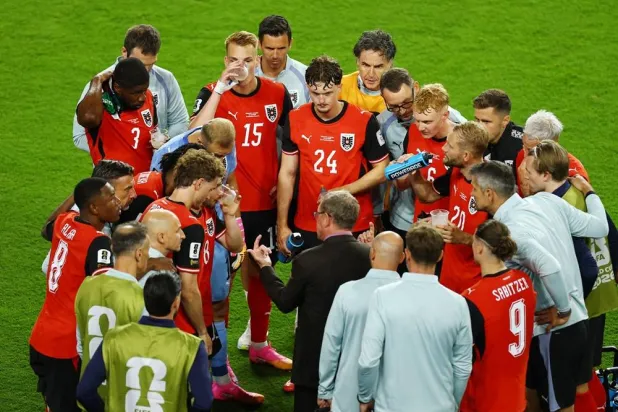
FIFA's introduction of mid-half hydration breaks at the World Cup is facing backlash, with critics arguing they kill game momentum and offer tactical advantages to coaches. The breaks, designed to help players cope with extreme heat in North America, have become a point of contention.
I actually felt sorry for them. They scored and then it was maybe 30 seconds after that it stopped. So it’s killed their momentum.
Curaçao's experience against Germany highlighted the issue. After scoring to make it 1-1, the smallest nation by population to ever qualify for the World Cup lost its initiative during a hydration break, conceding two goals before halftime and ultimately losing 7-1. "They scored and then it was maybe 30 seconds after that it stopped. So it’s killed their momentum," former England striker Alan Shearer commented on the disruption.
Former Ireland international Roy Keane echoed these sentiments, suggesting the breaks are a uniquely American "timeout" that disrupts the game's natural flow. "We love football because of the pace of the game... what it’s doing is stopping the flow of the game, the momentum," he said. Coaches, however, see strategic value. Netherlands coach Ronald Koeman acknowledged using the breaks for tactical instructions, stating, "You can use the break to tell the players what they need to improve or what is good or what they should do better."
We’re in America, right? So, it is like it is like it’s a timeout. We love football because of the pace of the game... what it’s doing is stopping the flow of the game, the momentum.
Data from the early stages of the tournament suggests a correlation between hydration breaks and subsequent goals. In eight of the first 16 games, goals were scored within 10 minutes of the restart. This pattern was observed in matches involving Morocco, Brazil, and others, indicating a potential shift in game dynamics. Fans have also expressed displeasure, with boos heard during a break in the Iraq vs. Norway match, underscoring a growing dissatisfaction with the interruption of play, regardless of weather conditions. FIFA has stipulated that these breaks will be implemented 22 minutes into each half, with players given three minutes to rehydrate.
You can use the break to tell the players what they need to improve or what is good or what they should do better. So you can use it in different ways to your advantage, and this is what we will be doing.
DistantNews Editorial
Originally published by Asharq Al-Awsat. Summarized and contextualized by our editorial team with added local perspective. Read our editorial standards.
More Stories


From Our Blog

What Gets Lost (and Found) When News Is Translated

The Critical Role of Diaspora Media in Global News

What Travellers Should Know About Countries with Restricted Press

A Digital Nomad's Guide to Following Local News

How the Same Story Looks Different in Different Countries
