

FIFA's Word Ban for World Cup 2026: What's Prohibited and Why
Translated from Spanish, summarized and contextualized by DistantNews.
At a glance
News
Official statement
New plan
- FIFA has established strict guidelines for the 2026 World Cup to protect intellectual property and prevent unauthorized use of event-related terms and logos.
- In Mexico, 398 trademarks associated with the event have been registered, granting FIFA exclusive commercial rights.
- The rules prohibit the use of official event names, slogans, logos, city branding, mascots, and the official trophy, as well as discriminatory or violent chants within stadiums.
As the 2026 FIFA World Cup approaches, the organization is implementing stringent rules to safeguard its intellectual property and commercial exclusivity. FIFA has outlined a comprehensive list of words, phrases, and visual assets that are either prohibited or strictly controlled to prevent unauthorized use.
In Mexico, the Mexican Institute of Industrial Property (IMPI) has authorized 398 trademarks linked to the event. This move ensures that only official commercial partners and authorized sponsors can utilize terms and branding associated with the World Cup 2026, thereby limiting misuse and maintaining the event's commercial integrity.
The prohibited terms include official event names in various languages, such as 'FIFA World Cup 26,' 'Copa Mundial de la FIFA,' and 'Coupe du monde de la FIFA.' The official slogans 'We are 26,' 'Somos 26,' and 'Nous sommes 26' are also restricted. Furthermore, the word 'Mundial' cannot be used in connection with any brand, business, or campaign without authorization.
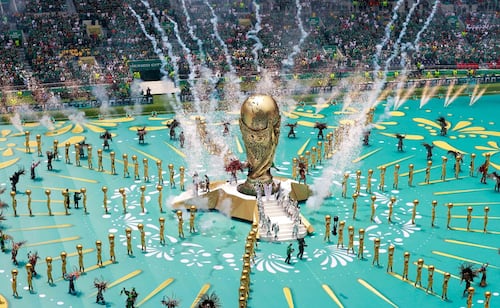
Beyond text, FIFA also prohibits the use of official event imagery. This includes the main World Cup 2026 logo, logos of host cities, official city slogans when paired with logos, images of the official trophy, official mascot visuals, the event's official poster, the FIFA logo, the FIFA Plus logo, and the official 'FWC 26' typography. Content creators are specifically barred from recording or publishing videos, highlights, or match fragments, as all official audiovisual material is reserved for licensed broadcasters and sponsors.
Inside stadiums, FIFA is cracking down on offensive language. Discriminatory chants, including homophobic slurs, racist or xenophobic expressions, and any phrases inciting violence or hatred, are banned. This comprehensive policy aims to control the narrative and commercial landscape surrounding the 2026 World Cup.
DistantNews Editorial
Originally published by El Universal in Spanish. Translated, summarized, and contextualized by our editorial team with added local perspective. Read our editorial standards.
More Stories
From Our Blog

What Press Freedom Means for the News You Read

What Gets Lost (and Found) When News Is Translated

The Critical Role of Diaspora Media in Global News

What Travellers Should Know About Countries with Restricted Press

A Digital Nomad's Guide to Following Local News
