


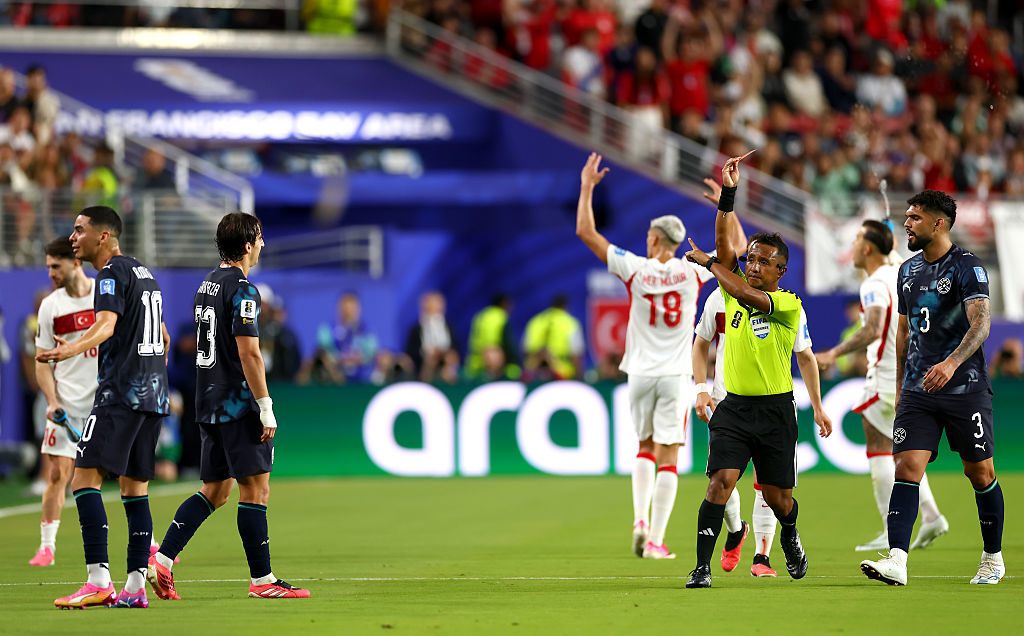
First World Cup Red Card Issued for Covering Mouth During Argument
Translated from Korean, summarized and contextualized by DistantNews.
At a glance
News
Named sources
Context piece
- Miguel Almirón of Paraguay received the first red card of the World Cup for covering his mouth while speaking to an opponent.
- The new rule, dubbed the 'Vinícius Rule,' aims to prevent racist remarks and insults.
- Other new rules include a 10-second limit for substitutes entering the field and mandatory sideline time for treated players.
Paraguay's Miguel Almirón became the first player to be sent off in the current World Cup after being shown a red card for covering his mouth while arguing with a Turkish player. The incident occurred during the first half of the Group D match, which Paraguay was leading 1-0 at the time.
The referee issued the red card after a video review confirmed Almirón had covered his mouth while speaking to the opponent following a rough tackle. This action directly violated a newly implemented rule in the North American World Cup, often referred to as the 'Vinícius Rule.'
This rule specifically targets players who cover their mouths while engaging with opponents, aiming to prevent racist slurs and other forms of verbal abuse. The introduction of such regulations underscores a growing effort by football's governing bodies to address unsportsmanlike conduct and maintain the integrity of the game.
In addition to the 'Vinícius Rule,' the World Cup has introduced other regulations designed to improve game flow and discipline. Substitutes must now enter the field within 10 seconds of being called, or they will face a penalty of not being allowed to play for at least one minute. Players receiving medical treatment during a match are also required to remain off the field for a minimum of 60 seconds.
DistantNews Editorial
Originally published by Dong-A Ilbo in Korean. Translated, summarized, and contextualized by our editorial team with added local perspective. Read our editorial standards.
More Stories



From Our Blog

What Gets Lost (and Found) When News Is Translated

The Critical Role of Diaspora Media in Global News

What Travellers Should Know About Countries with Restricted Press

A Digital Nomad's Guide to Following Local News

How the Same Story Looks Different in Different Countries
