


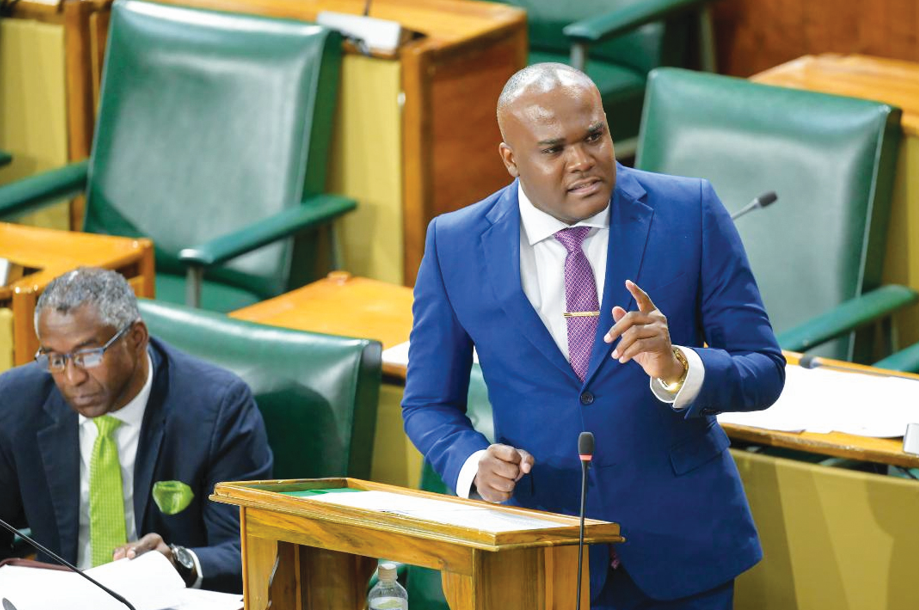
Fitz-Henley rejects Golding’s touting of ‘painful’ 1970s democratic socialist policies
Summarized and contextualized by DistantNews.
At a glance
News
Named sources
Context piece
- Senator Abka Fitz-Henley criticized PNP President Mark Golding's embrace of democratic socialism.
- Fitz-Henley warned against returning to the 1970s economic hardships, citing decline, capital flight, and shortages.
- He argued that the JLP administration has maintained stability and that Jamaica should focus on growth, not socialism.
Kingston, Jamaica, Government Senator Abka Fitz-Henley has strongly criticized People’s National Party (PNP) President Mark Golding’s support for democratic socialism. Fitz-Henley, who chairs the Jamaica Labour Party’s (JLP) Communication Taskforce, warned that Jamaica cannot afford a return to the economic difficulties of the 1970s.
Those of us who recall our history should remind the current generation that during the 1970s, the PNP’s embrace of this democratic socialist experiment which Mark Golding alluded to led to severe economic decline, massive capital flight, severe food shortages, a major plunge in the Jamaican dollar and a massive increase in the cost of living by hundreds of per cent.
Fitz-Henley was responding to Golding’s remarks at a PNP meeting where the party president stated that the PNP embraces democratic socialism, a philosophy previously championed by former Prime Minister Michael Manley. Golding suggested this ideology is seeing renewed global interest. However, Fitz-Henley urged Jamaicans to remember the economic consequences of that era.
The policies created severe energy blackouts and caused supermarket shelves to be empty, leading to public rationing and rising tensions on the streets of Jamaica over food.
"Those of us who recall our history should remind the current generation that during the 1970s, the PNP’s embrace of this democratic socialist experiment which Mark Golding alluded to led to severe economic decline, massive capital flight, severe food shortages, a major plunge in the Jamaican dollar and a massive increase in the cost of living by hundreds of per cent," Fitz-Henley stated. He further contended that the policies of the 1970s led to rising unemployment, factory closures due to a lack of foreign exchange, severe energy blackouts, and empty supermarket shelves, resulting in rationing and public tension.
Golding and the PNP should be told in no uncertain manner that Jamaica will not go back to a political philosophy which demolished the lives of thousands of Jamaicans and spawned the crisis, elements of which I just alluded to.
Fitz-Henley asserted that Golding and the PNP should be unequivocally told that Jamaica will not revert to a political philosophy that devastated many lives and created lasting economic damage. He credited the JLP administration with maintaining economic stability through challenges like the COVID-19 pandemic and international conflicts. Fitz-Henley concluded that Jamaica’s focus must remain on economic growth and improving living standards, rather than revisiting democratic socialism.
That Mark Golding, a political leader in 2026, would seek to publicly espouse such a philosophy that caused so many Jamaicans pain and created lasting damage to their lives and our economy tells us all we need to know. It tells us that Golding and the PNP cannot be trusted to manage Jamaica’s economy.
DistantNews Editorial
Originally published by Jamaica Observer. Summarized and contextualized by our editorial team with added local perspective. Read our editorial standards.
More Stories


From Our Blog

What Gets Lost (and Found) When News Is Translated

The Critical Role of Diaspora Media in Global News

What Travellers Should Know About Countries with Restricted Press

A Digital Nomad's Guide to Following Local News

How the Same Story Looks Different in Different Countries
