


Five dead from 'unprecedented' torrential rains in Japan
Translated from Spanish, summarized and contextualized by DistantNews.
At a glance
News
Sources not specified
Ongoing story
- At least five people died in eastern Japan due to "unprecedented" torrential rains, authorities reported.
- The heavy rainfall caused landslides, power outages, and stranded thousands of passengers at Narita International Airport.
- Emergency services worked to repair damaged roads, while many residents lacked electricity.
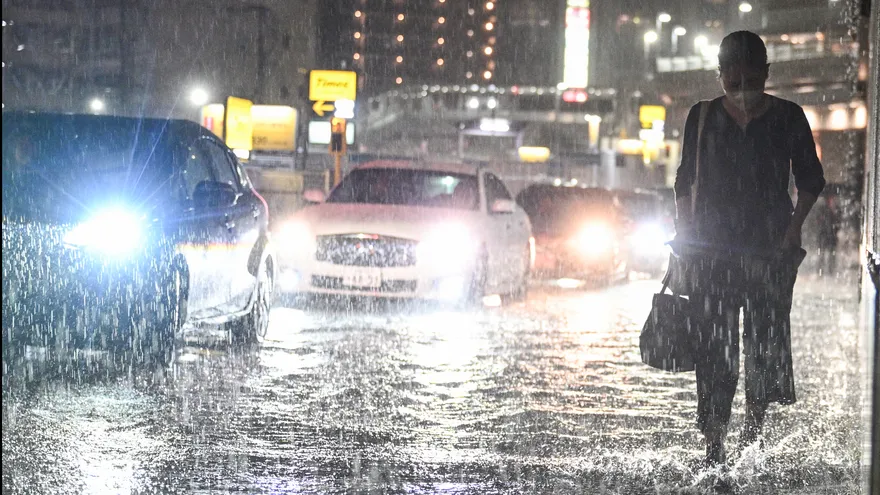
Torrential rains, described as "unprecedented," have caused at least five deaths east of Tokyo, Japanese authorities reported Friday. The downpours, which began Thursday night, triggered alerts for landslides and widespread power outages, leaving thousands of passengers stranded at Narita International Airport.
The meteorological agency issued its highest level of heavy rain alarm for the Chiba prefecture for the first time. In rural areas of Chiba, dozens of vehicles were abandoned, some submerged in mud, as emergency services worked throughout the day to repair damaged or collapsed roads. The prefecture reported that among the deceased were a man in his 60s or 70s found floating on a flooded road and a 66-year-old woman trapped in her submerged vehicle.
As of Friday afternoon, approximately 26,000 households in Chiba prefecture were without electricity, according to the disaster management office. Narita Airport, a major gateway to Tokyo, saw around 6,000 people stranded overnight in its terminals. Passengers received water, food, and sleeping bags, but many spent the night on the floor. By morning, long queues formed at check-in counters as travelers attempted to depart.
One traveler from the UK, Philip, described a nine-hour journey involving a taxi ride to reach the airport early Friday, clutching a sleeping bag and hoping to get some rest. Another traveler told NHK, "I never would have imagined spending the night at the airport, but that's how it is and we are learning to adapt." Hundreds of people were also trapped at the Chiba train station Thursday night due to service suspensions, and others spent the night in evacuation centers in Chiba, NHK also reported.
Scientists increasingly link extreme weather events like these to human-caused climate change, noting that such phenomena are becoming more frequent, prolonged, and intense.
I never would have imagined spending the night at the airport, but that's how it is and we are learning to adapt.
DistantNews Editorial
Originally published by TVN Panamá in Spanish. Translated, summarized, and contextualized by our editorial team with added local perspective. Read our editorial standards.
More Stories

From Our Blog

What Gets Lost (and Found) When News Is Translated

The Critical Role of Diaspora Media in Global News

What Travellers Should Know About Countries with Restricted Press

A Digital Nomad's Guide to Following Local News

How the Same Story Looks Different in Different Countries
