


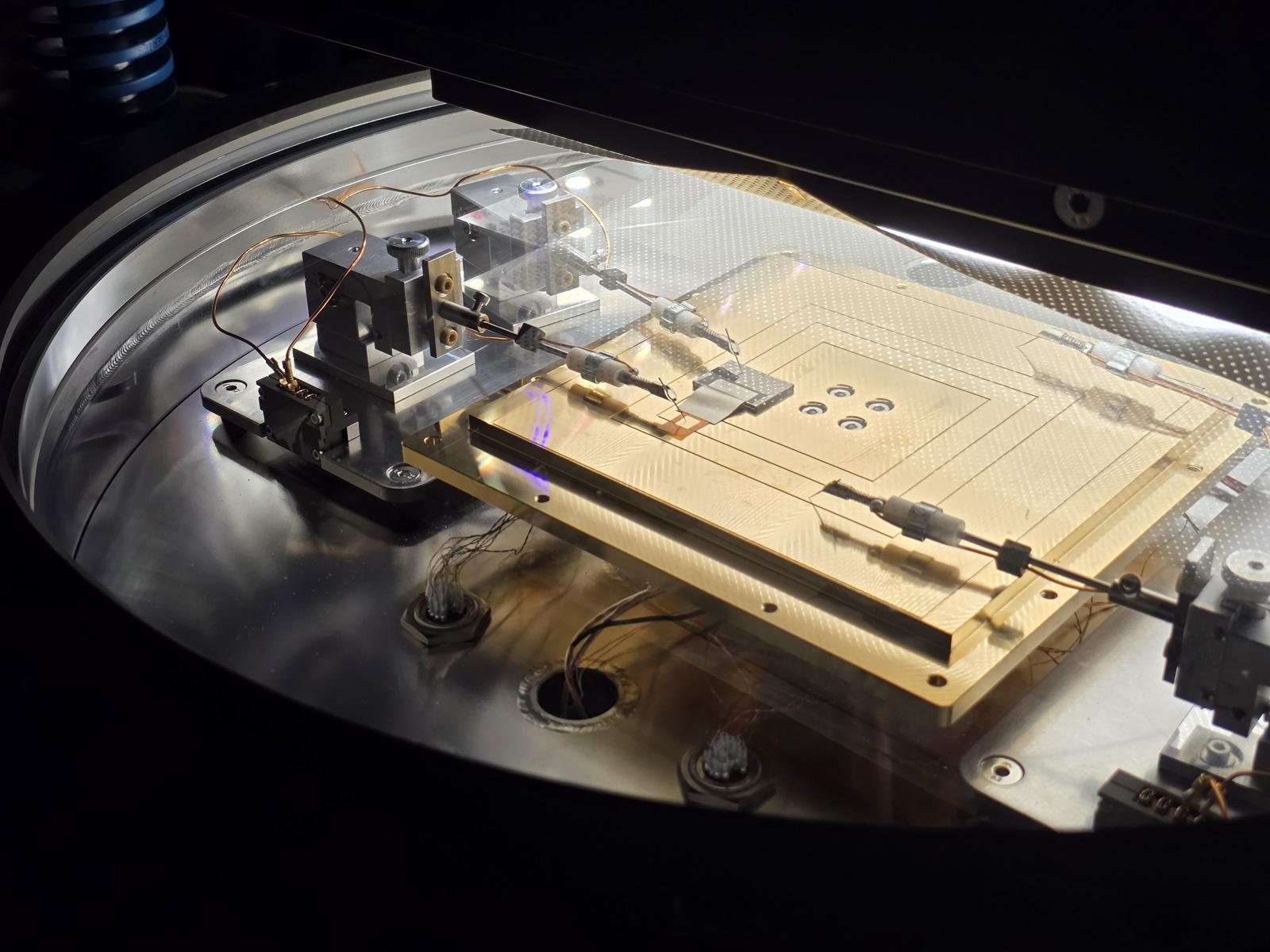
Flexelspace Spearheads National Project for Domestic Space Solar Cell Technology
Translated from Korean, summarized and contextualized by DistantNews.
At a glance
News
Sources not specified
Ongoing story
- Flexelspace will lead a 10.7 billion won national project to develop and verify domestic space solar cell technology.
- The project aims to create low-cost, high-efficiency, and reliable tandem solar modules suitable for the new space era.
- This initiative is crucial for advancing South Korea's capabilities in the growing global space power market.
As the new space industry expands with satellites, space stations, and space-based data centers, the demand for stable power supply in space environments is growing. However, existing space solar cells face limitations due to high manufacturing costs and limited productivity. Gallium arsenide-based products are expensive, while silicon-based ones require improvements in weight and long-term reliability.
The selection for this project signifies that the space tandem solar cell technology our company has accumulated is linked to the nation's future space and energy strategy.
Addressing these challenges, Flexelspace, a South Korean company specializing in space solar cells, has been selected as the lead institution for a significant national research and development project. The initiative, funded with 10.7 billion won by the Korea Institute of Energy Technology Evaluation and Planning, focuses on developing and verifying "Low-Cost, High-Efficiency Space Tandem Module" technology.
Over the next three years, Flexelspace, along with a consortium including the Korea Institute of Energy Research, the Electronics and Telecommunications Research Institute, and Gyeongsang National University, will work on creating tandem solar cell modules that offer cost-effectiveness, high efficiency, and reliability. The project specifically targets the development of CIGS (Copper Indium Gallium Selenide) and perovskite-based tandem solar cells, aiming to overcome the weaknesses of current technologies.
Space solar cells must possess not only generation efficiency but also reliability in extreme environments and economic feasibility.
This endeavor is significant as it is led by a private space company and integrates energy and space technologies. Flexelspace plans to expand its technical scope from cell technology to modules, arrays, and customized power systems, laying the groundwork for the commercialization of domestic space solar cell technology. The company is already collaborating with domestic and international satellite manufacturers and space infrastructure companies, strategizing to secure competitiveness in the global space power market through orbital demonstrations and advanced mass production techniques.
Although it is clearly a technically challenging and ambitious task, if successful, it will be a sure card to replace significant overseas imports and preempt the global next-generation space power market.
DistantNews Editorial
Originally published by Dong-A Ilbo in Korean. Translated, summarized, and contextualized by our editorial team with added local perspective. Read our editorial standards.
More Stories


From Our Blog

What Gets Lost (and Found) When News Is Translated

The Critical Role of Diaspora Media in Global News

What Travellers Should Know About Countries with Restricted Press

A Digital Nomad's Guide to Following Local News

How the Same Story Looks Different in Different Countries
