


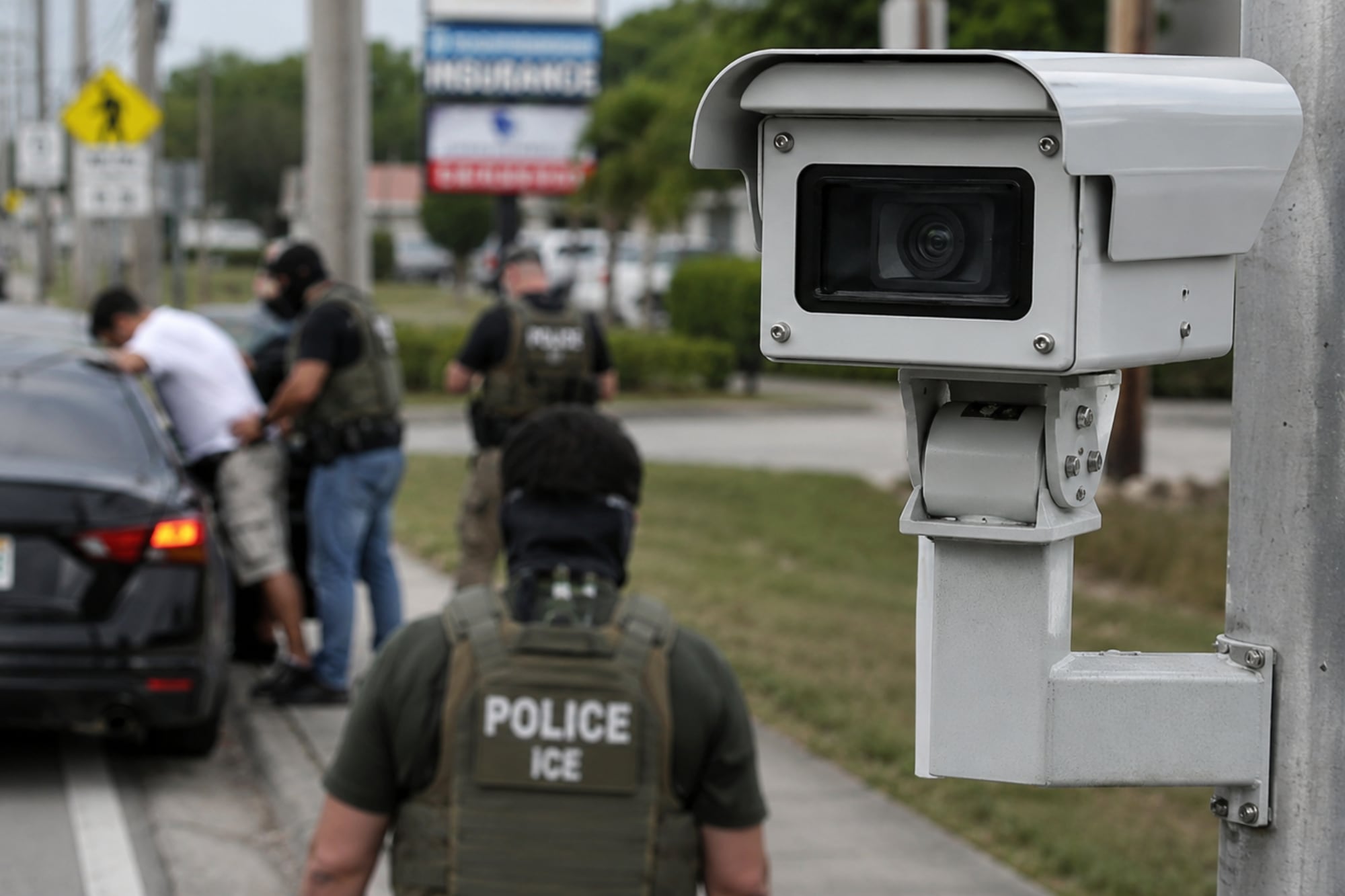
Florida's camera network raises concerns over immigration enforcement
Translated from Spanish, summarized and contextualized by DistantNews.
At a glance
News
Sources not specified
Context piece
- A network of automatic license plate readers used by Florida law enforcement has been employed in immigration-related searches.
- The Flock Safety system allows tracking of license plates and vehicle descriptions, though the company states ICE does not have direct default access.
- Federal agents reportedly requested searches through state and local police, creating an indirect access route to the system.
A network of automatic license plate readers (ALPRs) utilized by law enforcement agencies in Florida has been instrumental in immigration-related searches, according to a recent report. The system, provided by Flock Safety, enables the tracking of license plates and vehicle descriptions. While Flock Safety asserts that U.S. Immigration and Customs Enforcement (ICE) does not have direct default access to its cameras, systems, or data, the report indicates a different reality.
Suncoast Searchlight's investigation, published on June 19, confirmed that these license plate identification cameras were indeed used to support deportation efforts. The publication revealed that the federal government conducted over 4,000 immigration-related searches using Flock readers. Flock Safety has acknowledged the controversy, noting that some cities have removed cameras due to public concerns over data sharing and federal law enforcement access. The company maintains that its readers are not mass surveillance tools, capturing only specific license plate images on public roads without continuous tracking and adhering to a data retention schedule.
The Immigration Policy Tracking Project documented that ICE did not have an official contract with Flock. However, federal agents allegedly requested searches on their behalf from state and local police. This indirect method provided access to the technology without a formal agreement, raising questions about oversight and data privacy.
Further investigation by Suncoast Searchlight in 2025 indicated that the Florida Highway Patrol (FHP) conducted over 250 immigration-linked searches between March 13 and May 5, 2025, using Flock's ALPR system. These queries surged in the week leading up to and during "Operation Tidal Wave," a coordinated federal and state operation that resulted in more than 1,100 arrests in Florida.
Concerns about the use of Flock cameras in immigration enforcement are not isolated to Florida. The Immigration Policy Tracking Project has previously gathered reports of similar uses or access related to immigration control in states like Virginia and Washington. This pattern highlights a broader debate surrounding the deployment of surveillance technology and its implications for immigrant communities.
DistantNews Editorial
Originally published by La Nación in Spanish. Translated, summarized, and contextualized by our editorial team with added local perspective. Read our editorial standards.
More Stories



From Our Blog

What Gets Lost (and Found) When News Is Translated

The Critical Role of Diaspora Media in Global News

What Travellers Should Know About Countries with Restricted Press

A Digital Nomad's Guide to Following Local News

How the Same Story Looks Different in Different Countries
