


Following Elephant Tracks: The Day Elephant Saddles Disappeared in Buôn Đôn
Translated from Vietnamese, summarized and contextualized by DistantNews.
At a glance
In-depth
Sources not specified
Context piece
- Vietnam's Yok Don National Park is shifting to a "no-touch" elephant tourism model, moving away from traditional elephant riding.
- This new model prioritizes the elephants' natural behaviors and well-being, allowing them to roam freely in a more natural environment.
- Elephant handlers, like Y Khang Niê KĐăm, report positive changes in elephant behavior, noting reduced stress and a return to natural social interactions.
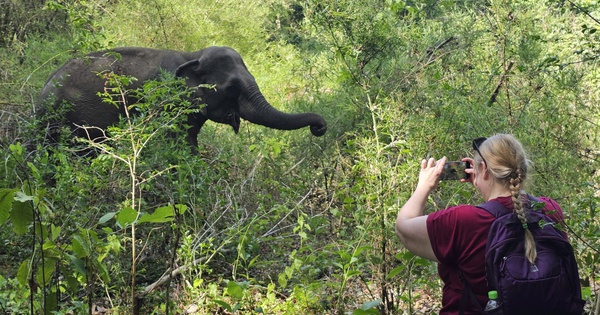
The traditional image of elephant tourism in Buôn Đôn, Vietnam, once defined by heavy wooden saddles carrying tourists, is fading. Yok Don National Park is pioneering a new, elephant-friendly tourism model that replaces riding with a "no-touch" approach, allowing visitors to follow the elephants' tracks in an environment closer to their natural habitat.
Behaviorally, when returned to nature, it's always better than being chained in one place. If an elephant stands in one spot for too long, it becomes stressed, repeating the same movement, like constant swaying. But since being released into nature, the elephants are no longer stressed.
This shift aims to address the long-term negative impacts of continuous work and prolonged chaining on the elephants' health and psychological well-being. Y Khang Niê KĐăm, a young mahout with six years of experience supporting the Asian Wildlife Organization, has witnessed the transformation firsthand. "Behaviorally, when returned to nature, it's always better than being chained in one place," he shared. "If an elephant stands in one spot for too long, it becomes stressed, repeating the same movement, like constant swaying. But since being released into nature, the elephants are no longer stressed."
Mahouts like Y Khang are now dedicating most of their time to walking through the forest, monitoring the elephants' health and behavior, and ensuring their safety. This work requires immense patience and a deep love for the animals. "If you don't love elephants, it's very difficult to stay in this profession," Y Khang stated. He noted that elephants, being intelligent creatures, can sense human intentions. Sometimes, when tourists are present, elephants might act "stubborn" or wander off, exhibiting a newfound independence that mahouts accept as a return to their natural instincts.
If you don't love elephants, it's very difficult to stay in this profession.
Visitors participating in this new model embark on quiet walks through the forest, leaving behind the noise of engines and loud entertainment. The experience emphasizes respectful observation, with simple instructions to walk softly, speak quietly, and maintain a safe distance. This approach allows tourists to connect with the elephants in a more meaningful way, observing their natural social interactions, such as using their trunks to touch each other's ears, mouths, or bodies to assess health and communicate – behaviors that signal the elephants are truly living as wild individuals.
Elephants are very intelligent animals; they understand people's hearts. When some guests are around, elephants might wander off and become more dependent, not listening to us mahouts as much. But that's okay; now that we've released them into nature, they must return to their natural instincts.
DistantNews Editorial
Originally published by Thanh Niên in Vietnamese. Translated, summarized, and contextualized by our editorial team with added local perspective. Read our editorial standards.
More Stories



From Our Blog

What Gets Lost (and Found) When News Is Translated

The Critical Role of Diaspora Media in Global News

What Travellers Should Know About Countries with Restricted Press

A Digital Nomad's Guide to Following Local News

How the Same Story Looks Different in Different Countries
