


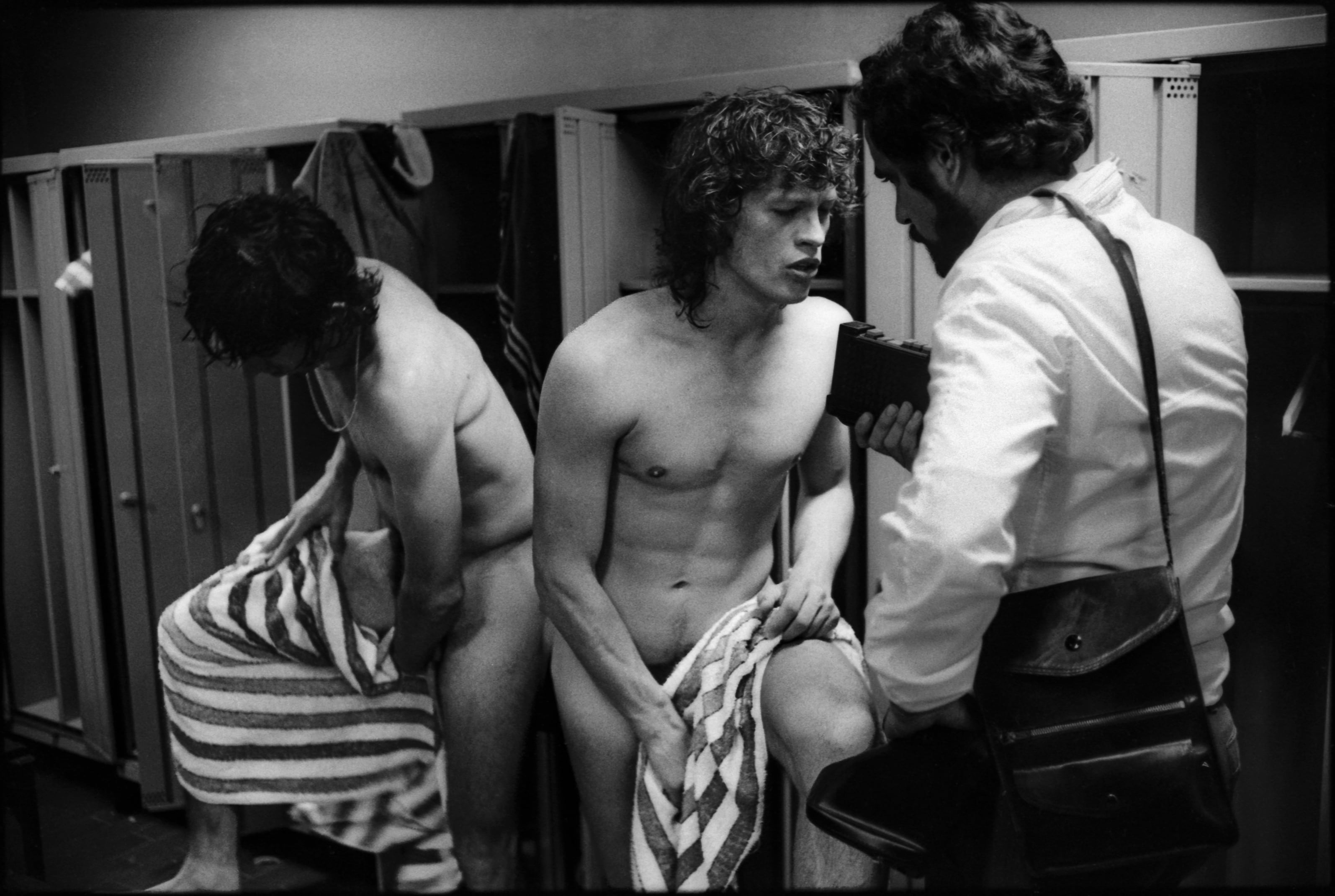
Football off the field: The private lives of players revealed
Translated from Spanish, summarized and contextualized by DistantNews.
At a glance
In-depth
Named sources
Context piece
- An exhibition titled "Tercer Tiempo" (Third Half) at the Libertad Palace in Buenos Aires showcases intimate and often nude photographs of football players. The exhibition explores the private lives of athletes beyond the game.
- The display features works by photographers Pepe Fernández and Silvio Zuccheri, capturing players in locker rooms and other private settings from the 1970s and 1980s. Some images are presented with interactive elements, requiring viewers to look through peepholes.
- The exhibition highlights a shift in press access to players, noting that such intimate access to locker rooms was common in the past but is now restricted. It aims to offer a glimpse into the players' daily lives, including training and living conditions.
An exhibition titled "Tercer Tiempo" (Third Half) is challenging conventional portrayals of football by delving into the private lives of players through intimate photography. Hosted at the Libertad Palace, the exhibition features a collection of images, some explicitly nude, that offer a raw and unfiltered look at athletes beyond the roar of the stadium.
Curator Francisco Medail guides visitors through the display, which includes a notable installation of gray lockers. Some doors are ajar, bearing an "+18" warning, inviting viewers to peer through tiny openings to witness scenes of footballers in vulnerable states, sometimes nude and speaking to the press. Photographer Pepe Fernández's work from Paris in the 1970s and early 1980s captures players with "less worked" bodies, "all hairy and without tattoos," contrasting with today's athletes.
Silvio Zuccheri's photographs, primarily of players from River, Boca, and Independiente in the late 1970s and early 1980s, are also featured. Zuccheri's work for the magazine El Gráfico provided an unusual intimacy with players, allowing him to capture candid moments in locker rooms after matches. The exhibition text notes that journalists' access to these spaces was once natural, enabling players to recount their games while still agitated.
The exhibition also touches upon the evolution of media access, referencing the 1993 incident where Carlos “Colorado” Mac Allister inadvertently appeared nude during a live television broadcast from a locker room. Medail explains that "Third Half" moves beyond the game itself, focusing on the "sociability that sport produces" and offering a rare glimpse into the daily routines, training sessions, and living conditions of footballers.
DistantNews Editorial
Originally published by La Nación in Spanish. Translated, summarized, and contextualized by our editorial team with added local perspective. Read our editorial standards.
More Stories



From Our Blog

What Gets Lost (and Found) When News Is Translated

The Critical Role of Diaspora Media in Global News

What Travellers Should Know About Countries with Restricted Press

A Digital Nomad's Guide to Following Local News

How the Same Story Looks Different in Different Countries
