

Footballer Antonio Rattín has died. The man who inspired the creation of red cards
Translated from Czech, summarized and contextualized by DistantNews.
At a glance
In-depth
Sources not specified
Outcome reported
- The article discusses the death of Argentine footballer Antonio Rattín at age 89.
- Rattín was a central figure in a highly controversial 1966 World Cup quarter-final match against England.
- His expulsion from the game, before the introduction of red cards, led to a prolonged protest and remains a significant event in football history.
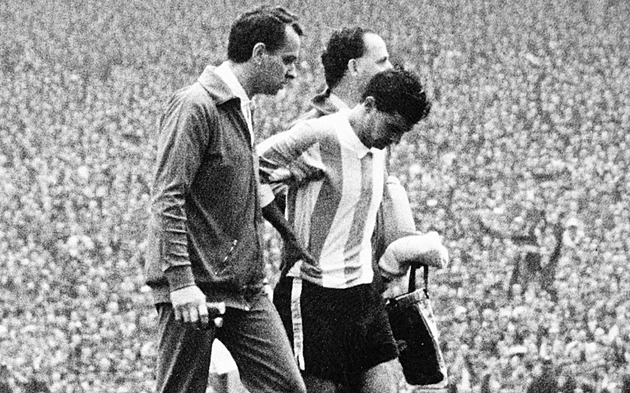
Antonio Rattín, the Argentine football captain whose dramatic actions in the 1966 World Cup quarter-final against England became legendary, has died at the age of 89. The match, played in England, remains a deeply controversial and frequently discussed event in football history, particularly in Argentina.
Rattín was sent off in the second half of the game. At the time, the concept of red and yellow cards had not yet been introduced, and the referee, Rudolf Kreitlein, verbally ordered Rattín off the pitch. Rattín, believing the German referee was biased in favor of England, insisted on a translator to understand the decision. When his request was denied, he refused to leave the field, staging a prolonged protest.
I had seen that this German gentleman whistled everything in favor of England. I therefore showed him my captain's armband – and demanded a translator for minutes to get explanations about his behavior.
His protest included sitting on the red carpet laid out for Queen Elizabeth II and crumpling a corner flag bearing the Union Jack. The situation escalated, with spectators throwing beer cans and Rattín eventually being escorted off the field. England's manager, Alf Ramsey, famously described the Argentine players as "animals," a sentiment echoed by the British tabloid press. Conversely, in Argentina, Rattín was celebrated for his defiance.
The 1966 match is often remembered in conjunction with the 1986 World Cup quarter-final between the same two nations. The latter game featured Diego Maradona's infamous "Hand of God" goal and a spectacular solo effort, which many in Argentina viewed as a form of footballing retribution for the Falklands War, known as the Malvinas in Spanish-speaking regions. Rattín's protest two decades earlier had already contributed to the complex and often tense relationship between Argentina and England.
Animals
DistantNews Editorial
Originally published by iDNES in Czech. Translated, summarized, and contextualized by our editorial team with added local perspective. Read our editorial standards.
More Stories

From Our Blog

What Gets Lost (and Found) When News Is Translated

The Critical Role of Diaspora Media in Global News

What Travellers Should Know About Countries with Restricted Press

A Digital Nomad's Guide to Following Local News

How the Same Story Looks Different in Different Countries
