

Foreign visitors to Seoul hit record 1.61 million in July, spending 1 trillion won
Translated from Korean and summarized by DistantNews. Read the original for the full story.
At a glance
News
Sources not specified
Context piece
- Seoul welcomed a record 1.61 million foreign tourists in July, a 20.8% increase year-on-year.
- Foreign visitors spent over 1 trillion won in Seoul via card for the fourth consecutive month, showing increased consumption.
- Spending patterns are diversifying beyond shopping to include medical/wellness, dining, and beauty services.
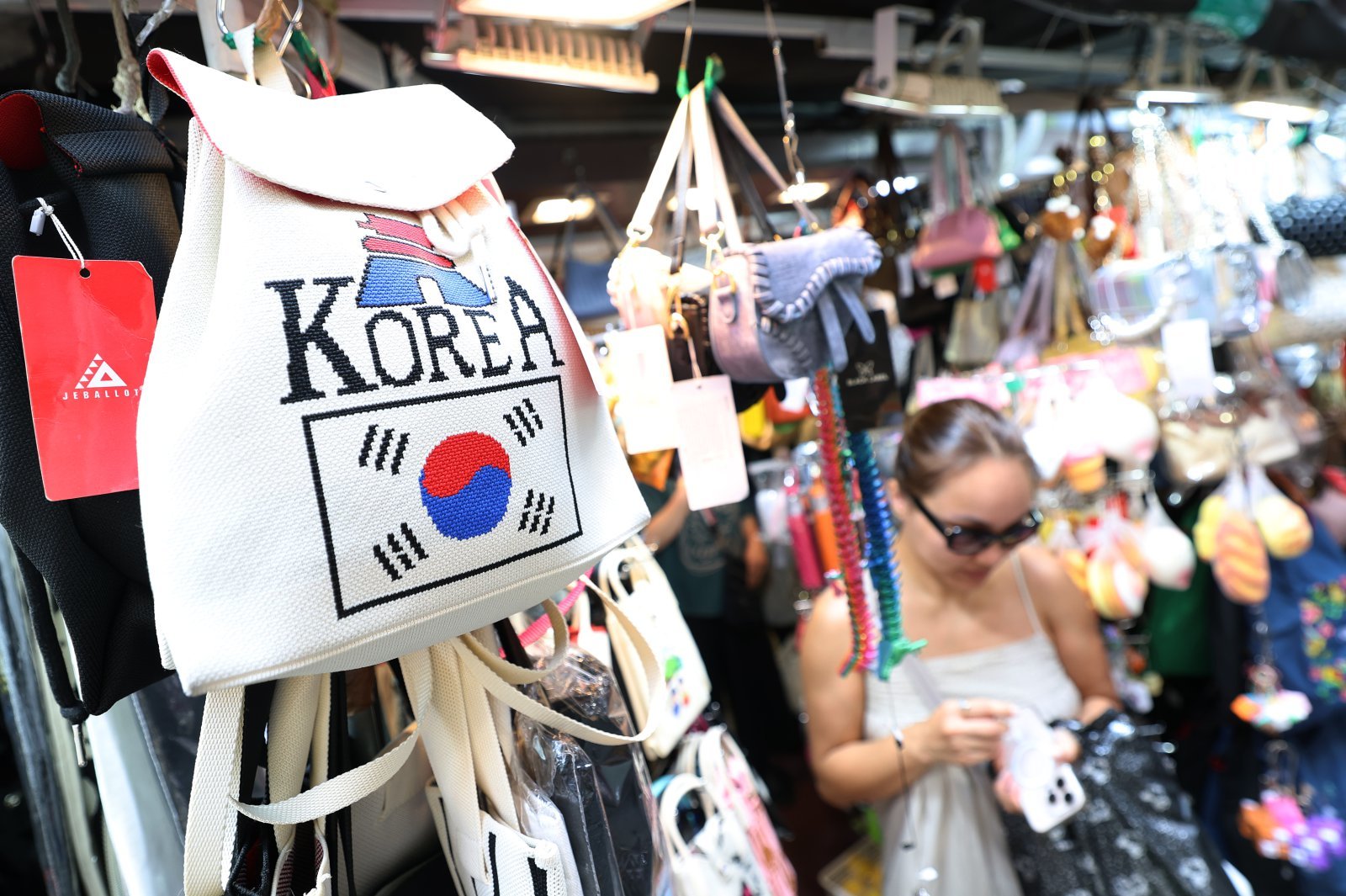
Seoul experienced an unprecedented surge in foreign tourism in July, with 1.61 million international visitors arriving in the city. This figure represents a significant 20.8% increase compared to the same month last year and a 5.2% rise from the previous month, setting a new monthly record.
Cumulatively, from January to July, Seoul hosted 9.83 million foreign tourists, a 21.3% increase from the 8.11 million recorded during the same period in 2023. Chinese tourists constituted the largest group, accounting for 37.1% of the total with 600,000 visitors, followed by Japanese tourists at 250,000 (15.8%), Taiwanese at 200,000 (12.4%), and Americans at 120,000 (7.2%).
Beyond the sheer numbers, the spending habits of these tourists have shown a remarkable increase. In July alone, foreign visitors spent 1.0707 trillion won using cards in Seoul, a substantial 69.7% jump from the previous year. This marks the fourth consecutive month that spending has surpassed the 1 trillion won threshold, following April (1.1532 trillion won), May (1.2053 trillion won), and June (1.1766 trillion won).
The total card spending by foreign tourists in Seoul from January to July reached 6.688 trillion won, a 58.7% increase year-on-year. This growth rate significantly outpaces the 21.3% increase in tourist numbers, indicating a higher per-visitor expenditure. Seoul's share of foreign tourists' offline card spending nationwide now exceeds 70%, standing at 71.1% in July and 71.5% for the year-to-date period.
Spending categories are also broadening. While shopping remains the largest segment at 46.4% of total card spending from January to July, medical and wellness tourism has surged to 24.4%, followed by food and beverages at 13.1%, and accommodation at 10.7%. Notable year-on-year growth rates were observed in spending at large shopping malls (75.9%), medical tourism (63.9%), dining (56.4%), and beauty services (39.3%). Gangnam district accounted for the largest portion of spending (29.4%), closely followed by Jung district (28.3%).
Seoul city aims to leverage this tourism boom for qualitative growth by extending visitor stays and increasing spending. Plans include expanding high-value tourism content in medical, wellness, and culinary sectors, alongside enhancing night-time tourism offerings. The city's "3·3·7·7 Seoul Tourism Future Vision" targets 30 million foreign tourists, 3 million won in per capita spending, a 7-day average stay, and a 70% repeat visit rate.
Now, beyond just the number of tourists, we will expand attractive tourism content and night-time tourism to create a Seoul that tourists stay longer, experience more, and revisit.
About this summary
Originally published by Dong-A Ilbo in Korean. Translated, summarized, and contextualized automatically by DistantNews, with a note on how the source frames the story. Not individually reviewed before publishing. How this works.
More Stories



From Our Blog

What Gets Lost (and Found) When News Is Translated

The Critical Role of Diaspora Media in Global News

What Travellers Should Know About Countries with Restricted Press

A Digital Nomad's Guide to Following Local News

How the Same Story Looks Different in Different Countries
