


Forget politics, here are 8 fascinating facts about Greenland you need to know
Translated from Croatian, summarized and contextualized by DistantNews.
At a glance
In-depth
Sources not specified
Context piece
- Greenland, the world's largest non-continental island, is the subject of global attention due to political disputes.
- Approximately 80% of Greenland is covered by a massive ice sheet, making its interior largely uninhabited.
- Despite its size, Greenland has a small population, with most residents living along the coast.
Greenland has recently captured global attention, not for its unique geography, but due to political tensions involving the United States and Denmark. Amidst these high-stakes political discussions, the remarkable nature of Greenland itself often gets overlooked. The island is a place of natural wonders, as evidenced by several fascinating facts.
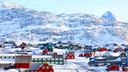
Greenland holds the title of the world's largest island that is not a continent, covering an immense area of approximately 2.16 million square kilometers. To put this size into perspective, numerous European countries could fit within its borders. However, the vast majority of this landmass, nearly 80%, is blanketed by the Greenland Ice Sheet. This colossal ice cover, averaging 1.67 kilometers in thickness and exceeding 3 kilometers in some areas, renders the island's interior inhospitable and largely unpopulated, creating a landscape akin to another planet.
Life in Greenland is concentrated along its coastlines, where cities and settlements hug the shores, fjords, and natural harbors. This unique settlement pattern reflects the extreme conditions inland. With a population ranging between 55,000 and 57,000, Greenland is one of the most sparsely populated regions globally. Its capital, Nuuk, is home to only about 18,000 residents.
Interestingly, Greenland's native name, Kalaallit Nunaat, translates to 'Land of the People,' a poignant reminder of the vibrant communities and culture that thrive there despite the ice. Politically, Greenland is an autonomous territory within the Kingdom of Denmark. While its citizens hold Danish and, by extension, EU citizenship, Greenland itself is not part of the European Union, creating a distinct political identity. The island also shares a brief 1.2-kilometer land border with Canada on Hans Island, one of the shortest international land borders worldwide. Furthermore, over 80% of Greenland lies north of the Arctic Circle, experiencing phenomena like the midnight sun and polar nights.
DistantNews Editorial
Originally published by Večernji List in Croatian. Translated, summarized, and contextualized by our editorial team with added local perspective. Read our editorial standards.
More Stories



From Our Blog

What Gets Lost (and Found) When News Is Translated

The Critical Role of Diaspora Media in Global News

What Travellers Should Know About Countries with Restricted Press

A Digital Nomad's Guide to Following Local News

How the Same Story Looks Different in Different Countries
