


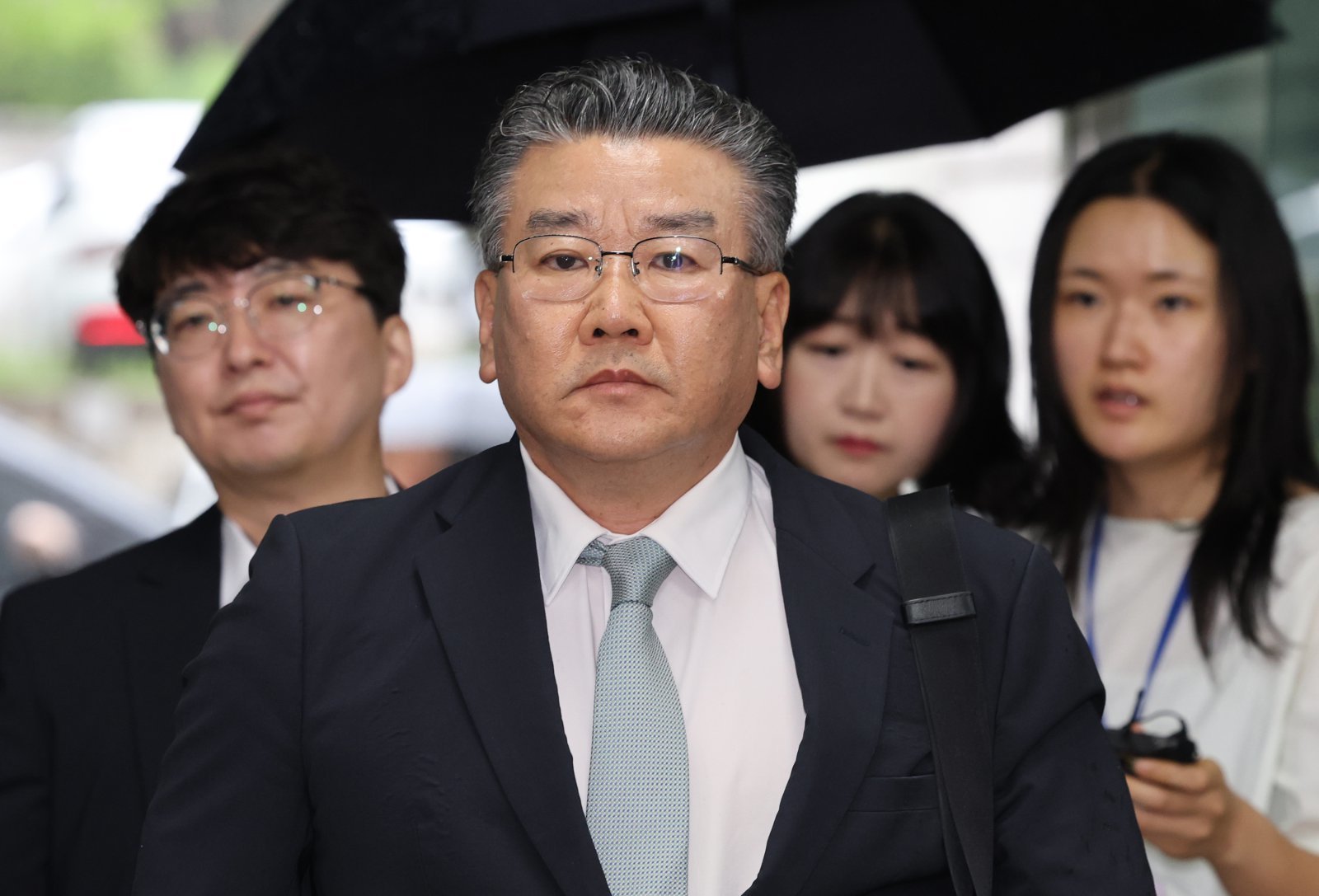
Former Audit Official Arrested Over Alleged Presidential Residence Renovation Audit Manipulation
Translated from Korean, summarized and contextualized by DistantNews.
At a glance
News
Named sources
Under investigation
- Yoo Byung-ho, former secretary general of the Board of Audit and Inspection, was arrested for allegedly downplaying an audit of the presidential residence renovation.
- He is accused of manipulating documents and improperly intervening in the audit process.
- The arrest follows allegations that unqualified companies were involved in the renovation and that audit results were distorted.
Yoo Byung-ho, a former secretary general of South Korea's Board of Audit and Inspection (BAI), has been arrested on charges of improperly influencing an audit related to the renovation of the presidential residence. The arrest occurred on July 20, 2026, after a court hearing at the Seoul Central District Court.
The allegations center on Yoo's alleged actions during his tenure as secretary general under the Yoon Suk-yeol administration. He is accused of reducing or concealing audit findings concerning the presidential office's relocation and the renovation of the former diplomatic residence. The relocation involved moving President Yoon's office from Cheong Wa Dae to the Ministry of National Defense building and the residence to the former diplomatic minister's compound.
Investigations by the special prosecution team suggest that Yoo's office was aware that an unqualified company, '21 Gram,' had led the overall renovation, disguising it as a legitimate construction project by using a company with a general construction license. Despite this knowledge, the audit report allegedly misrepresented the situation, stating that '21 Gram' was only involved in interior work. Further suspicions involve improper requests for written investigations, bypassing face-to-face inquiries, allegedly passed from the company's representative to Yoo, with potential involvement from first lady Kim Keon-hee.
Yoo denies the charges, asserting that the temporary use of written investigations was a decision made through mutual agreement and consensus, considering the sensitive nature of the presidential office and residence as high-security facilities. The court cited the risk of evidence destruction as the reason for issuing the arrest warrant.
Considering the characteristics of the office and residence, which are high-security facilities used by the head of state and the first lady, the written investigation method was temporarily chosen through smooth agreement and consensus.
DistantNews Editorial
Originally published by Dong-A Ilbo in Korean. Translated, summarized, and contextualized by our editorial team with added local perspective. Read our editorial standards.
More Stories



From Our Blog

What Gets Lost (and Found) When News Is Translated

The Critical Role of Diaspora Media in Global News

What Travellers Should Know About Countries with Restricted Press

A Digital Nomad's Guide to Following Local News

How the Same Story Looks Different in Different Countries
