


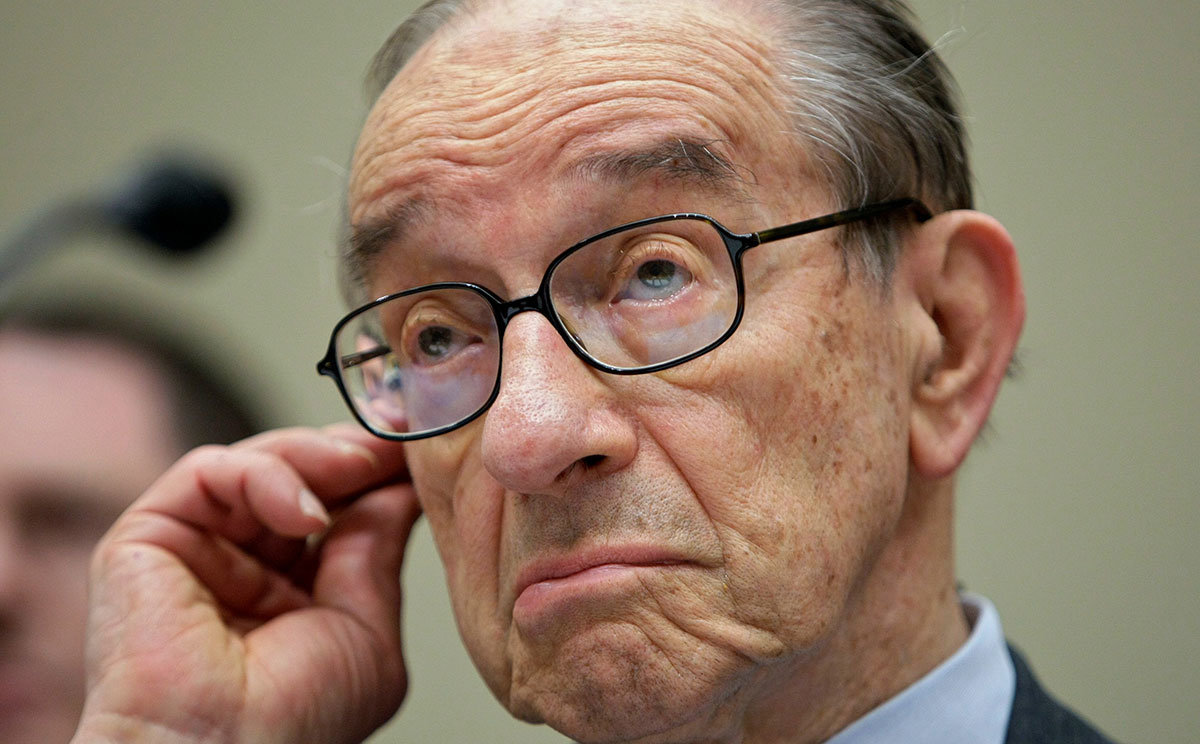
Former Fed Chair Greenspan, Who Led for 19 Years, Dies at 100
Translated from Korean, summarized and contextualized by DistantNews.
At a glance
News
From a news agency
Outcome reported
- Former U.S. Federal Reserve Chairman Alan Greenspan died at age 100 from Parkinson's disease complications.
- He led the Fed for 19 years, significantly increasing its influence, but faces criticism for contributing to financial crises.
- His wife, NBC correspondent Andrea Mitchell, remembered him as a "titan" who honestly admitted his mistakes.
Alan Greenspan, the former chairman of the U.S. Federal Reserve, has died at the age of 100. He passed away on March 22 (local time) due to complications from Parkinson's disease, as reported by CNN and other outlets.
Greenspan served as Fed chair from August 1987 to January 2006, a period of 19 years. During his tenure, he significantly elevated the status and influence of the central bank under four presidents: Ronald Reagan, George H.W. Bush, Bill Clinton, and George W. Bush. However, his legacy is marked by a dual assessment: credited with shaping the U.S. economy for decades, yet also criticized for fueling asset market bubbles that contributed to global financial crises.
His wife, NBC correspondent Andrea Mitchell, mourned his passing in a statement, describing him as a "titan" who played a key role in shaping the American economy for decades. She added that he was always honest about his mistakes.
Born in 1926 into a Jewish family in New York, Greenspan began his career teaching economics at New York University in the 1950s and also ran an economic consulting firm for 21 years. Shortly after taking the helm at the Fed in 1987, he navigated the stock market crash known as "Black Monday" in October of that year.
He was a titan who helped shape the American economy for decades, but he always honestly admitted his mistakes.
DistantNews Editorial
Originally published by Dong-A Ilbo in Korean. Translated, summarized, and contextualized by our editorial team with added local perspective. Read our editorial standards.
More Stories


From Our Blog

What Gets Lost (and Found) When News Is Translated

The Critical Role of Diaspora Media in Global News

What Travellers Should Know About Countries with Restricted Press

A Digital Nomad's Guide to Following Local News

How the Same Story Looks Different in Different Countries
