


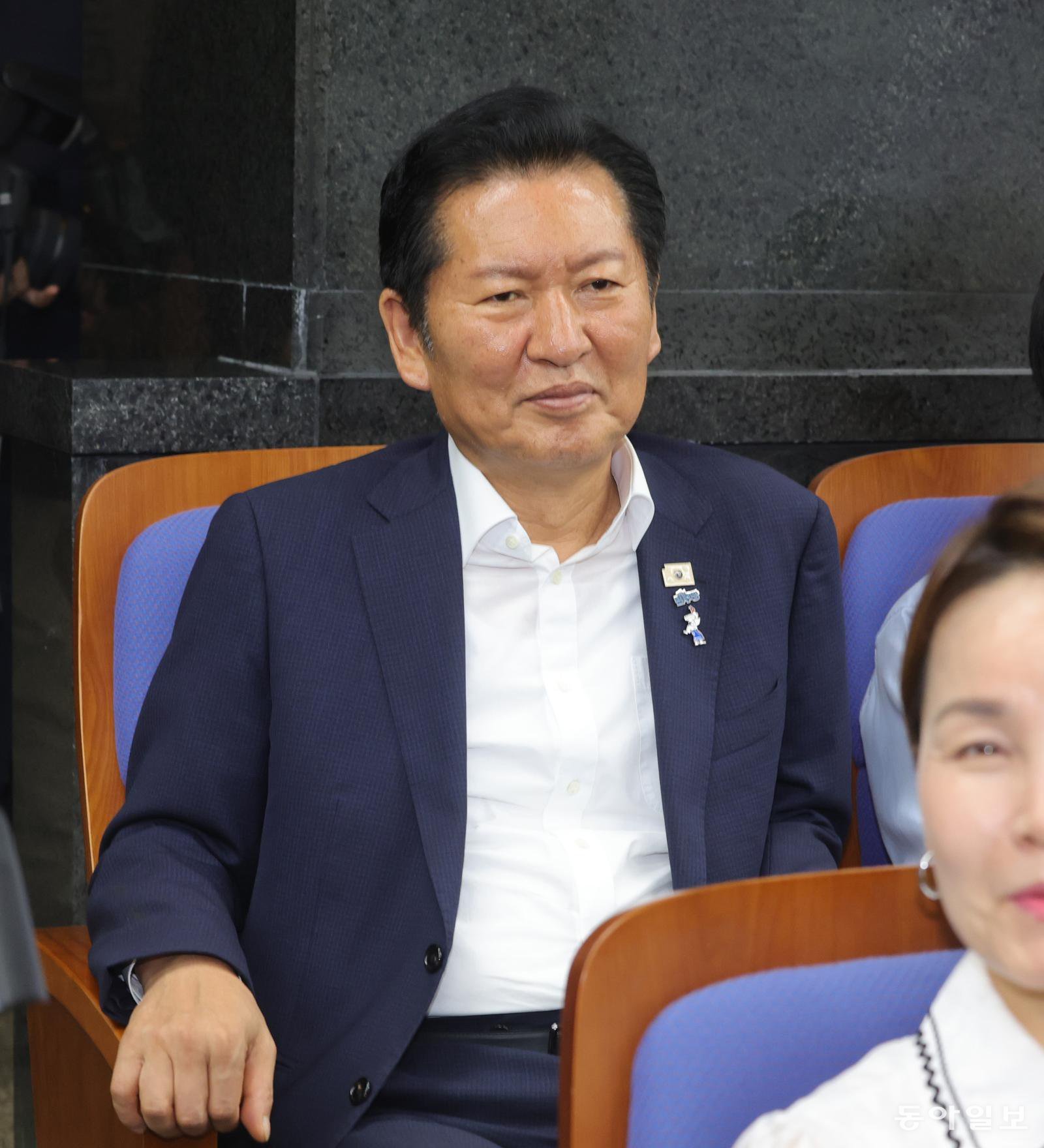
Former Party Leader Criticizes Past Merger Attempt, Blames Rival
Translated from Korean, summarized and contextualized by DistantNews.
At a glance
News
Sources not specified
Context piece
- A former leader of the Democratic Party of Korea, Jeong Cheong-rae, criticized a past merger proposal with the Cho Kuk Innovation Party.
- Jeong implied that former Prime Minister Kim Min-seok opposed the merger, shifting blame for its failure.
- The controversy resurfaces amid discussions about potential party realignments and upcoming elections.
Jeong Cheong-rae, a former leader of the Democratic Party of Korea, has reignited controversy surrounding a proposed merger with the Cho Kuk Innovation Party. Jeong, who is running for party leadership, suggested that the merger was necessary and implied that former Prime Minister Kim Min-seok was responsible for its collapse.
How else could it have been done, wasn't it necessary to merge somehow?
Speaking on a YouTube channel, Jeong stated that he had proposed the merger earlier in the year. He recalled facing criticism that he sought party leadership while Cho Kuk aimed for the presidency, and that bringing Cho Kuk into the Democratic Party would not benefit him. Jeong's remarks appear to target Kim Min-seok, who had previously opposed the merger, suggesting Kim's stance was a key obstacle.
When the merger proposal with the Cho Kuk Innovation Party was made (earlier this year), Jeong Cheong-rae was trying to take party leadership, and Cho Kuk was trying to take the presidency.
The resurfacing of this debate comes as discussions about party consolidation and upcoming elections intensify. A past controversy involving Kang Deuk-gu, a supreme council member close to Kim Min-seok, is also being brought back into focus. Kang had posted on Facebook that the President desired a merger followed by a unified party convention after the local elections, a claim that has drawn renewed attention.
Objectively speaking, what benefit is there for me to bring (former) representative Cho Kuk into the Democratic Party?
DistantNews Editorial
Originally published by Dong-A Ilbo in Korean. Translated, summarized, and contextualized by our editorial team with added local perspective. Read our editorial standards.
More Stories

From Our Blog

What Gets Lost (and Found) When News Is Translated

The Critical Role of Diaspora Media in Global News

What Travellers Should Know About Countries with Restricted Press

A Digital Nomad's Guide to Following Local News

How the Same Story Looks Different in Different Countries
