


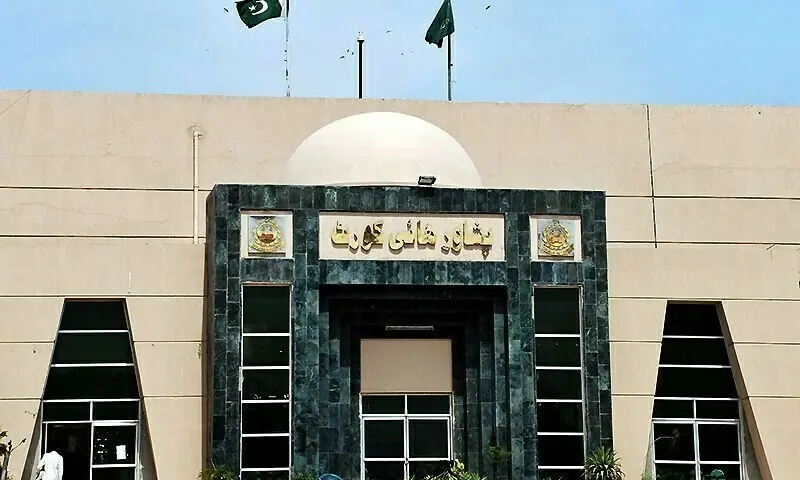
Four Peshawar High Court judges cease functioning amid delayed presidential confirmation
Translated from English, summarized and contextualized by DistantNews.
At a glance
News
Named sources
Ongoing story
- Four additional judges at Pakistan's Peshawar High Court have stopped functioning due to the president's delay in confirming their services.
- The Judicial Commission of Pakistan (JCP) recommended their confirmation, but the president has not yet assented to the proposal.
- The Peshawar High Court Bar Association president urged the president to approve the recommendations to prevent further disruption to judicial work and case backlogs.
Four additional judges at Pakistan's Peshawar High Court are no longer performing their duties because the president has not confirmed their services. Justices Farah Jamshed, Inamullah Khan, Sabitullah Khan, and Aurangzeb were appointed as additional judges for one year, taking their oath on February 4, 2025. Their terms were later extended by six months on the recommendation of the Judicial Commission of Pakistan (JCP), which expired on August 4.
In a meeting on July 20, the JCP recommended the confirmation of these four judges under Article 175(A) of the Constitution. However, the constitution does not specify a deadline for the president to approve recommendations forwarded by the prime minister. Official sources indicate that the Peshawar High Court has been in contact with the law ministry regarding the delay in the presidential nod to the JCP's recommendations. None of the four judges have been assigned cases since August 3, as judicial work cannot be allocated without the government's official notification.
The Commission, by the majority of its total membership, shall nominate one person for each vacancy of a Judge in the Federal Constitutional Court, the Supreme Court, a High Court or the Federal Shariat Court, as the case may be, to the Prime Minister who shall forward the same to the President for appointment.
Ameenur Rehman Yousafzai, president of the PHC Bar Association, has appealed to the president to assent to the recommendations. He stated that withholding the summary is unconstitutional and that the president is bound to give his assent. Yousafzai emphasized that the JCP has the constitutional authority to recommend service confirmations after thorough review of candidates' qualifications, backgrounds, and performance.
The delay is causing concern as the Peshawar High Court is already short of judges. Yousafzai warned that this impasse will negatively impact the court's daily operations and exacerbate the existing backlog of cases. Notably, Justice Jamshed was the only female judge at the PHC. The four judges were initially appointed alongside six others, who have since been confirmed as regular high court judges.
The President couldn’t withhold the summary and it was binding on him to give assent to it.
DistantNews Editorial
Originally published by Dawn in English. Translated, summarized, and contextualized by our editorial team with added local perspective. Read our editorial standards.
More Stories


From Our Blog

What Gets Lost (and Found) When News Is Translated

The Critical Role of Diaspora Media in Global News

What Travellers Should Know About Countries with Restricted Press

A Digital Nomad's Guide to Following Local News

How the Same Story Looks Different in Different Countries
