


Fragile quiet descends on Lebanon as US-Iran truce leaves questions unanswered
Translated from English, summarized and contextualized by DistantNews.
At a glance
News
Named sources
Ongoing story
- Fragile quiet holds in southern Lebanon following a US-Iran ceasefire agreement, though residents return to damaged homes with caution.
- The US-Iran deal's specifics for Lebanon remain unclear, but Iran and mediators stated it includes a ceasefire, a key point of contention.
- The conflict, which began in March, has devastated Lebanon, displacing an estimated 50,000 homes and leaving one million people displaced, with many doubting the long-term stability of the truce.
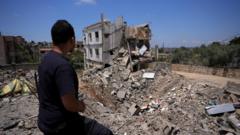
A fragile quiet has settled over southern Lebanon as families displaced by the war begin returning to their communities. This tentative peace follows an announcement of a ceasefire agreement between the United States and Iran. Despite official warnings that it is not yet safe, residents are returning, with some arriving to find Israeli armored vehicles blocking their streets.
All of this can be compensated for, and rebuilt.
Exhausted by over three months of conflict, the people of Lebanon are hopeful that the truce will halt the fighting between Israel and the Iranian-backed Hezbollah. While a semblance of quiet holds, punctuated by recent attacks from both sides, many remain skeptical about the durability of this peace. "Israel can't be trusted," one returning resident stated, reflecting a widespread sentiment of doubt.
The precise implications of the US-Iran agreement for Lebanon are still unclear, as the deal has not been publicly released. However, both Iran and Pakistan, which mediated the talks, have indicated that a ceasefire in Lebanon is part of the agreement. This inclusion was a crucial demand from Iran, aimed at bolstering its regional influence and supporting Hezbollah supporters.
For someone who's used to this area and has lived here, to come back and see this destruction is extremely hard.
This latest round of conflict, which erupted in March, has been catastrophic for Lebanon. An estimated 50,000 homes have been damaged or destroyed, and approximately one million people remain displaced. The war has severely impacted the country, with Hezbollah, a significant political and social force among Lebanon's Shia Muslim community, remaining a key player despite being weakened. Israel had initially argued that the conflict with Hezbollah was separate from its broader issues with Iran, but US pressure may be compelling it to scale back its military campaign.
Israel can't be trusted.
DistantNews Editorial
Originally published by BBC News in English. Translated, summarized, and contextualized by our editorial team with added local perspective. Read our editorial standards.
More Stories



From Our Blog

What Gets Lost (and Found) When News Is Translated

The Critical Role of Diaspora Media in Global News

What Travellers Should Know About Countries with Restricted Press

A Digital Nomad's Guide to Following Local News

How the Same Story Looks Different in Different Countries
