


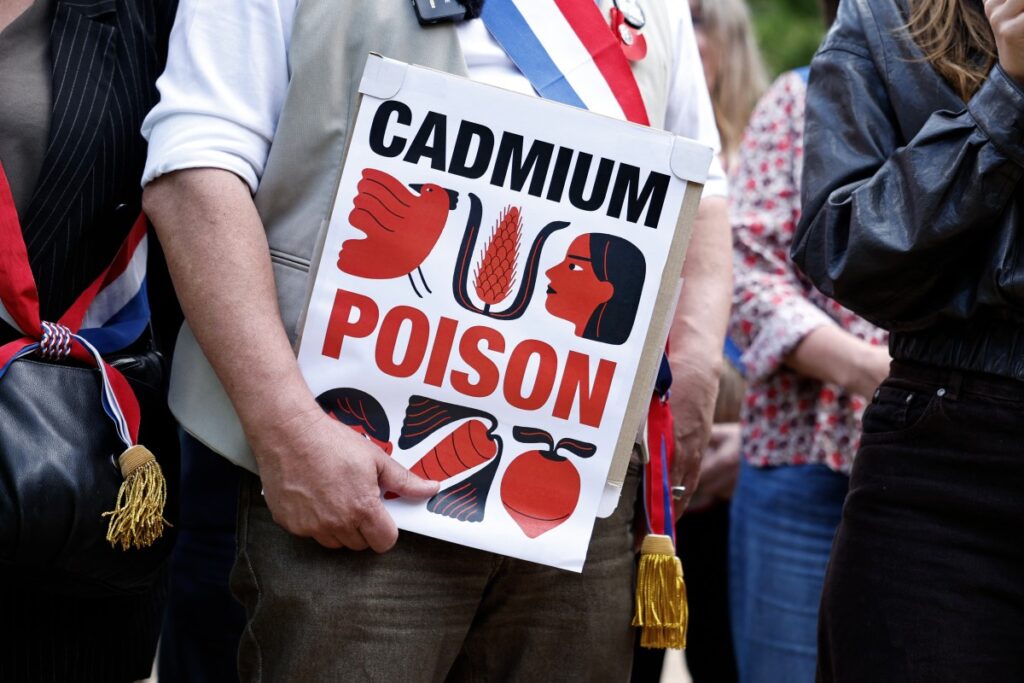
France admits partial blame for Caribbean pesticide scandal
Translated from English, summarized and contextualized by DistantNews.
At a glance
News
From a news agency
New plan
- French lawmakers have acknowledged the state's partial responsibility for the long-term harm caused by the toxic pesticide chlordecone in the French West Indies.
- Chlordecone was used on banana plantations in Guadeloupe and Martinique from 1972 to 1993, despite being banned on the mainland in 1990.
- The new law aims to decontaminate affected areas and compensate victims, though some lawmakers feel more reparations are needed.
French lawmakers have officially recognized the state's partial responsibility in the enduring harm inflicted upon the French West Indies by the toxic pesticide chlordecone. The pesticide, also known as Kepone, was extensively used on banana plantations in Guadeloupe and Martinique between 1972 and 1993, even after France banned its use domestically in 1990.
the state acknowledges its share of responsibility for the health-related, moral, environmental and economic harm suffered by the territories of Guadeloupe and Martinique and by their populations.
In a unanimous vote, the lower house of parliament passed a bill acknowledging "its share of responsibility for the health-related, moral, environmental and economic harm suffered by the territories of Guadeloupe and Martinique and by their populations." The Senate has also supported this measure. Research indicates that nearly 90 percent of the populations in both regions have been contaminated with chlordecone.
carcinogenic in mice and rats
The chemical has been linked to severe health issues, including prostate cancer, which has exceptionally high rates in Martinique and Guadeloupe. Studies also point to adverse effects on the nervous system, reproductive health, hormonal balance, and organ function. The World Health Organization identified chlordecone as a potential human carcinogen as early as 1979, and its use was banned globally in 2009 under the Stockholm Convention.
This compromise text will help restore deeply damaged trust.
The new legislation sets a goal for France to "decontaminate soil and water polluted" by the pesticide and to "compensate all victims of this contamination." While acknowledging the progress, some lawmakers, like Elie Califer from Guadeloupe, stressed that "more work needs to be done to ensure reparations." Olivier Serva, also from Guadeloupe, expressed that while "we've come far," he is "not entirely satisfied," particularly given the state's initial reluctance to admit any responsibility.
But we’ve come far, given that the state initially didn’t want to acknowledge its partial responsibility.
DistantNews Editorial
Originally published by Jamaica Observer in English. Translated, summarized, and contextualized by our editorial team with added local perspective. Read our editorial standards.
More Stories

From Our Blog

What Gets Lost (and Found) When News Is Translated

The Critical Role of Diaspora Media in Global News

What Travellers Should Know About Countries with Restricted Press

A Digital Nomad's Guide to Following Local News

How the Same Story Looks Different in Different Countries
