


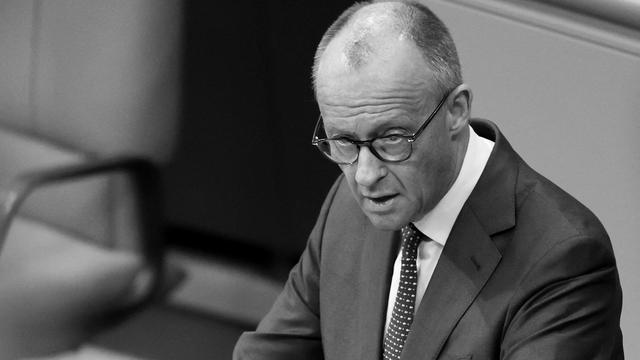
Friedrich Merz: Whether the summer break will happen is decided tomorrow
Translated from German, summarized and contextualized by DistantNews.
At a glance
News
Sources not specified
Context piece
- German Chancellor Friedrich Merz delivered his final government statement before the summer break, promoting reforms.
- Key measures include tax relief for lower/middle incomes, a higher wealth tax, and relaxed rules for fixed-term employment.
- The Chancellor also reported success from the NATO summit, noting Germany's planned purchase of Tomahawk missiles.
As Germany heads into its summer break, Chancellor Friedrich Merz delivered his final government statement before the parliamentary recess, aiming to project confidence in his administration's reforms. The coalition government, comprising the Union and SPD parties, recently agreed on 34 measures designed to bolster the economy and secure jobs. These initiatives include tax relief targeted at small and medium-sized incomes, an increase in the wealth tax, and more flexible regulations for fixed-term employment contracts. The government also plans to reform the statutory health insurance system.
Despite opposition challenges, Merz expressed optimism that the new legislation would be passed by the Bundestag on Friday. He also reflected on the recent NATO summit in Ankara, characterizing it as a success for Germany and Europe. A significant outcome highlighted was the federal government's decision to purchase American Tomahawk cruise missiles for deployment in Germany.
The article also briefly touches upon developments in Iran, noting the ongoing mourning period for Ali Khamenei, who led the Islamic Republic for 37 years before his death in February. Uncertainty surrounds the travel of his supporters to his hometown for the funeral, as the railway line connecting Tehran to Mashhad was reportedly destroyed by US attacks. The US claims to have attacked 90 other military targets, resulting in 14 reported deaths, while Iran has reported attacks on US bases in Bahrain, Kuwait, and Qatar.
Additionally, the piece mentions significant resistance from trade unions and the works council at Volkswagen (VW) against the automaker's austerity plans. These plans could potentially lead to the loss of up to 100,000 jobs and the closure of four plants. The supervisory board of VW is scheduled to meet in Wolfsburg.
DistantNews Editorial
Originally published by Die Zeit in German. Translated, summarized, and contextualized by our editorial team with added local perspective. Read our editorial standards.
More Stories


From Our Blog

What Gets Lost (and Found) When News Is Translated

How the Same Story Looks Different in Different Countries

The Critical Role of Diaspora Media in Global News

What Travellers Should Know About Countries with Restricted Press

A Digital Nomad's Guide to Following Local News
