


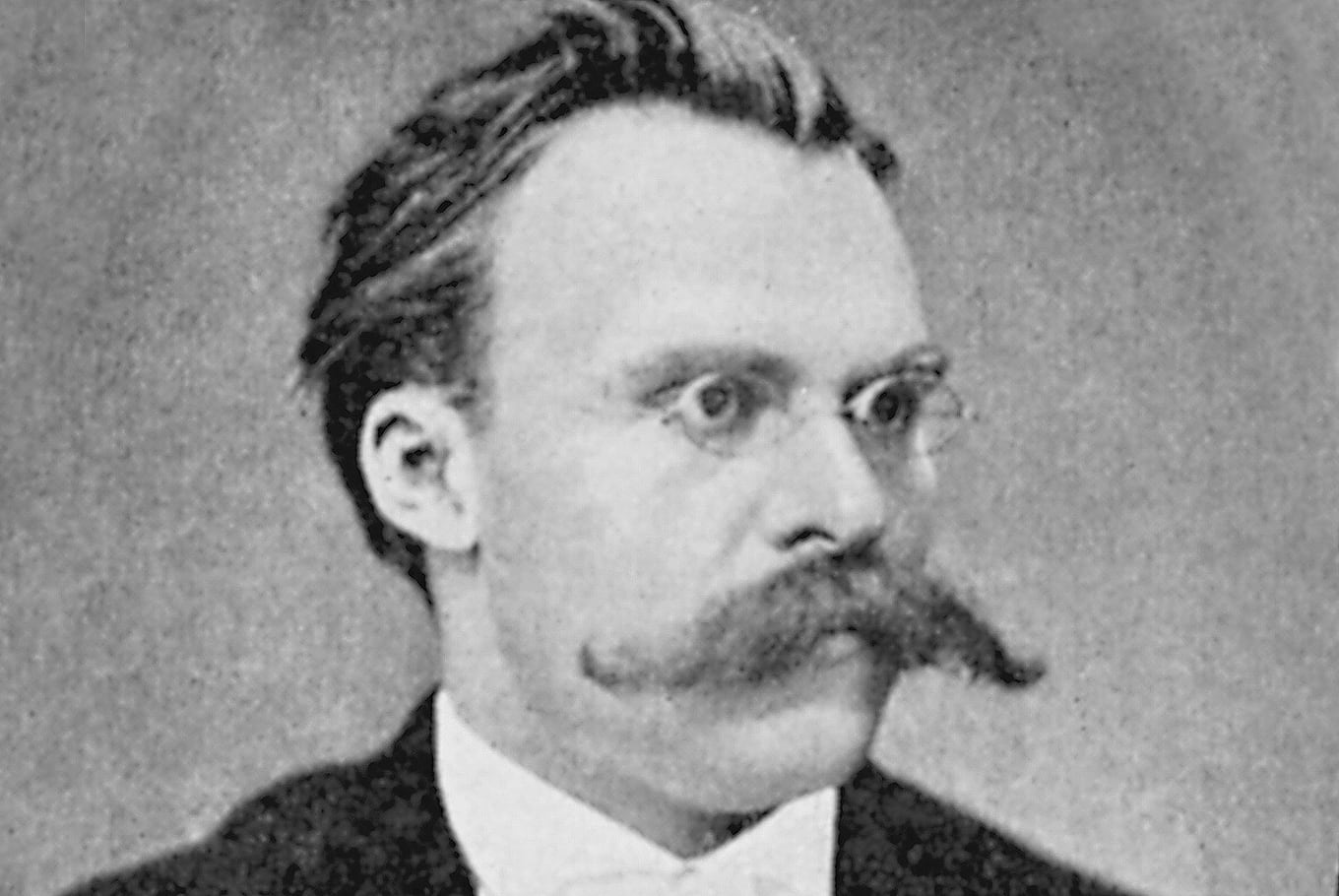
Friedrich Nietzsche, on the Search for Truth: 'There Are No Facts, Only Interpretations'
Translated from Spanish, summarized and contextualized by DistantNews.
At a glance
Interview
Named sources
Context piece
- Philosopher Darío Sztajnszrajber argues that contemporary philosophy challenges the traditional pursuit of absolute truth.
- He cites Friedrich Nietzsche's idea that "there are no facts, only interpretations" to illustrate the subjective nature of truth.
- Sztajnszrajber distinguishes between everyday truths, scientific truths, and philosophical truths, emphasizing the latter's focus on existential meaning.
Philosopher Darío Sztajnszrajber asserts that the contemporary philosophical landscape questions the long-held notion of seeking absolute truths. In an interview, he explained that while many philosophical traditions define their purpose as the search for truth, this becomes problematic when some currents conclude that "truth is that there is no truth."
Sztajnszrajber invoked Friedrich Nietzsche's controversial idea, "there are no facts, but only interpretations," to highlight this perspective. He differentiated between everyday truths, which are functional and mechanical for daily life, and scientific truths, which focus on the "how" things work. Philosophical truth, however, delves into deeper, more ontological questions about the general sense of existence and purpose.
"One thing is that the thing works, and another is that it is true. And that is where one can discuss what we seek in the name of truth," Sztajnszrajber stated, linking this search to existential or transcendent purposes. He also touched upon the concept of happiness, rejecting simplistic formulas often found on social media. Instead, he referenced Epicurus's "ataraxia," defined as "the imperturbability of the soul and the pursuit of minimal pleasures."
Reflecting on his own life at 58, Sztajnszrajber admitted he doesn't have a definitive answer to the purpose of life. However, he finds personal fulfillment in his "desire to know" and the continuous exercise of "constant wonder."
DistantNews Editorial
Originally published by La Nación in Spanish. Translated, summarized, and contextualized by our editorial team with added local perspective. Read our editorial standards.
More Stories



From Our Blog

What Gets Lost (and Found) When News Is Translated

The Critical Role of Diaspora Media in Global News

What Travellers Should Know About Countries with Restricted Press

A Digital Nomad's Guide to Following Local News

How the Same Story Looks Different in Different Countries
