


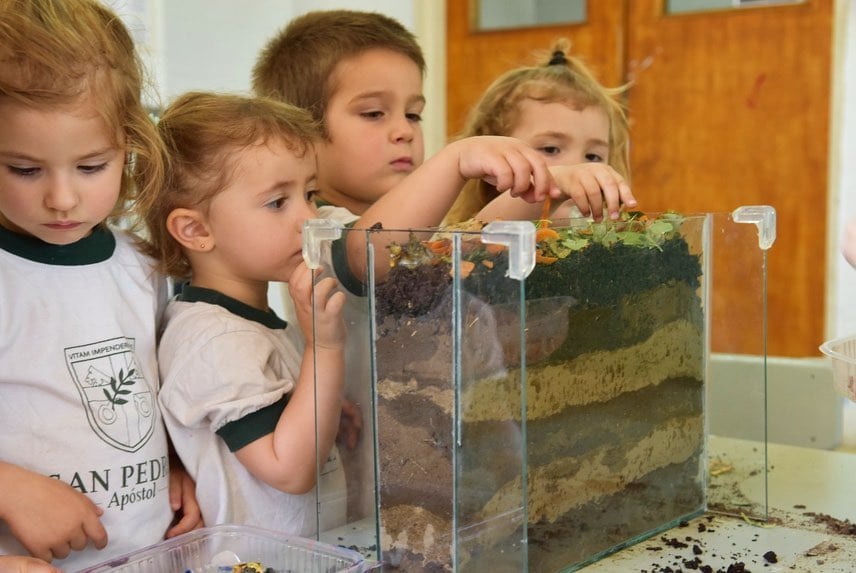
From a school garden to global recognition: how a Córdoba school became one of the ten best in the world for its environmental work
Translated from Spanish, summarized and contextualized by DistantNews.
At a glance
In-depth
Named sources
Approved/passed
- A school in Córdoba, Argentina, has been recognized globally for its environmental work, ranking among the top ten schools worldwide in the Environmental Action category of the World's Best School Prizes 2026.
- The initiative began with a small school garden and has expanded to include greenhouses with aquaponics and hydroponics systems, and a chicken coop, integrating sustainability into the school's culture.
- The school's approach, called Awareness, Education and Action (AEA), aligns with UN Sustainable Development Goals and embeds environmental projects across all subjects, fostering critical thinking and student autonomy.
What started as a modest garden in front of a school in Córdoba, Argentina, has blossomed into a globally recognized environmental initiative. The Colegio San Pedro Apóstol has been named one of the top ten schools in the world for its environmental action in the World's Best School Prizes 2026, a testament to its deep integration of sustainability into its educational culture.
Sustainability did not arise as a project. It is part of the school's culture.
The school's commitment to the environment has evolved significantly over the years. Beyond the initial garden, they now boast two additional gardens, a greenhouse that houses fish within aquaponics and hydroponics systems, and a strategically located chicken coop near the early childhood section. This comprehensive approach ensures that sustainability is not an isolated project but a core component of the school's identity.
We want the children to develop critical thinking, be autonomous, and for the teachers to act as mediators and facilitators of these processes.
Valentina Cabuchi, the head of Communication and Institutional Relations, explained that sustainability is intrinsically woven into the school's ethos. The educational proposal aims to harmonize academic training with human and socio-emotional development. Student autonomy is a key principle, nurtured from the early years, drawing inspiration from Maria Montessori's educational philosophy, which emphasizes student-led learning.
The greenhouse combines hydroponic and aquaponic systems and is used as a learning space for students of all levels.
The school's sustainability model, known as Awareness, Education and Action (AEA), aligns with the United Nations' Sustainable Development Goals. This framework allows environmental projects to emerge organically from any subject and find practical application within the school's campus. For instance, the chicken coop is used for workshops where young students learn about the life cycle of chickens and engage with biology and nature. The greenhouse serves as a versatile learning space for all grade levels, integrated into various projects throughout the academic year.
The chicken coop is strategically located next to the early childhood level. There, during afternoon workshops, the youngest children learn about the life cycle of chickens, participate in their care, and work on content related to biology and nature.
DistantNews Editorial
Originally published by La Nación in Spanish. Translated, summarized, and contextualized by our editorial team with added local perspective. Read our editorial standards.
More Stories



From Our Blog

What Gets Lost (and Found) When News Is Translated

The Critical Role of Diaspora Media in Global News

What Travellers Should Know About Countries with Restricted Press

A Digital Nomad's Guide to Following Local News

How the Same Story Looks Different in Different Countries
