


From dance floor to war: China prepares humanoid robots for combat
Translated from English and summarized by DistantNews. Read the original for the full story.
At a glance
Analysis
Documents & data
Ongoing story
- Chinese military institutions are studying humanoid robots for battlefield roles, according to a Reuters review of procurement notices, studies, patents and official records.
- Research intensified in 2025 and 2026, focusing on robot perception, manipulation and training data, but Reuters found no evidence that armed humanoids serve in operational PLA units.
- China’s large commercial humanoid-robot industry gives the People’s Liberation Army access to a rapidly expanding technology base.
At China’s World Humanoid Robot Games in August, machines jumped, boxed and danced while spectators cheered their progress and laughed at their highly shareable stumbles. Two days later, the People’s Liberation Army’s official newspaper drew a far more military conclusion from the spectacle, urging researchers to speed the transfer of advanced technology from laboratories to training grounds for robotic “combatants”.
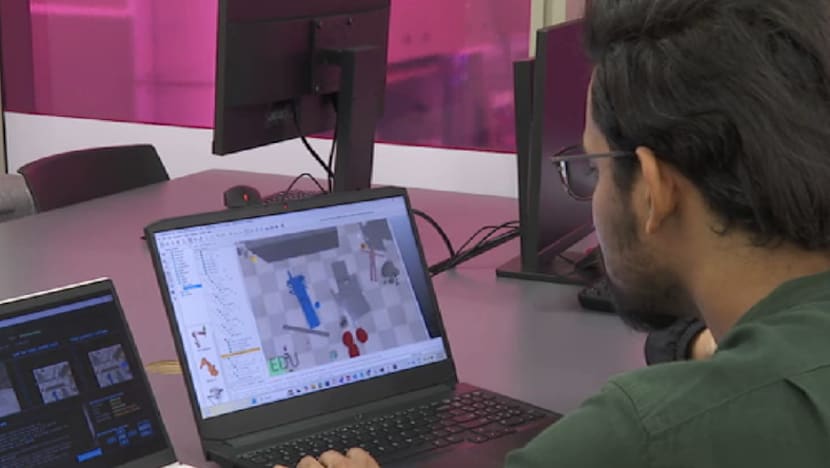
A Reuters review of more than 100 Chinese military procurement notices, academic studies, patents, official publications, government records and defence-company materials found that China’s defence establishment is preparing for possible military uses of humanoid robots. Military institutions are testing robots against battlefield requirements, seeking equipment and technologies to train them, and examining how they could work alongside soldiers.
The effort gathered momentum in 2025 and 2026. Researchers are focusing on perception, manipulation and the data needed to train robots. One Chinese concept for urban warfare envisions six “combat robots”, including humanoids, robot dogs or unmanned vehicles, divided between two assault groups.
Going where we don’t want humans to go is one of the most compelling reasons to develop robots in the first place.
China’s manufacturers accounted for about 95% of global humanoid shipments in 2025, according to BofA Global Research. That commercial lead gives the PLA access to an expanding industrial base as it develops military applications of its own.
The work reflects a wider military interest in autonomous systems, sharpened by the Russia-Ukraine war. Semiautonomous drones have changed reconnaissance and attack, while robots carry supplies and retrieve casualties. But the technology remains far from battlefield readiness. Reuters found no evidence that China has deployed an armed humanoid with an operational PLA unit, and the machines remain energy-intensive and unreliable outside controlled demonstrations. Researchers also warn that unpredictable battlefield conditions pose serious challenges for robots.
If losing a robot means avoiding the loss of a human life, then the robot can become expendable.
About this summary
Originally published by The Straits Times in English. Translated, summarized, and contextualized automatically by DistantNews, with a note on how the source frames the story. Not individually reviewed before publishing. How this works.
More Stories


From Our Blog

News in Translation: What Gets Lost, and How We Keep the Framing

Diaspora Media: How Communities Follow News From Home

Traveling Where the Press Is Not Free: How to Read the News There

The Digital Nomad's Guide to Local News

The Same Story, Different Countries: How Coverage Changes at the Border
