


From heavy floods to tornadoes and typhoons: How a faster-warming China is battling more climate extremes
Summarized and contextualized by DistantNews.
At a glance
News
Official statement
Context piece
- China is experiencing extreme weather events, including floods, tornadoes, and heatwaves, at a rate faster than the global average.
- Scientists attribute these volatile conditions to the country warming at an accelerated pace.
- The increasing frequency and intensity of these events pose significant challenges for adaptation and societal resilience.
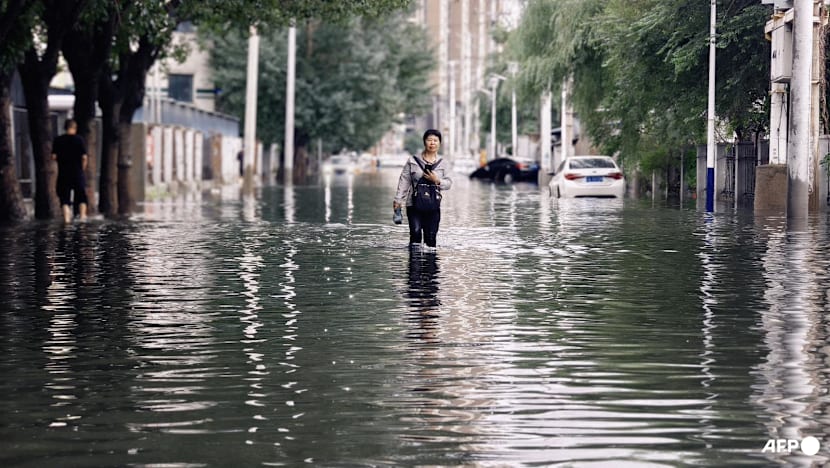
China is grappling with a succession of extreme weather events, including severe floods, tornadoes, and intense heatwaves, as its climate warms at a rate exceeding the global average. These increasingly volatile conditions, observed in recent weeks, have led to significant disruptions, such as forcing over 260,000 people to evacuate their homes due to torrential rains and heavy floods. The country has also witnessed a mass snake escape in Guangxi and scorching heatwaves gripping multiple regions.
Land warms faster than oceans. Because China is a large continental landmass, it experiences stronger warming than the global average.
According to the China Meteorological Administration (CMA), China's annual average temperature increased by 0.31 degrees Celsius per decade from 1961 to 2025, surpassing the global average. The year 2025 ranked among the two warmest on record since 1901, with northern China experiencing faster warming than the south, and western regions warming more rapidly than the east. Professor Benjamin Horton from the City University of Hong Kong explains that China's vast continental landmass contributes to this accelerated warming, as land heats up faster than oceans.
The rapid rate of warming is a critical concern, as it necessitates gradual adaptation for societies, infrastructure, ecosystems, and economies. Professor Horton notes that the climate baseline is shifting so quickly that events once considered rare are becoming the new normal. This rapid change challenges the ability of systems to adapt gradually, increasing vulnerability to extreme conditions.
The rate of warming matters because societies, infrastructure, ecosystems and economies (must) adapt gradually.
China has seen a rise in both the frequency and intensity of extreme weather. In 2025, 11 out of 27 typhoons in the region made landfall in China, with Typhoon Maysak causing significant damage and at least 39 deaths in Hainan and Guangxi. Earlier in July, two tornadoes struck Hubei province, resulting in at least 11 fatalities and hundreds of injuries. Harrowing accounts from survivors describe being swept away by floodwaters, underscoring the immediate and devastating impact of these climate extremes.
The concern is no longer simply that summers are hotter. The climate baseline itself is shifting so quickly that extremes once considered rare are becoming normal.
DistantNews Editorial
Originally published by CNA. Summarized and contextualized by our editorial team with added local perspective. Read our editorial standards.
More Stories



From Our Blog

What Gets Lost (and Found) When News Is Translated

The Critical Role of Diaspora Media in Global News

What Travellers Should Know About Countries with Restricted Press

A Digital Nomad's Guide to Following Local News

How the Same Story Looks Different in Different Countries
