


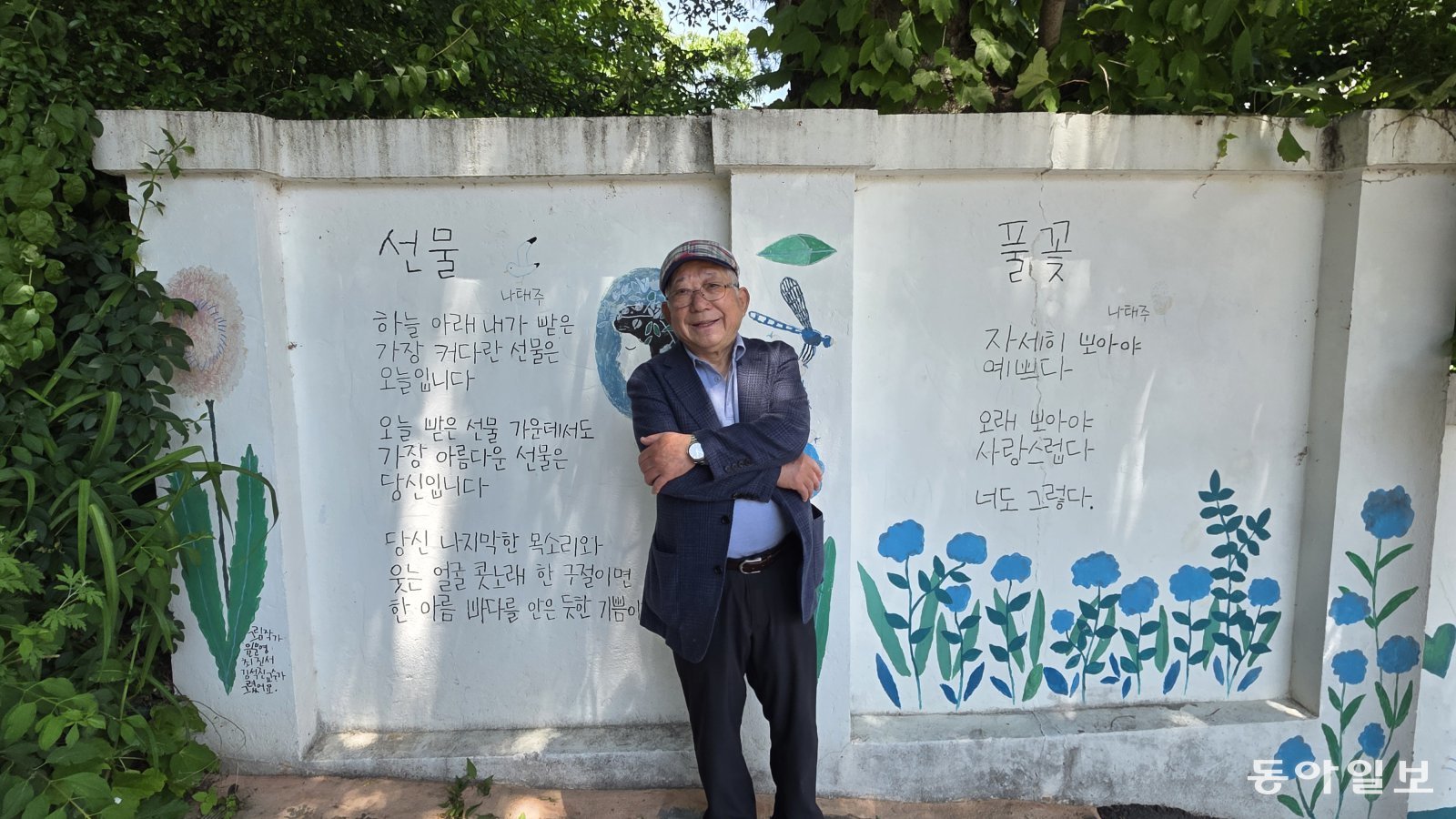
From Poet Na Tae-joo's Garden: 'Wait, Endure, and Yield'
Translated from Korean, summarized and contextualized by DistantNews.
At a glance
In-depth
Sources not specified
Context piece
- The Na Tae-joo Pulkkot Literature Museum in Gongju features a wall covered in ivy and blooming trumpet vines.
- Poet Na Tae-joo likens the trumpet vine to a "thoughtless younger sister" for its uninhibited blooming and falling.
- The article explores the poet's garden and his reflections on nature and life through his poetry.
In Gongju, South Korea, the old walls of the Na Tae-joo Pulkkot Literature Museum are adorned with vibrant trumpet vines. These flowers, blooming in a riot of orange, are currently flourishing along a wall poet Na Tae-joo once described as a "world map drawn by ivy."
One trumpet vine grows from within the wall, while another reaches over from a neighbor's property, intertwining with the green ivy. When asked about the trumpet vine, the poet likened it to a "thoughtless younger sister." He explained that it blooms carelessly in the summer, with its wide-open blossoms resembling a smile, only to fall away when its season ends, evoking a sense of impermanence and melancholy.
It's like a thoughtless younger sister.
Na Tae-joo shared his poem 'Trumpet Vine,' which reflects on the flower's beauty and transient nature. The poem speaks of the "lovely, dazzling body of the sky" that blooms with a wide mouth, indifferent to whether it is seen, and then falls. It also touches upon the "younger sisters of sorrow" that rise again, stem by stem, even in the early morning rain.
The encounter with the "poet's garden" extends to a philosophical bookstore called 'Old Questions' located in the Na Tae-joo alleyway near Gemincheon Stream in Gongju. This setting provides a backdrop for exploring the intersection of nature, poetry, and life's deeper questions.
It blooms with a wide mouth, indifferent to whether it is seen, and then falls. It also touches upon the 'younger sisters of sorrow' that rise again, stem by stem, even in the early morning rain.
DistantNews Editorial
Originally published by Dong-A Ilbo in Korean. Translated, summarized, and contextualized by our editorial team with added local perspective. Read our editorial standards.
More Stories



From Our Blog

What Gets Lost (and Found) When News Is Translated

The Critical Role of Diaspora Media in Global News

What Travellers Should Know About Countries with Restricted Press

A Digital Nomad's Guide to Following Local News

How the Same Story Looks Different in Different Countries
