


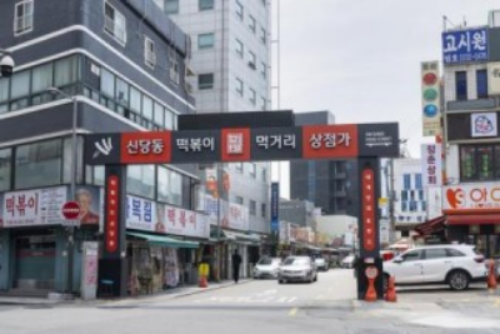
From Shaman Village to 'Hipdang-dong': Shindang-dong's Transformation Beyond Tteokbokki
Translated from Korean, summarized and contextualized by DistantNews.
At a glance
In-depth
Sources not specified
Context piece
- Shindang-dong, once known only for its tteokbokki street, has transformed into a trendy "Hipdang-dong" attracting young creators and tourists.
- The neighborhood's history spans 600 years, evolving from a shamanistic village to a refugee settlement and now a hub for modern culture and commerce.
- Its transformation is marked by the integration of technology into traditional industries and the emergence of unique cafes, shops, and design studios, drawing both domestic and international visitors.
Seoul's Shindang-dong, a neighborhood historically defined by its vibrant tteokbokki street, has undergone a remarkable metamorphosis. It is now affectionately known as "Hipdang-dong," a testament to its evolution into a dynamic urban space that attracts MZ generation consumers and international tourists alike. This transformation is built upon a rich 600-year history, charting a course from its origins as a village for shamans to its current status as a trendsetting district where young creators and new commercial ventures coexist.
In the past, most tourists were from Asian countries like Japan and China, but recently, due to the influence of overseas content, Western tourists are also visiting a lot.
The Seoul Museum of History recently published a report, "Shindang-dong: God, New, Hip," detailing this fascinating journey. The neighborhood's name itself, Shindang-dong (新堂洞), reflects its past. Originally using the character for 'god' (神), it adopted the character for 'new' (新) after the Gabo Reforms in 1894. The name "Shindang" (신당) literally means 'shrine' or 'shamanistic house.' Historically, the area outside Gwanghuimun Gate, a passage for the deceased, was where the Donghwalinseo, an institution for aiding the sick, was located. This led to shamans, who were prohibited from living within the city walls, forming a community there, creating spaces to console the living and appease the spirits of the dead.
Thanks to its location near Dongdaemun, foreigners can visit without hesitation.
During the Japanese colonial period, the area was redeveloped into a modern residential zone. Following liberation and the Korean War, Shindang-dong saw a rapid population increase as overseas Koreans and war refugees flocked to the area. The "Shindang Land Readjustment Project" at this time established a modern street network and residential infrastructure, forming the urban skeleton that largely defines Shindang-dong today. After liberation, merchants from across the country established various commercial areas, including the famous tteokbokki street initiated by Halmeoni Mabok-rim in the 1950s, the grain market street (Ssajeon Street), the tightly packed residential area known as Ant Alley (Gaemigolmok), and the metalworking district (Cheolgongso Street) from the Japanese colonial era. These four distinct alleys continue to showcase the neighborhood's identity.
Convenient transportation and the connection with the Dongdaemun commercial district are factors that attract consumers of various nationalities.
More recently, Shindang-dong has embraced innovation, integrating 3D and AI technologies into its traditional garment and sewing industries. This modernization, coupled with the rise of trendy cafes, new brand flagships, and design studios, has made it a magnet for young creatives. The influx of foreign tourists is also notable. Beyond the tteokbokki street, cocktail bars and fashion brands, promoted through international social media, are drawing visitors not only from Asia but also from Western countries. This convenient location, close to Dongdaemun, and its connection to the broader Dongdaemun market area, further enhance its appeal to a diverse international clientele. The unique concept of cocktail bars like "Jusindang," themed around the Korean zodiac, particularly captivates Western tourists.
About 40% of weekday visitors are foreigners, and Western tourists are particularly interested in the space themed around the Korean zodiac.
DistantNews Editorial
Originally published by Dong-A Ilbo in Korean. Translated, summarized, and contextualized by our editorial team with added local perspective. Read our editorial standards.
More Stories


From Our Blog

What Gets Lost (and Found) When News Is Translated

The Critical Role of Diaspora Media in Global News

What Travellers Should Know About Countries with Restricted Press

A Digital Nomad's Guide to Following Local News

How the Same Story Looks Different in Different Countries
