


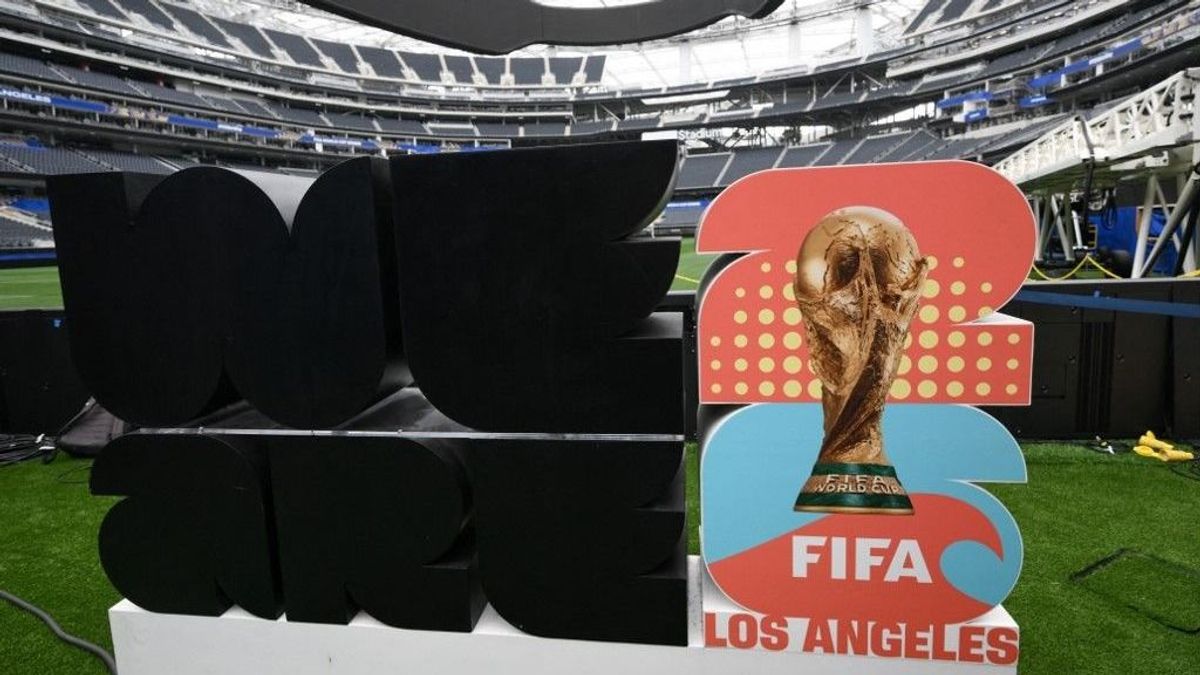
From SoFi's marvel to minimal budgets: The 16 stadiums of the Football World Cup
Translated from Hungarian, summarized and contextualized by DistantNews.
At a glance
News
Sources not specified
Context piece
- The 2026 World Cup will feature 16 stadiums across the United States, Mexico, and Canada, with FIFA setting minimum capacity requirements.
- The SoFi Stadium in Inglewood, Los Angeles, is highlighted as the most innovative venue, featuring a unique hybrid indoor-outdoor design and a massive jumbotron.
- The tournament's infrastructure involves significant investment, with many venues undergoing modernization rather than complete new construction.
The 2026 FIFA World Cup is set to showcase 16 state-of-the-art stadiums across the United States, Mexico, and Canada, with FIFA imposing strict capacity regulations. Venues must accommodate at least 40,000 spectators for group stage matches and a minimum of 80,000 for the final. Artificial turf fields in the U.S. have been replaced with natural grass to meet FIFA's standards.
Among the host venues, the SoFi Stadium in Inglewood, Los Angeles, stands out as the most innovative and modern facility. This unique stadium boasts a hybrid indoor-outdoor design, covered by a vast, transparent ETFE roof spanning 90,000 square meters. While the roof encloses the field and surrounding areas, the sides remain open, allowing for continuous natural ventilation. Suspended from the roof is the world's largest dual-sided, 360-degree, 4K resolution jumbotron, weighing nearly 1,000 tons, offering optimal viewing from any point within the stadium.
What truly sets the SoFi Stadium apart is its subterranean construction. Due to height restrictions imposed by a nearby airport, the playing field was excavated 30 meters below ground level. This design means that spectators enter the stadium and then descend towards their seats, creating a unique entry experience.
The infrastructure development for the 2026 tournament represents a significant investment, with the construction of the SoFi Stadium alone costing approximately $5.5 billion. Unlike the 2022 World Cup in Qatar, which required the construction of entirely new venues, the 2026 tournament primarily involves the renovation and modernization of existing stadiums and their surrounding areas.
DistantNews Editorial
Originally published by Magyar Nemzet in Hungarian. Translated, summarized, and contextualized by our editorial team with added local perspective. Read our editorial standards.
More Stories



From Our Blog

Countries Without a Free Press: What You Need to Know

What Press Freedom Means for the News You Read

What Gets Lost (and Found) When News Is Translated

The Critical Role of Diaspora Media in Global News

What Travellers Should Know About Countries with Restricted Press
