


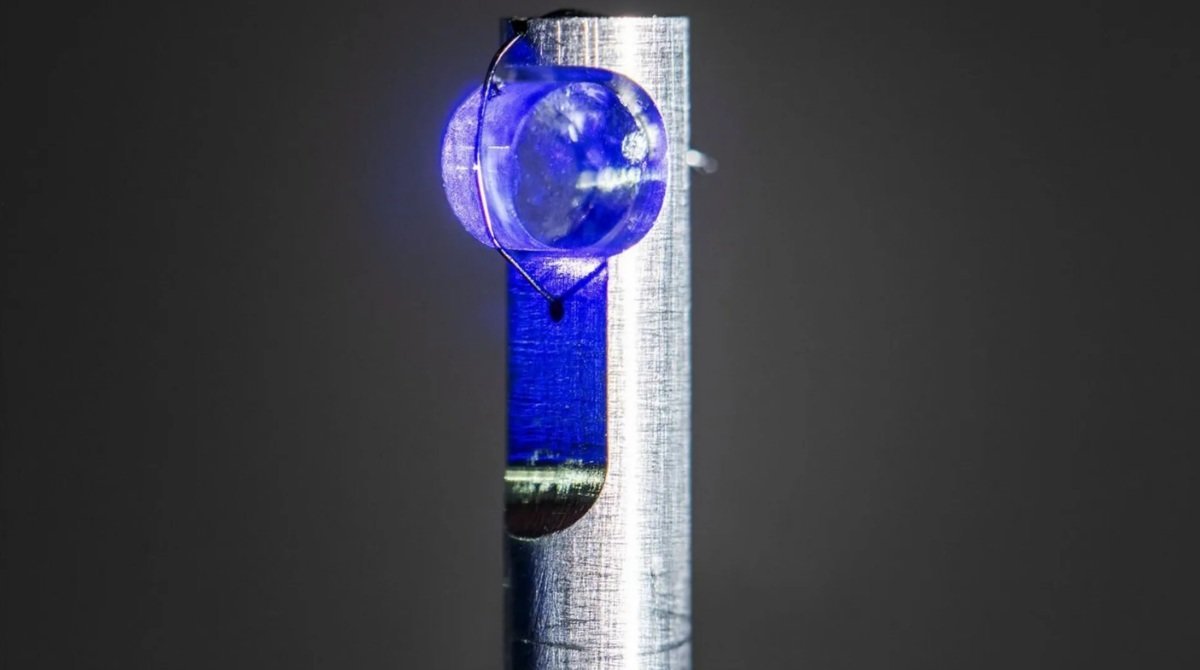
From Ultra-Precise Navigation to Unlocking Space Secrets: The Nuclear Clock Era Begins
Translated from Korean, summarized and contextualized by DistantNews.
At a glance
News
Sources not specified
Context piece
- Researchers are developing "nuclear clocks" that use atomic nuclei, potentially offering greater precision than current atomic clocks.
- Both Chinese and European research teams have demonstrated the functionality of these nuclear clocks.
- These clocks could advance fields like navigation, dark matter detection, and fundamental physics testing.
Humanity's quest for precise timekeeping is advancing, moving beyond the electrons within atoms to focus on the atomic nucleus itself. Recent breakthroughs have seen "nuclear clocks," which utilize the energy transitions within thorium-229 nuclei, operate successfully as actual timekeeping devices.
These nuclear clocks hold the potential to become more precise and stable timekeeping standards than existing atomic clocks. Furthermore, they are anticipated to serve as novel tools for exploring dark matter and testing fundamental laws of physics. This development signifies a leap forward in metrology and scientific instrumentation.
Recent research efforts have seen significant progress on multiple fronts. A Chinese team led by Tsinghua University has successfully demonstrated a nuclear clock functioning with atomic nuclei as the timekeeping basis. Concurrently, a European collaborative effort involving the Vienna University of Technology and the German National Metrology Institute has also reported the successful implementation of a nuclear clock.
Existing atomic clocks, the current gold standard for time measurement, operate by monitoring the transitions of electrons within atoms. Similar to how a pendulum's swing regulates a grandfather clock, atomic clocks rely on the predictable energy changes electrons undergo when moving between different energy levels. These transitions correspond to specific light frequencies, forming the basis of their accuracy. Nuclear clocks promise to enhance this precision even further.
DistantNews Editorial
Originally published by Dong-A Ilbo in Korean. Translated, summarized, and contextualized by our editorial team with added local perspective. Read our editorial standards.
More Stories



From Our Blog

What Gets Lost (and Found) When News Is Translated

The Critical Role of Diaspora Media in Global News

What Travellers Should Know About Countries with Restricted Press

A Digital Nomad's Guide to Following Local News

How the Same Story Looks Different in Different Countries
