

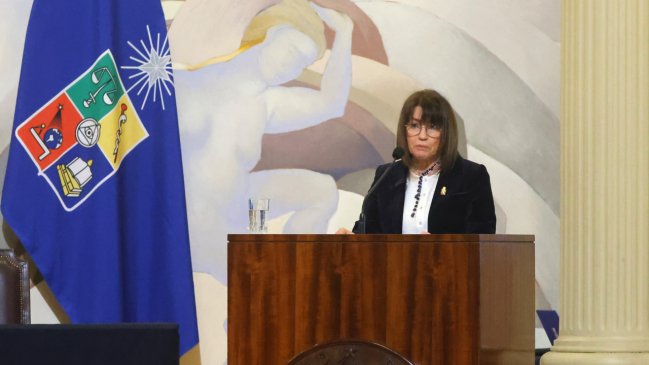

Future University of Chile rector: 'We do not validate occupations as a form of mobilization'
Translated from Spanish, summarized and contextualized by DistantNews.
At a glance
News
Sources not specified
Context piece
- The future rector of the University of Chile, Alejandra Mizala, stated that student occupations ('tomas') are not a valid form of protest.
- She argued that such methods obscure legitimate student causes and impose the will of a few.
- Mizala emphasized the need for agreement on appropriate mobilization methods to address student needs.
Alejandra Mizala, the incoming rector of the University of Chile, has declared that student occupations of university facilities are an inappropriate and invalid method of protest. She believes these actions, often referred to as 'tomas,' ultimately obscure legitimate student demands and concerns.
We do not validate the occupations as an adequate form of mobilization.
"There are situations currently in the university and (specifically) on the Juan Gómez Millas campus in particular, where students voted for a strike (for their mental health demands), but another group of students occupied it," Mizala explained in an interview. "And we are talking with them so they understand that we need to agree on the appropriate modalities to establish their requirements and needs."
There are situations currently in the university and (specifically) on the Juan Gómez Millas campus in particular, where students voted for a strike (for their mental health demands), but another group of students occupied it. And we are talking with them so they understand that we need to agree on the appropriate modalities to establish their requirements and needs.
Mizala articulated that while student causes may be legitimate, the methods used to pursue them, particularly occupations, are not conducive to productive dialogue or resolution. "Often what happens is that there are legitimate causes, but the forms of mobilization (to demand them), particularly occupations, we do not find adequate. It is a way of imposing the will of some over the rest, in the sense that there are students who cannot go to campus or who do not have adequate places to study in their homes," she stated.
Often what happens is that there are legitimate causes, but the forms of mobilization (to demand them), particularly occupations, we do not find adequate. It is a way of imposing the will of some over the rest, in the sense that there are students who cannot go to campus or who do not have adequate places to study in their homes.
"We do not validate occupations as an adequate form of mobilization. Occupation is not a valid form of mobilization, and legitimate causes become blurred because the method (for demanding them) is not adequate," Mizala reiterated. She added that university authorities are currently working to end these occupations. The university administration aims to foster a more constructive environment for addressing student grievances.
Occupation is not a valid form of mobilization, and legitimate causes become blurred because the method (for demanding them) is not adequate.
DistantNews Editorial
Originally published by Cooperativa in Spanish. Translated, summarized, and contextualized by our editorial team with added local perspective. Read our editorial standards.
More Stories



From Our Blog

What Gets Lost (and Found) When News Is Translated

The Critical Role of Diaspora Media in Global News

What Travellers Should Know About Countries with Restricted Press

A Digital Nomad's Guide to Following Local News

How the Same Story Looks Different in Different Countries
