


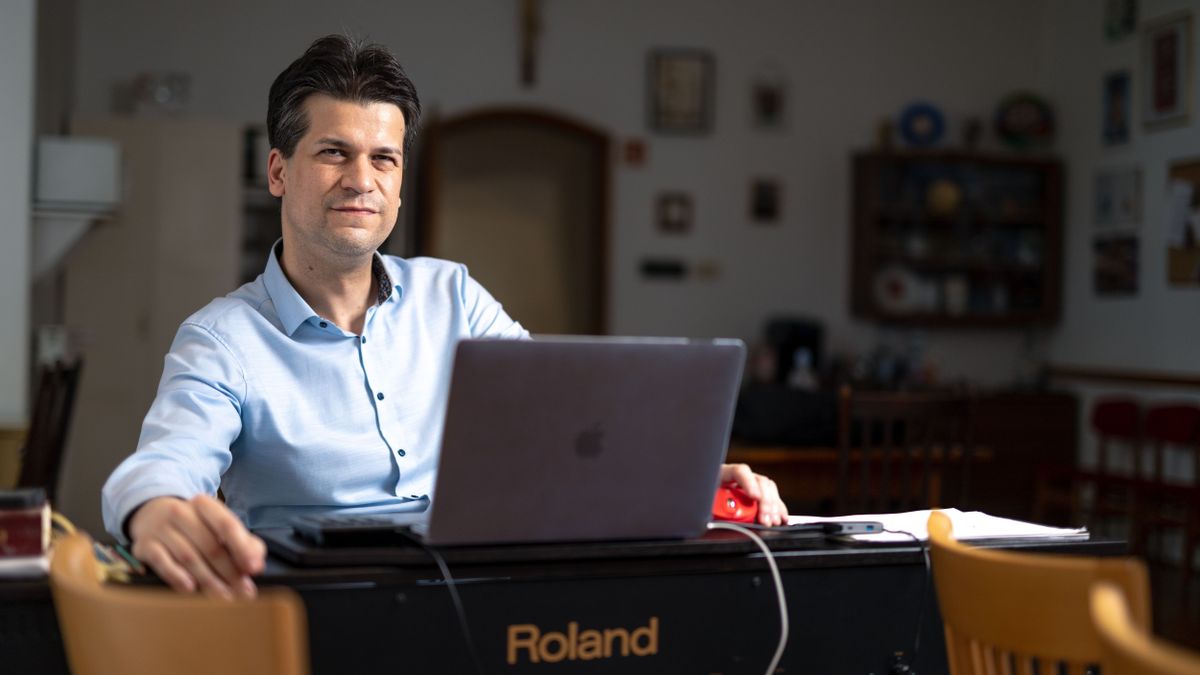
Gábor Virágh: Contemporary Music is the Most Accurate Reflection of Our Times
Translated from Hungarian, summarized and contextualized by DistantNews.
At a glance
Interview
Named sources
Context piece
- Contemporary music is the most accurate reflection of our times, according to composer and organist Gábor Virágh.
- Virágh emphasizes understanding the performers and their environment when composing to create unique pieces tailored to specific ensembles.
- He views his roles as an organist and composer as inseparable, with each informing the other and drawing inspiration from diverse sources, including everyday sounds and nature.
Contemporary music serves as the most precise reflection of the present era, according to Gábor Virágh, a composer and organist. Virágh, a recipient of the Erkel Ferenc Prize, consistently pushes creative boundaries with his new works, demonstrating that modern music can indeed reach a broad audience.
When composing, Virágh prioritizes understanding the specific ensemble or performer for whom the music is intended. He studies their technical capabilities, preferred repertoire, and often requests recordings. This meticulous approach ensures that each piece is uniquely crafted for its intended performers, rather than being a generic composition. He considers both the performers' technical abilities and limitations, as well as how to adapt his own musical language to suit the specific ensemble, whether it be a choir, keyboard instrument, or orchestra.
Virágh sees his dual career as an organist and composer as intrinsically linked, each role enriching the other. As a performer, he approaches pieces with a composer's eye, and as a composer, he relates differently to works he performs. His direct, physical engagement with sound, particularly through organ playing, is vital. Liturgical service, in a sense, merges these roles, requiring presence as a performer and compositional thinking for improvisation, a key part of Catholic liturgy.
While he believes his organist's perspective once more strongly influenced his compositions, he feels he has now transcended that early characteristic. He finds composing for the organ liberating, but also enjoys performing works by others, like Bach, as a respite from his own music. Inspiration, he notes, comes from myriad sources, from the music of Bach and other art forms to everyday sonic experiences like the rhythmic squeak of a bus's shock absorber or sounds filtering from a workshop. He also finds inspiration in the colors of the sky.
DistantNews Editorial
Originally published by Magyar Nemzet in Hungarian. Translated, summarized, and contextualized by our editorial team with added local perspective. Read our editorial standards.
More Stories


From Our Blog

Countries Without a Free Press: What You Need to Know

What Press Freedom Means for the News You Read

What Gets Lost (and Found) When News Is Translated

The Critical Role of Diaspora Media in Global News

What Travellers Should Know About Countries with Restricted Press
