


Gagan Thapa’s Chitwan reference revives memories of Congress’ 1962 armed rebellion
Summarized and contextualized by DistantNews.
At a glance
News
Named sources
Context piece
- Nepali Congress President Gagan Thapa invoked the memory of a violent 1962 armed rebellion in Chitwan during a speech, highlighting sacrifices made for democracy.
- Thapa stated that the ground in Chitwan holds the remains of around 50 democratic insurgents killed by the Panchayat government after an uprising led by Jagat Prakash Jung Shah.
- The reference aimed to remind attendees of the historical struggle for democracy and the cost paid for the current democratic system.
Nepali Congress President Gagan Thapa recently brought attention to a largely forgotten, violent chapter of Nepal's political history, referencing the 1962 armed rebellion in Chitwan.
Please do not say that nothing happened during those 35 years. Please do not undermine the stories of the 30-year struggle against the Panchayat system. Beneath the very ground where you are standing lie the bodies of around 50 people buried there in 1962.
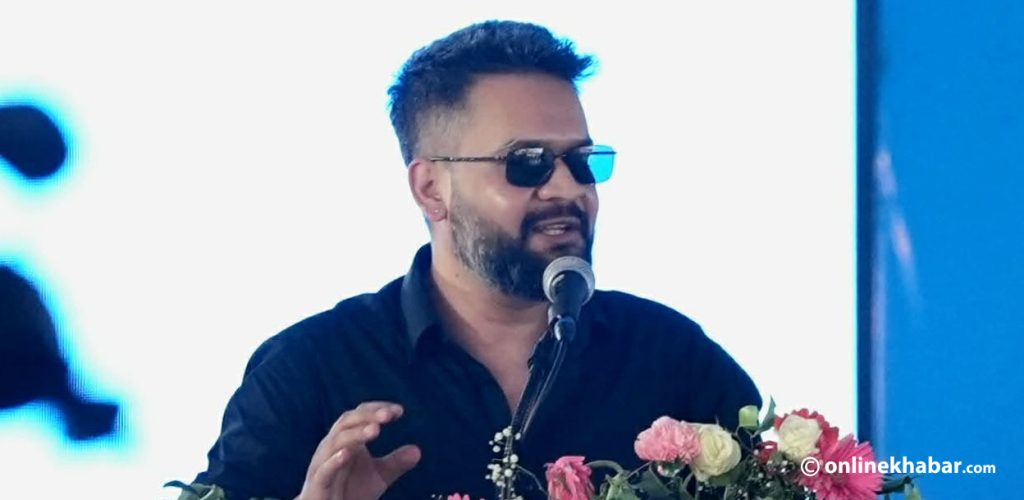
Speaking at the Rastriya Swatantra Party's general convention, Thapa urged the audience not to undermine the decades-long struggle for democracy. He specifically invoked the sacrifices made in Chitwan, stating, "Beneath the very ground where you are standing lie the bodies of around 50 people buried there in 1962." He described Chitwan as a historic center of resistance where the Panchayat government brutally suppressed an uprising, resulting in the deaths of democratic insurgents.
Thapa emphasized that the current democratic system, symbolized by the audience's ability to raise their flags, was a direct result of these sacrifices. "The soil of Chitwan is stained red with the blood of those martyrs," he declared, urging listeners to remember the cost of freedom.
The Panchayat government killed them and buried them beneath the very ground where you are standing. Today, you are able to raise your blue flag because of those sacrifices. When you raise that flag, look at the ground beneath your feet. The soil of Chitwan is stained red with the blood of those martyrs.
The 1962 Chitwan uprising was part of a broader armed insurrection launched by the Nepali Congress following King Mahendra's 1960 royal coup. The rebellion, led by Jagat Prakash Jung Shah, aimed to restore Parliament and release political prisoners. However, King Mahendra's forces retaliated with a severe crackdown, leading to the deaths of approximately 50 insurgents, including Commander Shah himself.
I was investigating the plane crash that killed UN Secretary-General Dag Hammarskjöld in 1961 near Ndola, Northern Rhodesia (now Zambia), when they captured Jagat Prakash Jung Shah, father of Naveen Prakash Jung Shah (who later became the vice-chancellor of Tribhuvan University), from Chitwan and brought him to Kathmandu. Following the 1960 coup, Shah had been leading an armed rebellion against the regime. Within a few days, he was sent back there and shot dead.
Historians and former diplomats have documented the event, noting King Mahendra's dismissive view of the rebellion. Thapa's decision to highlight this incident serves as a stark reminder of the violent struggles that paved the way for Nepal's present-day democracy, underscoring the importance of remembering this history.
They probably came looking for a prize, but ended up losing everything for nothing.
DistantNews Editorial
Originally published by Kathmandu Post. Summarized and contextualized by our editorial team with added local perspective. Read our editorial standards.
More Stories


From Our Blog

What Gets Lost (and Found) When News Is Translated

The Critical Role of Diaspora Media in Global News

What Travellers Should Know About Countries with Restricted Press

A Digital Nomad's Guide to Following Local News

How the Same Story Looks Different in Different Countries
