


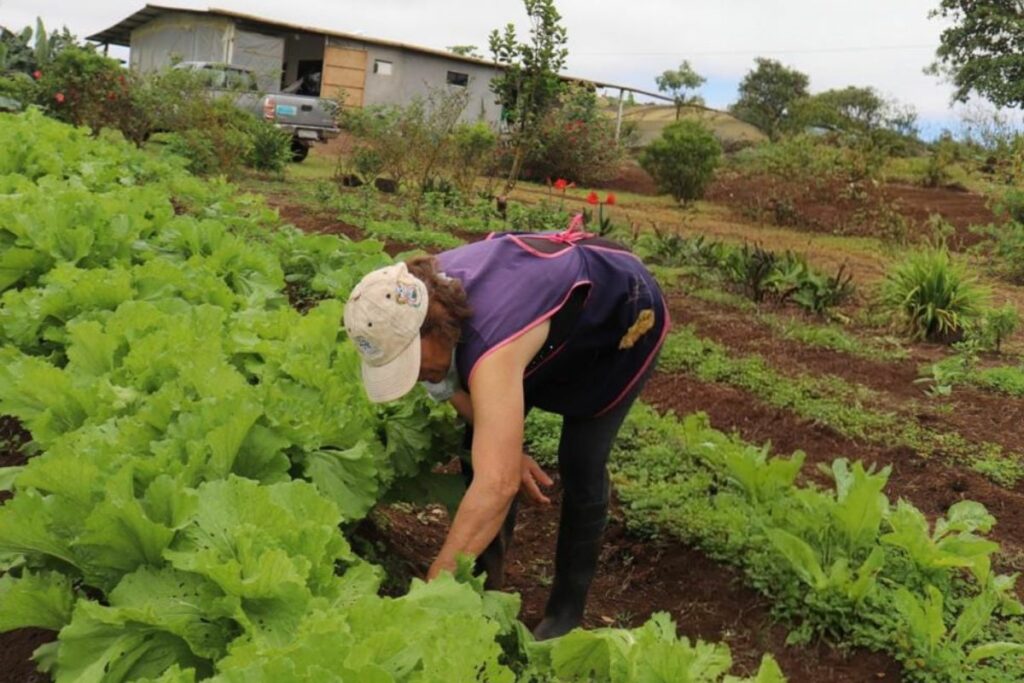
Galapagos farmers achieve 40% local food self-sufficiency
Translated from Spanish, summarized and contextualized by DistantNews.
At a glance
News
Named sources
Context piece
- Farmers in the Galapagos Islands have increased their food production to supply 40% of the archipelago's consumption, a significant rise from 10% in 2019.
- This increase is attributed to the adoption of agroecological farming methods, which enhance crop yields, produce healthy food, and protect the environment.
- The initiative, supported by the Heifer Ecuador Foundation and the Ministry of Agriculture, involves "Schools of Agroecology" that teach sustainable farming techniques.
Farmers in the Galapagos Islands have dramatically boosted local food production, now supplying 40% of the archipelago's needs, a substantial leap from just 10% in 2019. This achievement is particularly noteworthy given the limited number of farmers compared to mainland Ecuador.
On islands like Santa Cruz, San Cristóbal, and Santa Isabela, a variety of crops including potatoes, carrots, zucchini, tomatoes, onions, peppers, papayas, melons, and oranges are cultivated. Even the smaller island of Floreana contributes to local food supply. Farmers credit the islands' diverse microclimates for enabling the cultivation of a wide range of produce using agroecological methods.
This sustainable farming model is actively promoted by the Heifer Ecuador Foundation in partnership with Ecuador's Ministry of Agriculture, Livestock, and Fisheries (MAGP). The "Schools of Agroecology" program, operating on the main production islands, teaches techniques that increase crop yields, ensure food safety, and prevent soil contamination.
Carmen Ramón, an agroecological farmer on Santa Cruz, exemplifies this success. Cultivating 2.5 hectares, she grows vegetables like potatoes and carrots during the cooler months and various fruits year-round. She has adopted techniques learned from the agroecology school, such as preparing natural fertilizers called "bioles" and using weed-blocking geomesh, which conserves soil moisture and reduces labor costs. Ramón notes that this year's unusually hot weather may be linked to the El Niño phenomenon, which has disrupted the region's typical climate.
DistantNews Editorial
Originally published by El Comercio in Spanish. Translated, summarized, and contextualized by our editorial team with added local perspective. Read our editorial standards.
More Stories


From Our Blog

What Gets Lost (and Found) When News Is Translated

The Critical Role of Diaspora Media in Global News

What Travellers Should Know About Countries with Restricted Press

A Digital Nomad's Guide to Following Local News

How the Same Story Looks Different in Different Countries
