


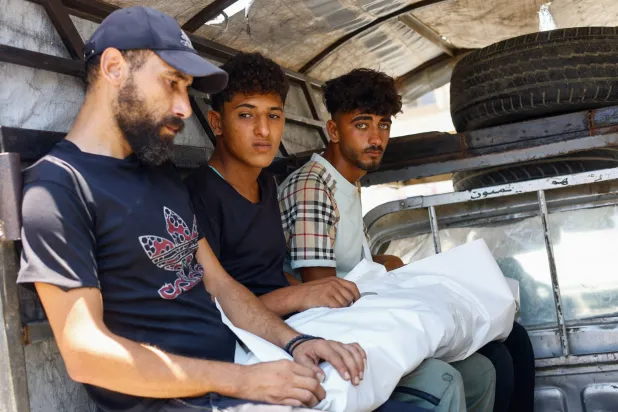
Gaza Health Officials Say 3 Killed in Israeli Drone Strike
Summarized and contextualized by DistantNews.
At a glance
News
From a news agency
Ongoing story
- Residents in El-Obeid, Sudan, face severe water and food shortages amid fierce fighting between the army and Rapid Support Forces (RSF).
- The RSF has intensified attacks on the city, targeting infrastructure like power stations and water pumps.
- Analysts believe controlling El-Obeid is crucial for consolidating RSF power in western Sudan and potentially advancing towards the capital.
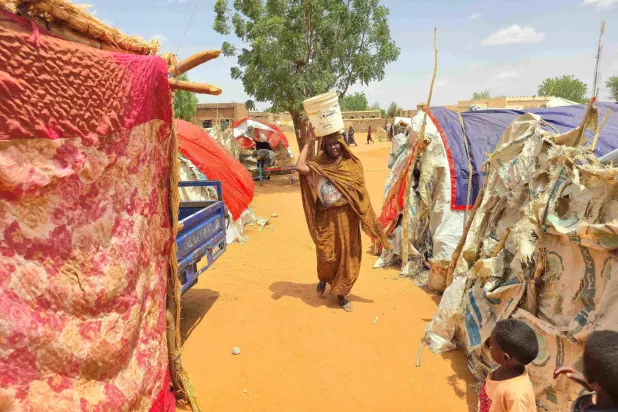
In El-Obeid, Sudan, a critical city in the ongoing conflict, residents are enduring dire conditions marked by intense fighting and a severe lack of essential resources. Agsam Hamad, a mother of seven, described the arduous journey to fetch undrinkable water from distant wells, highlighting the daily struggle for survival in a displacement camp on the city's outskirts. "Our situation is very difficult. We need food and water," she told AFP.
We walk long distances for this water and it is undrinkable.
El-Obeid, home to nearly 100,000 displaced people, has recently faced its most intense attacks from the paramilitary Rapid Support Forces (RSF). These assaults have targeted key infrastructure, including the main power station and fuel depots, leading to widespread power outages and the shutdown of water pumps. Residents now rely on tanker trucks, wells, and limited distribution points for water, exacerbating the humanitarian crisis.
Our situation is very difficult. We need food and water.
The United Nations has warned of significant RSF troop movements around El-Obeid, raising fears of a ground assault and potential atrocities similar to those seen in El-Fasher. The city's strategic location at a crossroads linking army-controlled areas with RSF-controlled Darfur makes it a key prize. Analysts suggest that capturing El-Obeid would solidify RSF control over western Sudan and could pave the way for an advance on the capital, Khartoum.
Controlling it is about power, land and money.
Fighting and strict restrictions have severely limited access to El-Obeid, making independent reporting challenging. Rare footage from Al-Rahmaniyah camp shows exhausted women carrying jerrycans after long waits for water. Nearly 200 families are housed in makeshift shelters, with children and elders suffering from lack of basic necessities. "We have nothing. No water, food or mattresses," said Waseela Mohamed, a grandmother of seven.
We have nothing. No water, food or mattresses.
DistantNews Editorial
Originally published by Asharq Al-Awsat. Summarized and contextualized by our editorial team with added local perspective. Read our editorial standards.
More Stories


From Our Blog

What Gets Lost (and Found) When News Is Translated

The Critical Role of Diaspora Media in Global News

What Travellers Should Know About Countries with Restricted Press

A Digital Nomad's Guide to Following Local News

How the Same Story Looks Different in Different Countries
