

GCC inflation holds steady at 1.8% in 2025
Translated from English, summarized and contextualized by DistantNews.
At a glance
News
Official statement
Context piece
- Inflation across Gulf Cooperation Council (GCC) countries remained stable at 1.8% in 2025, slightly up from 1.6% in 2024.
- This rate is significantly lower than global averages and many developed economies, indicating effective economic policies.
- Housing and miscellaneous goods/services were the main drivers of inflation, while global food price declines helped ease imported pressures.
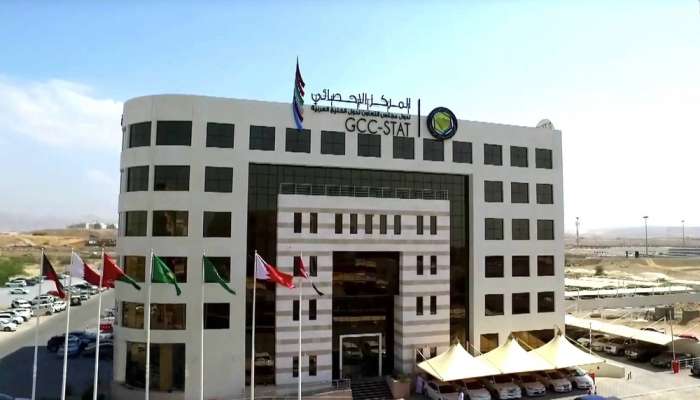
Inflation across the Gulf Cooperation Council (GCC) countries has remained remarkably stable, holding at 1.8% in 2025. This figure represents a slight increase from 1.6% in 2024 but remains well below the 2% threshold for the second consecutive year. The GCC Statistical Centre (GCC-Stat) report highlights this stability as a testament to the effectiveness of economic policies in managing inflationary pressures.
Compared to global trends, the GCC's inflation rate is notably low. At 1.8%, it significantly undercuts the rates seen in emerging markets (5.3%), the global average (4.2%), Japan (3.2%), the United States (2.6%), and the European Union (2.5%). The report attributes the primary drivers of GCC inflation to housing costs and miscellaneous goods and services, which together accounted for approximately 73% of the overall inflation. Miscellaneous goods and services saw the highest inflation rate at 5.4%, followed by housing at 4.0%.
While certain sectors experienced price increases, others remained stable or declined. Health, communication, and furnishings saw no annual change, and transport even registered a slight decrease of 0.2%. The report also noted that a 2.1% decline in global food and beverage prices helped mitigate imported inflation. However, rising natural gas prices and ongoing geopolitical tensions pose potential risks that require continued monitoring.
The report concludes that the convergence and stability of inflation rates across GCC nations create a favorable environment for economic and monetary integration. This stability also provides fiscal flexibility for member states to pursue economic reforms and development spending, underscoring the importance of harmonized statistical methods and preparedness for future external economic challenges.
DistantNews Editorial
Originally published by Times of Oman in English. Translated, summarized, and contextualized by our editorial team with added local perspective. Read our editorial standards.
More Stories

From Our Blog

What Gets Lost (and Found) When News Is Translated

The Critical Role of Diaspora Media in Global News

What Travellers Should Know About Countries with Restricted Press

A Digital Nomad's Guide to Following Local News

How the Same Story Looks Different in Different Countries
