

Generational gap poses major challenge for Dominican coconut industry
Translated from Spanish, summarized and contextualized by DistantNews.
At a glance
News
Sources not specified
Context piece
- The Dominican Republic's coconut industry faces a significant challenge with 71% of producers being 50 years or older, indicating a critical need for generational succession.
- The sector also suffers from low technical assistance coverage, limited access to agricultural credit and insurance, and few formal marketing contracts.
- The National Agricultural Registry identifies over 5,000 coconut producers cultivating more than 396,000 tareas, highlighting the industry's economic importance and potential for growth.
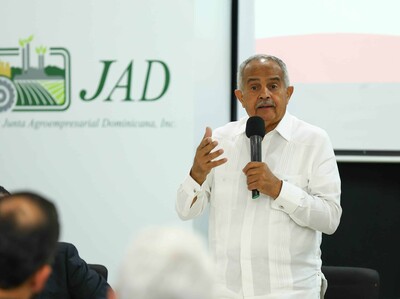
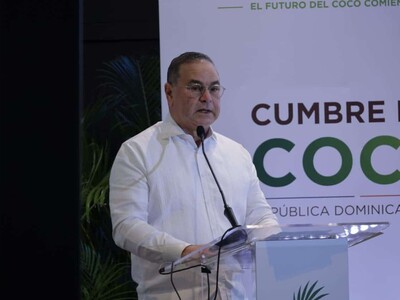
Dominican Republic's Minister of Agriculture, Francisco Oliverio Espaillat Bencosme, has identified generational succession as a primary challenge for the nation's coconut industry, with 71% of producers aged 50 or older. He stressed the need for young people to view agriculture not as a relic of the past but as a future business opportunity, emphasizing the integration of technology, innovation, financing, mechanization, profitability, and market access.
the Dominican state needs young people to look again at the field, not as an activity of the past, but as a business opportunity of the future.
Espaillat made these remarks at the inaugural DominiCoCo summit, an event focused on stimulating the coconut sector. He detailed other significant hurdles facing the industry, including low coverage of technical assistance, with only 49% of producers receiving it. Access to agricultural credit is limited to 16% of producers, while agricultural insurance reaches just 6%. Furthermore, only 4% of coconut farmers have formal marketing contracts, leaving many vulnerable to market fluctuations.
And to achieve this we have to bring technology, innovation, financing, mechanization, profitability and markets to the field.
Data from the National Agricultural Registry (Renagro) provides a clearer picture of the sector, identifying 5,141 coconut producers and 5,383 plots covering over 396,000 tareas nationwide. Minister Espaillat highlighted that these figures represent thousands of families and communities whose economies are intertwined with coconut production, forming a substantial platform for industry expansion.
Only 49% of our coconut producers receive technical assistance. Barely 16% have access to agricultural credit, 6% have insurance and barely 4% have some formal marketing contract.
The Ministry of Agriculture is committed to supporting the sector's improvement process. Espaillat stated that the 396,000 planted tareas are not just statistics but represent significant opportunities for progress and development. He concluded by asserting that while coconut is part of the Dominican Republic's agricultural history, the focus must shift from merely managing its past to actively building its future.
The results of the National Agricultural Registry (Renagro) identify 5,141 coconut producers, 5,383 plots and more than 396,000 tasks effectively planted throughout the national territory.
DistantNews Editorial
Originally published by Diario Libre in Spanish. Translated, summarized, and contextualized by our editorial team with added local perspective. Read our editorial standards.
More Stories



From Our Blog

What Gets Lost (and Found) When News Is Translated

The Critical Role of Diaspora Media in Global News

What Travellers Should Know About Countries with Restricted Press

A Digital Nomad's Guide to Following Local News

How the Same Story Looks Different in Different Countries
