

Geospatial study links lung cancer hotspots in Bagmati to air pollution
Summarized and contextualized by DistantNews.
At a glance
News
Sources not specified
Context piece
- Lung cancer incidence is rising rapidly in Nepal, particularly in urban areas like the Kathmandu Valley.
- A new geospatial study aims to understand the geographical distribution of lung cancer risk factors, including air pollution.
- Limited spatial health research in Nepal hinders a comprehensive understanding of disease patterns and public health challenges.
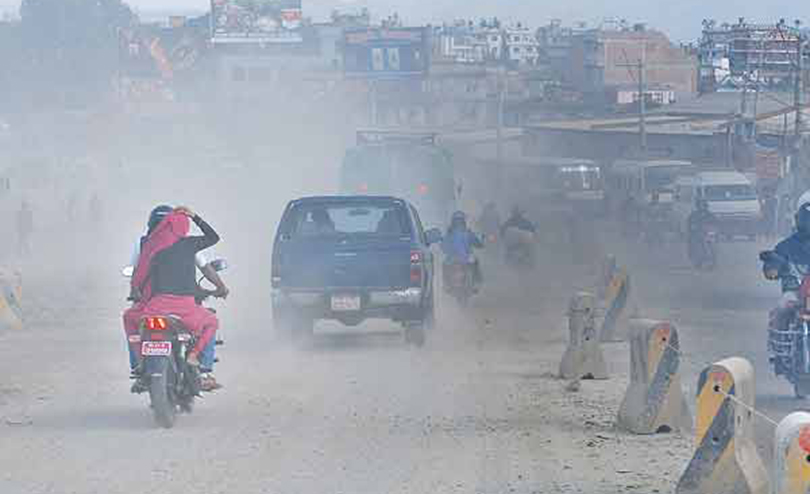
Lung cancer is a growing public health crisis in Nepal, with incidence rates significantly higher in urban centers like the Kathmandu Valley compared to rural areas. A recent study highlights the critical need for geospatial analysis to understand the uneven distribution of risk factors, such as air pollution from urbanization, traffic, and industrial activities.
The air we breathe is not the same everywhere.
Conventional health statistics often fail to capture these spatial inequalities, leaving the geographical dimensions of disease exposure invisible. While cancer is a leading cause of death globally, the rapid increase in lung cancer cases in developing countries like Nepal demands localized, municipal-level analysis. The World Health Organization reports 2.6 million lung cancer cases worldwide in 2024, making it the most common cancer, especially among men.
cancer is a leading cause of death worldwide, accounting for nearly 10 million deaths in 2024, or nearly one in six deaths.
Nepal's age-standardized incidence rate (ASIR) for lung cancer is exceptionally high at 80.9 per million, with a mortality rate (ASMR) of 54.8 per million. The Kathmandu Valley shows an ASIR of 18.1 for men and 10.4 for women, starkly contrasting with rural areas like Rukum, which report lower rates. This disparity underscores the importance of spatial health research in identifying and addressing localized environmental and behavioral factors contributing to the disease.
The most common cancer is lung cancer, with 2.6 million cases.
DistantNews Editorial
Originally published by OnlineKhabar English. Summarized and contextualized by our editorial team with added local perspective. Read our editorial standards.
More Stories


From Our Blog

What Gets Lost (and Found) When News Is Translated

The Critical Role of Diaspora Media in Global News

What Travellers Should Know About Countries with Restricted Press

A Digital Nomad's Guide to Following Local News

How the Same Story Looks Different in Different Countries
