


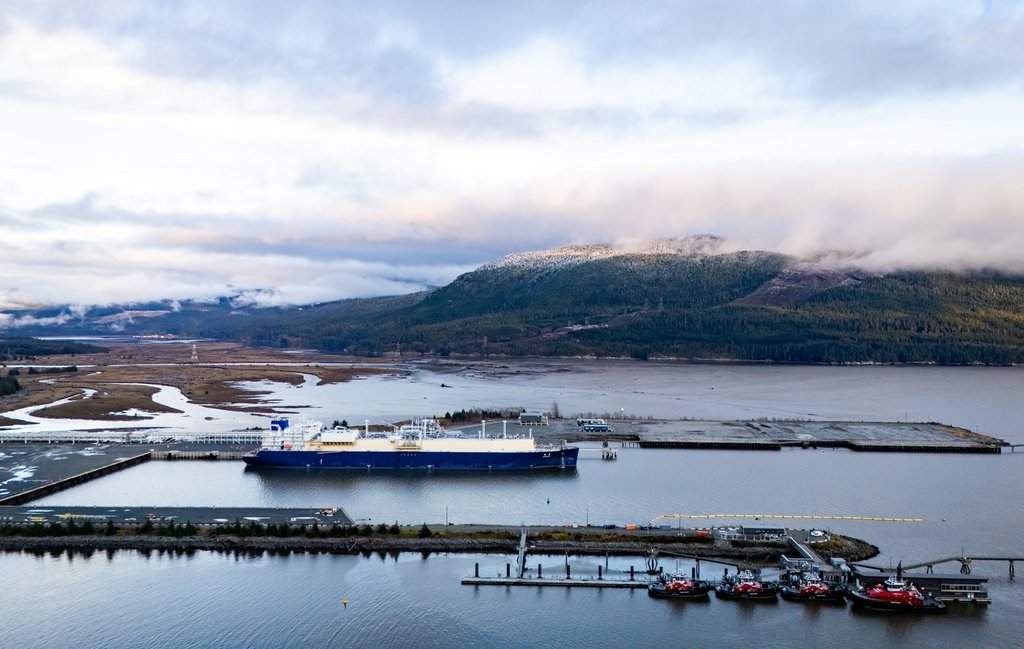
German company and B.C.’s Ksi Lisims sign landmark long-term LNG agreement
Summarized and contextualized by DistantNews.
At a glance
News
Named sources
New plan
- German company Uniper and British Columbia's Ksi Lisims have signed a long-term agreement for liquefied natural gas (LNG) supply.
- Uniper will purchase up to two million tonnes per annum of LNG for up to 20 years, with deliveries starting around 2032.
- The deal faces criticism from environmental groups concerned about climate commitments, while some see it as economically beneficial.
German energy company Uniper and British Columbia's Ksi Lisims have finalized a significant long-term agreement for liquefied natural gas (LNG) supply, marking a major step in energy cooperation between Canada and Germany. The deal, signed in Düsseldorf, Germany, will see Uniper purchase up to two million tonnes of LNG annually on a free-on-board basis for up to two decades, with initial deliveries expected around 2032.
This agreement is about far more than LNG. By signing this long-term off-take agreement, we are strengthening Uniper’s portfolio with a reliable source of LNG from Canada.
Michael Lewis, CEO of Uniper, hailed the agreement as strengthening the company's portfolio with a reliable LNG source from Canada. This development aligns with recent federal government initiatives to support LNG development in British Columbia. Both the Ksi Lisims LNG export terminal and phase two of LNG Canada are undergoing expedited review processes, pending final investment decisions.
The federal government anticipates these projects will attract substantial private investment and boost Canada's GDP. Eva Clayton, president of the Nisga'a Lisims Government, invoked the traditional concept of a "Common Bowl" to explain the pursuit of LNG exports, emphasizing interdependence and sharing abundance.
Since time immemorial, the Nisga’a people have adhered to the concept of a Common Bowl. This foundational idea teaches that we are all interdependent, and directs us to share our abundance with others. Today, that same spirit of sharing has led us to pursue LNG exports on the global stage.
However, the agreement has drawn criticism from environmental organizations. Stand.earth's Richard Brooks called it a "major step backwards for climate action," arguing that proceeding with a large-scale methane gas project amid raging wildfires is irresponsible. He also criticized the deal for benefiting a U.S. private equity-owned company. Political scientist Kathryn Harrison suggests that economic concerns are currently overshadowing climate change in voters' priorities, though she noted this doesn't necessarily mean a lack of care for future environmental safety.
This is a major step backwards for climate action by both the German and Canadian governments who have pulled out all the stops to ink this deal. Moving forward with a massive new methane gas project as devastating wildfires rage across Canada and Europe is irresponsible and an abdication of leadership.
DistantNews Editorial
Originally published by Global News. Summarized and contextualized by our editorial team with added local perspective. Read our editorial standards.
More Stories

From Our Blog

What Gets Lost (and Found) When News Is Translated

The Critical Role of Diaspora Media in Global News

What Travellers Should Know About Countries with Restricted Press

A Digital Nomad's Guide to Following Local News

How the Same Story Looks Different in Different Countries
