

German football's young record-breaker faces uncertain future after metabolic disorder diagnosis
Translated from Hungarian, summarized and contextualized by DistantNews.
At a glance
News
Sources not specified
Context piece
- Kennet Eichhorn became the youngest player in 2. Bundesliga history at 16 years and 14 days old.
- He also became the youngest goal scorer in German Cup history at 16 years and 128 days old, and the youngest goal scorer in 2. Bundesliga history at 16 years and 287 days old.
- Eichhorn's career trajectory is being compared to Toni Kroos, but his recent diagnosis of a metabolic disorder raises concerns, drawing parallels to Mario Götze's career struggles.
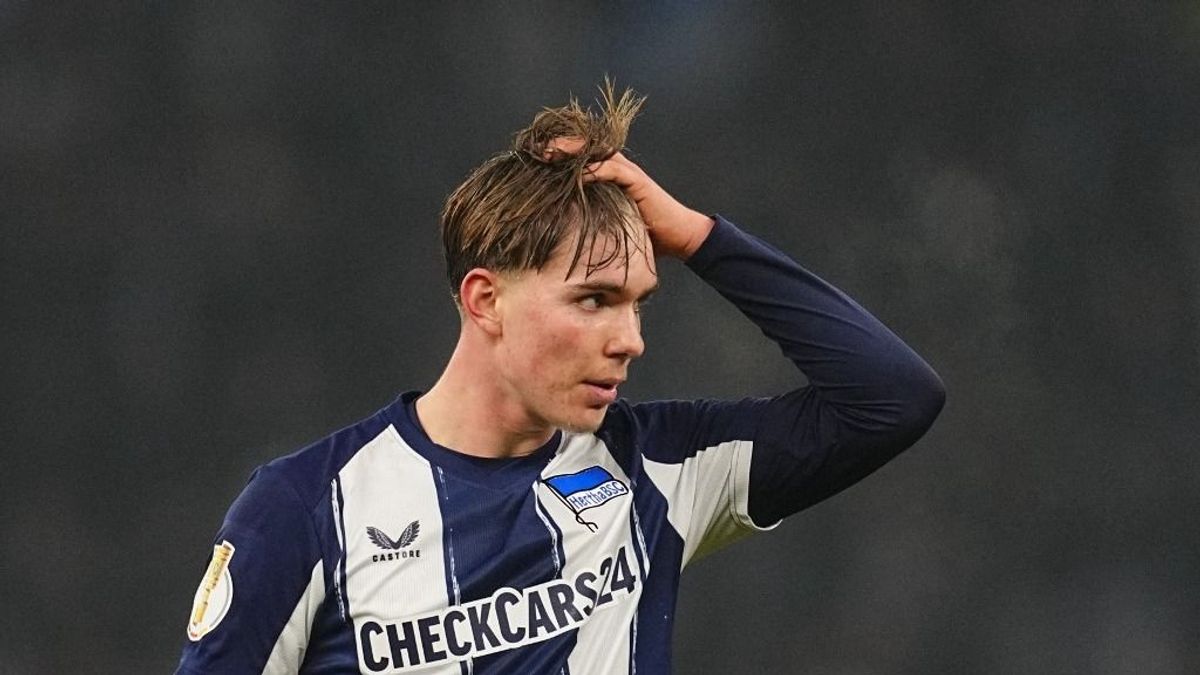
Kennet Eichhorn, at just 16 years and 14 days old, shattered the record for the youngest player to debut in the 2. Bundesliga, stepping onto the field for the first time in a match against Karlsruhe. His early career has been marked by a series of impressive milestones. He quickly followed his debut with another record, starting a match against Hannover at 16 years and 48 days old. In that game, he showcased his skills with an 86% pass accuracy, losing the ball only once, and winning 55% of his duels, earning praise from coach Stefan Leitl as the player of the match.
Eichhorn's playing style, characterized by his defensive positioning and ability to control the game's tempo rather than relying on flashy dribbles or goals, has led many in Germany to see him as the successor to Toni Kroos. He exudes a calm demeanor on the ball, reminiscent of the Real Madrid legend. His first professional goal, assisted by Márton Dárdai, came in a German Cup match where Hertha defeated Kaiserslautern 6-1. This goal, scored at 16 years and 128 days, made him the youngest scorer in the history of the German Cup, surpassing Jude Bellingham's previous record.
We are only negotiating with them half-heartedly.
His impressive performances continued into the 2. Bundesliga, where he scored his first goal at 16 years and 287 days, becoming the league's youngest-ever goal scorer. Bayer Leverkusen reportedly acquired him for nine million euros, placing him in a talent development system that has nurtured stars like Michael Ballack, Toni Kroos, Kai Havertz, and Florian Wirtz. However, recent reports indicate Eichhorn has been diagnosed with a metabolic disorder, a condition that has drawn comparisons to Mario Götze's career. Götze, who scored the winning goal in the 2014 World Cup final, experienced a decline in performance after 2016, which was later attributed to a metabolic illness. Götze's struggles serve as a cautionary tale for Eichhorn's future.
It will get sorted. It always gets sorted. It's like a chess game.
DistantNews Editorial
Originally published by Magyar Nemzet in Hungarian. Translated, summarized, and contextualized by our editorial team with added local perspective. Read our editorial standards.
More Stories

From Our Blog

Countries Without a Free Press: What You Need to Know

What Press Freedom Means for the News You Read

What Gets Lost (and Found) When News Is Translated

The Critical Role of Diaspora Media in Global News

What Travellers Should Know About Countries with Restricted Press
