


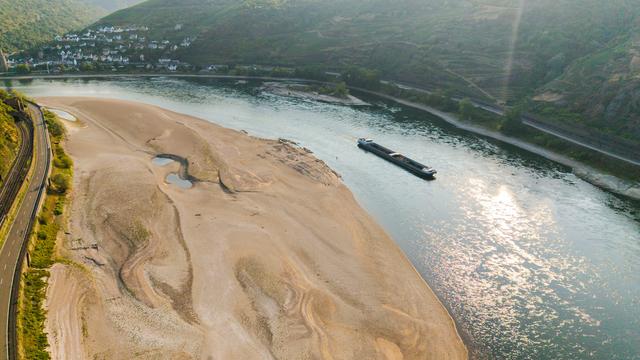
German Officials and Industry Leaders Seek Solutions for Rhine Low Water Crisis
Translated from German, summarized and contextualized by DistantNews.
At a glance
News
Named sources
Ongoing story
- German officials and industry representatives met to discuss solutions for the severe low water levels affecting the Rhine River.
- The low water levels pose significant challenges to inland shipping, industry, and the entire logistics chain.
- Discussions focused on evaluating current measures, implementing short-term solutions like 24-hour lock operations, and investing in infrastructure resilience.
Federal Transport Minister Steffen Bilger met with representatives from industry associations, port operators, and inland shipping companies in Bonn to address the escalating crisis caused by extremely low water levels on the Rhine River. The critical situation is severely impacting inland navigation, industrial operations, and the broader logistics network across Germany.
The low water levels present major challenges for inland shipping, industry, and the entire logistics chain.
During the meeting, participants aimed to assess the effectiveness of existing measures and identify immediate actions to mitigate the crisis. Bilger emphasized the need for pragmatic and solution-oriented collaboration among all stakeholders to enhance the resilience of waterways against extreme low-water events. He stressed that the conference should initiate accelerated implementation of targeted Rhine deepening projects.
It is crucial now that everyone works together pragmatically and solution-oriented.
Holger Lösch, deputy general manager of the Federation of German Industries (BDI), called for increased investment in the nation's transport infrastructure, which he described as underfunded for decades. He also advocated for significantly faster planning and approval processes for infrastructure projects. The BDI believes that deepening the Rhine would boost transport capacity even during periods of low water.
The low water conference in Bonn must be the starting signal for the accelerated implementation of targeted Rhine deepening.
The Association of Public Inland Ports (BÖB) proposed several short-term measures, including switching to 24-hour operations at canal locks to prevent congestion, especially as traffic shifts to the West German Canal system. BÖB managing director Marcel Lohbeck also urged against postponing necessary repairs on canals and called for the swift approval of areas for temporary 'buffer storage' facilities at ports to temporarily hold goods.
To prevent congestion there, the locks should be switched to 24-hour operation.
DistantNews Editorial
Originally published by Die Zeit in German. Translated, summarized, and contextualized by our editorial team with added local perspective. Read our editorial standards.
More Stories


From Our Blog

What Gets Lost (and Found) When News Is Translated

How the Same Story Looks Different in Different Countries

The Critical Role of Diaspora Media in Global News

What Travellers Should Know About Countries with Restricted Press

A Digital Nomad's Guide to Following Local News
