


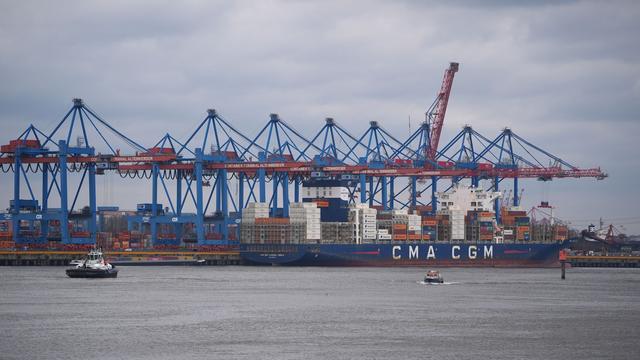
German Ports Demand Consequences After Drone Incident
Translated from German, summarized and contextualized by DistantNews.
At a glance
News
From a news agency
Context piece
- German port operators are demanding better protection against drone attacks following an incident at Leipzig Airport.
- The association cited a security gap between detecting a drone and effectively defending against it, despite improved regulations.
- They call for ports to be treated equally to airports in drone defense, with clear responsibilities and funding for defense technology.
German port operators are urging for enhanced security measures to protect against drone attacks, a call amplified by a recent incident at Leipzig Airport.
The current incident shows that there is still a security-relevant gap between the detection of a drone and its actual defense.
The Central Association of German Sea Port Operations (ZDS) stated that current regulations, despite recent improvements, are insufficient to counter the real-world threat posed by drones. Florian Keisinger, the association's managing director, highlighted a critical security gap: the time between detecting a drone and successfully neutralizing it.
"In a hybrid attack, there are often only 60 to 90 seconds to react. By the time the responsible authorities can intervene, a drone has often already disappeared or completed its mission," Keisinger explained. He stressed the need to close this gap by explicitly including seaports as critical infrastructure in national drone defense strategies.
In a hybrid attack, there are often only 60 to 90 seconds to react. By the time the responsible authorities can intervene, a drone has often already disappeared or completed its mission.
The ZDS is advocating for legal certainty regarding the use of defense systems and clear delineation of responsibilities among port operators, state and federal police, and the military. They argue that seaports should be granted the same protections as airports against drones. Furthermore, they seek guaranteed funding for modern detection and defense technology and inclusion in the national overview of hybrid threats.
This gap must be closed.
"Anyone who takes supply security, the protection of critical infrastructure, and military mobility seriously must equip the major German seaports with effective drone defense systems as quickly as possible and ensure effective protection against drones," Keisinger asserted, emphasizing the ports' role in national security architecture.
Anyone who takes supply security, the protection of critical infrastructure, and military mobility seriously must equip the major German seaports with effective drone defense systems as quickly as possible and ensure effective protection against drones.
DistantNews Editorial
Originally published by Die Zeit in German. Translated, summarized, and contextualized by our editorial team with added local perspective. Read our editorial standards.
More Stories



From Our Blog

What Gets Lost (and Found) When News Is Translated

How the Same Story Looks Different in Different Countries

The Critical Role of Diaspora Media in Global News

What Travellers Should Know About Countries with Restricted Press

A Digital Nomad's Guide to Following Local News
